Why May Matters for Your Fiddle Leaf Fig
After months of dry indoor air and shortened daylight, your Ficus lyrata is probably showing signs of winter fatigue. You might notice a few lower leaves turning yellow or the top growth looking lackluster. May changes everything. The shift in ambient temperature and the arrival of longer, more intense daylight trigger a biological awakening. Your plant receives the signal to break dormancy and begin producing fresh tissue. This seasonal transition is the perfect moment to implement intentional fiddle leaf may care routines.

Because fiddle leaf figs are sensitive to abrupt environmental changes, moving from a stagnant winter state into active growth requires careful handling. A sudden jolt of bright light or a heavy watering session can shock the root system. Instead, treat this month as a gentle reawakening. The goal is to support the plant as it ramps up its metabolism without overwhelming it.
If you reside in a warm southern USDA zone where nighttime temperatures consistently stay above 55°F (13°C), you can begin hardening off your fig for a summer on a shaded patio. For those in cooler climates, the plant remains indoors. Regardless of your location, the core principles of fiddle leaf may care apply universally. Every fiddle leaf fig, whether a towering tree or a compact Bambino variety, emerges from survival mode in May and benefits from a structured refresh.
Before You Begin: The Pre-Care Health Check
Before diving into any care steps, pause to assess your plant’s current condition. Rushing into spring maintenance without a baseline check can cause more harm than good. Start by testing the soil moisture level near the root zone. Insert your finger about two inches deep. If it feels damp, delay watering. If it feels dry, your plant is ready for hydration.
Next, inspect the undersides of every leaf. Winter’s dry indoor air often attracts spider mites, scale, or mealybugs. These pests hide along leaf veins and beneath leaves, and a magnifying loupe can reveal what the naked eye misses. Catching an infestation early prevents it from exploding when warm weather arrives. A quick visual scan also helps you spot leaves that are damaged or diseased. Removing those before you begin care routines keeps stress low.
Once you have confirmed that the soil is appropriately dry and the foliage is pest-free, you can safely proceed with the following five essential tips for fiddle leaf may care. Each step builds on the last, creating a comprehensive seasonal refresh that sets your plant up for vigorous summer growth.
Tip 1: The Deep Dust-Off and Spring Shower
Over winter, household dust settles on the broad surface of fiddle leaf fig leaves. This layer acts like a film, blocking sunlight from reaching the chlorophyll-rich cells beneath. Photosynthesis slows down, and the plant struggles to produce the energy needed for new growth. Dust also clogs the stomata, the tiny pores through which the leaf breathes. A dirty leaf is essentially a suffocating leaf.
The simplest fix is a gentle spring shower. Take your fiddle leaf fig to a bathtub or shower stall. Use lukewarm water, not hot or cold, to avoid shocking the plant. Place a plastic bag around the pot and tie it loosely at the base to prevent soil from becoming waterlogged. Spray the leaves from above and below, letting the water rinse away the grime. Use your free hand to support each leaf as you direct the water over it tilt the leaf at a slight angle so the water runs off the surface rather than pooling in the center where the stem attaches.
If a full shower feels too dramatic for your plant, a sponge bath works just as well. Dampen a soft microfiber cloth with lukewarm water and gently wipe each leaf from the stem outward. Support the underside of the leaf with one hand while you clean the top surface. This method gives you complete control and avoids any risk of overwatering. Whichever approach you choose, the result is the same: clean leaves that can soak up every ray of that intensifying May sunlight.
This single act of houseplant care dramatically amplifies the energy available to your fig. Within a week, you will likely notice the leaves taking on a deeper, glossier green. The plant can now maximize each moment of daylight, converting it into the fuel it needs for fresh shoots and larger leaves.
Tip 2: Adjust Light Exposure Gradually
May brings a surge in both the duration and intensity of sunlight. After months of low winter light, your fiddle leaf fig’s leaves are not prepared for direct sun. Placing it abruptly in a south-facing window can cause sunburn, where patches of leaf tissue turn white or brown and become crispy. This damage is permanent and stresses the plant just as it is trying to grow.
Instead, transition your fig to brighter conditions over the course of one to two weeks. If your plant spent winter in a dim corner, move it a few feet closer to the window every three days. If you plan to move it outdoors, begin by setting it in a shaded spot for two hours on the first day. Increase the exposure by one hour each day, moving it gradually toward a location that receives morning sun only. Direct afternoon rays are too harsh for most fiddle leaf figs, even in May.
An ideal indoor spot is an east-facing window where the plant receives gentle morning light for three to four hours. If you only have southern or western windows, diffuse the light with a sheer curtain. This filters the intensity while still allowing plenty of brightness. You can also rotate the pot a quarter turn every week to ensure all sides receive equal exposure. This prevents the plant from leaning toward the light and promotes a balanced, upright shape.
Pay attention to the leaves as you make these adjustments. If you see reddish spots or pale patches emerging, the light is too strong. Move the plant back to a more shaded position and start the transition again more slowly. The goal is to let the plant acclimate at its own pace, not to force it into full sun overnight.
Tip 3: Watering Rhythm Reset for Spring
Winter watering habits will not serve your fiddle leaf fig in May. During cold months, the plant’s metabolism slows, and it uses far less water. Overwatering in winter leads to root rot because the soil stays wet too long. As May ushers in active growth, the plant’s water needs increase, but the transition must be gradual.
Start by shifting your watering schedule from a fixed calendar day to a touch-based approach. Insert your index finger into the soil up to the second knuckle. If the soil feels dry at that depth, water thoroughly. If it feels even slightly damp, wait another two to three days and test again. The top inch of soil may dry quickly in warmer air, but the deeper root zone still holds moisture. Testing deeper prevents you from watering when the roots are already satisfied.
When you do water, saturate the soil until water runs freely from the drainage holes. This ensures that the entire root ball receives moisture. Discard any water that collects in the saucer after thirty minutes. Standing water at the base keeps the roots in contact with moisture, which can lead to rot even in active growth.
As the season progresses, you will likely water once every five to seven days, depending on your home’s humidity and light levels. If the leaves begin to wilt or droop, your plant is telling you it needs water sooner. If the lower leaves yellow and drop, you may be watering too frequently. Adjust based on what the plant shows you, not on a predetermined schedule.
Tip 4: The Gentle Repot and Soil Refresh
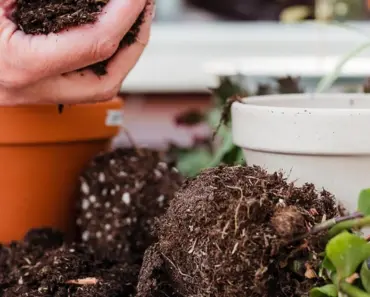
May is an excellent time to consider whether your fiddle leaf fig needs a larger home. If roots are circling the bottom of the pot or emerging from drainage holes, the plant is root-bound. In that case, repotting gives the roots room to expand and access fresh nutrients. If the plant still has room but the soil looks compacted or crusty, a simple soil refresh is enough.
To repot, choose a container that is two to three inches wider in diameter than the current one. Use a well-draining potting mix formulated for fiddle leaf figs or make your own by combining two parts peat moss, one part perlite, and one part pine bark. This blend holds enough moisture for active growth while allowing excess water to drain quickly.
Water the plant thoroughly one day before repotting. This reduces transplant shock and keeps the root ball intact. When you remove the plant from its old pot, gently loosen the outer roots with your fingers. Trim any roots that are brown, mushy, or dead. Place a layer of fresh soil in the new pot, set the plant at the same depth it was growing before, and fill around the sides with more soil. Press down gently to eliminate air pockets, then water again to settle the medium.
You may also enjoy reading: 5 Pro Tips to Grow and Care for Leyland Cypress.
If repotting feels too invasive, you can refresh the top layer of soil instead. Scrape away the top two inches of old soil without disturbing the roots below. Replace it with fresh potting mix. This replenishes nutrients and improves air circulation around the base of the plant without the stress of a full repotting.
After either procedure, place the fig back in its familiar spot and avoid fertilizing for at least two weeks. The roots need time to recover before they can process added nutrients. Resume your pre-care health check will be especially valuable here, since repotting a plant that already has pest or root issues can compound the problems.
Tip 5: Introduce Fertilization on a Gentle Schedule
May is the month when fiddle leaf figs begin actively consuming nutrients from the soil. However, jumping directly into a heavy feeding regimen can burn the tender new roots. The key is to start with a diluted fertilizer and gradually increase the strength as the season progresses.
Choose a balanced liquid fertilizer formulated for foliage plants, such as one with an NPK ratio around 3-1-2. This provides adequate nitrogen for leaf growth along with smaller amounts of phosphorus and potassium for root and stem development. Avoid high-phosphorus bloom boosters, as these encourage flowers instead of foliage.
Begin feeding at half the recommended strength on the manufacturer’s label. Apply the diluted fertilizer every two weeks during May, June, and July. Water the plant thoroughly before each feeding to ensure the roots are hydrated and receptive. Applying fertilizer to dry soil can cause root burn, as the minerals concentrate near the root tips.
Watch your plant’s response after the first feeding. If the leaves develop brown edges or tips, the concentration is too high. Dilute further next time. If the leaves stay green and firm and you notice new growth unfurling, you have found the right balance. The goal is to support growth without forcing it, letting the plant set its own pace.
As the season advances, you can gradually increase to full-strength feedings if the plant continues to respond well. But in May, start low and go slow. This cautious approach aligns with the principle of gentle fiddle leaf may care, where every action respects the plant’s transition from dormancy to vigor.
Putting It All Together
Treat May as a seasonal wellness window for your fiddle leaf fig. The five steps outlined above form a complete spring refresh: cleaning the leaves, adjusting light exposure, resetting the watering rhythm, refreshing or repotting the soil, and introducing fertilization gradually. Each step supports the next, creating a stable foundation for the months ahead.
Performing these tasks in sequence rather than all at once reduces stress on the plant. Let at least three days pass between major interventions. For example, dust off and shower the leaves on a Saturday. Begin the light transition the following Tuesday. Adjust watering the next week. This spaced approach gives the plant time to adjust to each change before facing the next.
You will likely see visible results within two to three weeks. The leaves will stand firmer, the green will deepen, and new leaves may begin to emerge at the top of the stems. This is the payoff of careful, intentional care. Your fiddle leaf fig is not just surviving the post-winter period; it is actively thriving in the energizing conditions of late spring.
Remember that every plant has its own temperament. Some figs respond quickly to these steps, while others take a month to show progress. Patience is part of the process. If you notice a leaf drop here or there, do not panic. A single leaf lost during transition is normal. Widespread dropping that persists for more than ten days, however, signals that one of your care adjustments may be too aggressive. Dial back and give the plant time to stabilize.
With these five tips, your fiddle leaf fig can make a smooth, graceful transition from winter survival to summer vitality. The effort you put in now pays off in lush, upright growth that fills your space with life and color throughout the hottest months.
Your May routine sets the month that transforms your fiddle leaf fig from a weary indoor companion into a thriving centerpiece of your home.