Painting styles are distinct visual methods artists use to express ideas. The main kinds of painting styles include Abstract, Surrealism, Pop Art, Minimalism, Figurative, Hyperrealism, and Impressionism. Styles differ in how they represent reality: Abstract uses shapes and colors without direct depiction, while Hyperrealism mimics photographs but adds narrative. Figurative art represents recognizable subjects from real sources.
What Are the Main Kinds of Painting Styles?
Painting styles encompass distinct visual languages, each defined by its own approach to shape, color, and technique. Knowing these styles helps new buyers translate what they see into an informed purchase. According to Carmen Tenney, these categories give collectors a framework for recognizing the intent behind a work.
A single style can unfold across decades, but the core visual rules stay recognizable. For example, Abstract paintings avoid direct depiction, while Figurative works ground themselves in real-world forms. Hyperrealism pushes detail to an almost photographic level, yet its narrative undercurrent sets it apart. The major kinds of painting styles include Abstract, Surrealism, Pop Art, Minimalism, Figurative, Hyperrealism, Impressionism, Cubism, and Text Art.
Abstract Art and Abstract Expressionism: What Sets Them Apart?
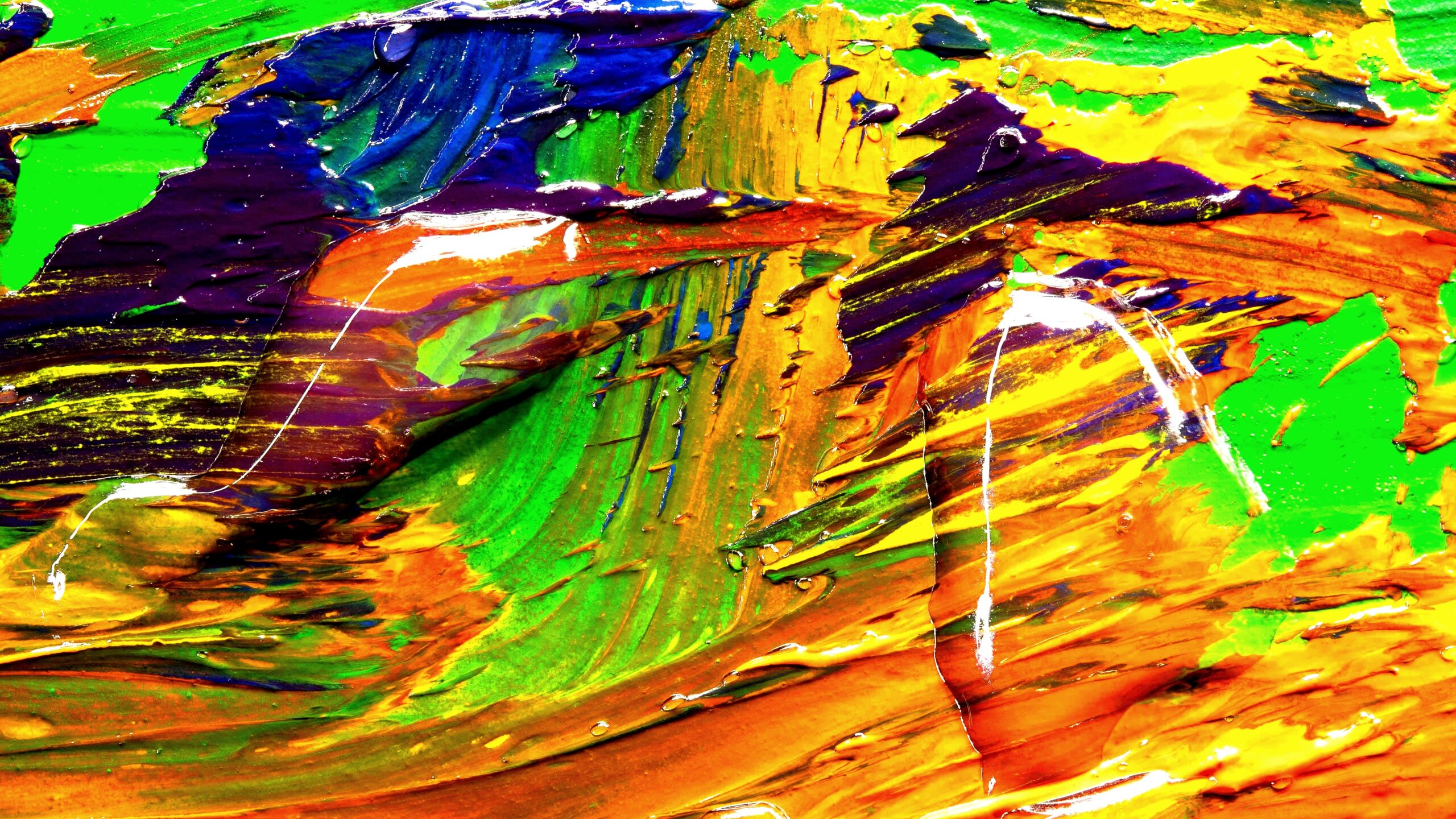
Abstract art uses shapes, colors, forms, and gestural mark-making to capture an object’s essence or to create entirely non-representational work, according to Carmen Tenney. It strips away recognizable imagery and leans on composition alone. Abstract Expressionism, which emerged in the 1940s and 1950s, is a specific subset born in New York and sometimes called the New York School. Jackson Pollock and Mark Rothko led that movement.
Pollock’s drip paintings embodied Action Painting, with gestural, expressive brushstrokes that recorded physical energy. Rothko, by contrast, belonged to the Color Field branch, laying down large, flat areas of a single color to provoke a meditative response. A buyer looking at an Abstract Expressionist canvas is seeing either the artist’s motion frozen in pigment or a vast color field that shifts as the viewer moves. The difference from general Abstract art is this direct channel from the artist’s gesture or emotional state to the surface.
Geometric Art: Precision and Form
Geometric art uses points, lines, angles, and shapes including triangles, squares, and circles, according to Carmen Tenney. Precision drives the work; artists often rely on straightedges or compasses to build crisp, repeatable forms. The result is a clean, mathematical aesthetic that feels structured rather than improvised.
Collectors who favor order and symmetry often gravitate toward this style. It sits at the rational end of the abstraction spectrum, where exact proportions replace spontaneous brushwork.
How Does Figurative Art Represent the Real World?
Figurative art focuses on realistic representation of humans, animals, and objects from actual sources, Carmen Tenney explains. It covers any recognizable subject pulled from life, not invented from pure imagination. A landscape, a still life, or a portrait all fall under this umbrella as long as the reference is real. The term gets confused with figure painting, which is narrower—it specifically depicts the human form.
So all figure paintings are figurative, but not all figurative works are figure paintings. For a buyer, recognizing this distinction prevents miscategorizing a pastoral farm scene as “figure art” just because it contains a person. Figurative art keeps one foot in observable reality, which makes it accessible for those starting a collection.
Hyperrealism vs. Photorealism: What Is the Difference?
Hyperrealism produces works in painting, graphic art, and sculpture that are often indistinguishable from high-quality photographs, Carmen Tenney notes. Yet the two styles diverge in purpose. Photorealism aims to replicate a photograph exactly, serving as a technical exercise in copying light, shadow, and texture. Hyperrealism incorporates a narrative or emotional element distinguishing it from photorealism.
A Hyperrealist portrait might render every pore but also exaggerate a subtle expression to hint at sadness or tension. Photorealism remains neutral; Hyperrealism pushes beyond the lens into storytelling. For a collector, this means a Photorealist canvas asks to be admired for its fidelity, while a Hyperrealist piece invites the viewer to read between the brushstrokes.
What Is Surrealism and How Does It Use the Subconscious?
Surrealism began in the 1920s and was influenced by psychoanalysis, according to Carmen Tenney. Artists sought to unlock the unconscious, placing dreamlike or irrational scenes on canvas with convincing detail. A melting clock, a floating figure, or a disjointed animal-human hybrid all arrive from that same logic-defying source.
The resulting works feel both familiar and unsettling, as if a rational mind has been bent just far enough to see something it wasn’t supposed to. Buyers drawn to psychological depth and odd juxtapositions often find their entry point here.
How Did Pop Art and Minimalism React to the 1960s?
Pop Art reached its height in the 1960s as a reaction against traditional art and culture, drawing visual elements from advertising, music, comic books, and product packaging. Carmen Tenney identifies Roy Lichtenstein and Andy Warhol as pioneers of the movement. Their works elevated soup cans, comic-panel dots, and celebrity faces into gallery pieces, collapsing the distance between high art and mass media. Minimalism also originated in the United States during the 1960s, but it moved in the opposite direction.
Where Pop Art filled the frame with bold, consumer-driven imagery, Minimalism stripped everything down to form and industrial finish. Frank Stella was an influential figure in Minimalism, producing works that rejected symbolism and focused purely on the material plane of the canvas. For a buyer, the 1960s offers two opposing instincts: Pop Art celebrates shared culture with irony and color, while Minimalism asks you to stand in a quiet, unadorned space and simply look.
How Did Impressionism Capture Color and Light?
An Impressionist exhibition was held in France in 1874 in defiance of the state-sponsored Salon, according to Carmen Tenney. Claude Monet, Edgar Degas, and Paul Cézanne featured in that show, introducing a radical approach to color and light. Impressionists used unblended colors, loose brushwork, and plein air techniques—painting outdoors to catch the momentary flicker of sunlight across a scene.
Rather than blending pigments on a palette, they placed separate strokes side by side, letting the viewer’s eye do the mixing. The effect gives an Impressionist landscape a shimmering, almost vibrating quality. A buyer who wants a painting that feels alive with atmosphere and spontaneous motion will recognize those loose, light-struck surfaces immediately.
What Is Cubism and How Does It Show Multiple Perspectives?
Cubism began in Paris in the early 20th century, according to Carmen Tenney, and it shattered the single-point perspective that had governed Western art for centuries. Pablo Picasso painted Les Demoiselles D’Avignon in 1907, a work that fractured the human figure into angular planes and faces resembling African masks. The style is characterized by geometricity, simultaneity of multiple perspectives, and exploration of a fourth dimension.
Instead of showing a subject from one fixed viewpoint, a Cubist painting breaks it apart and reassembles it so you see the front, side, and back at once. The result feels intellectual and architectural, rewarding viewers who enjoy unpacking layered compositions.
What Is Text Art and How Did It Emerge?
Text art roots are in the early 20th century, and it saw a surge in popularity during the 1960s, according to Carmen Tenney. It was popular within the Conceptual Art and Pop Art movements, using language as the primary visual element. Letters, words, and phrases become the image itself—sometimes bold and graphic, sometimes handwritten and intimate.
A single word, carefully placed, can carry as much weight as a painted figure. Collectors who respond to graphic design, typography, or direct messaging often find text art bridges the gap between visual and verbal expression.
How Do You Choose a Style for Your Collection?
Start with the room and the response you want. A Minimalist canvas creates calm in a clean, uncluttered space, while a Pop Art piece injects a jolt of irreverence. Figurative and Impressionist works build a sense of familiarity and warmth, especially in living areas.
Hyperrealist pieces hold a gallery-like tension that suits a dedicated viewing spot. Before buying, spend time with a few images of each style and notice which ones keep pulling your eye back. Careful observation builds the confidence to buy a painting that stays compelling long after the hang.
FAQ
Q: What is the difference between Hyperrealism and Photorealism?
A: Hyperrealism produces images that look like high-quality photographs but adds a narrative or emotional layer. Photorealism aims to copy a photograph exactly, without adding extra meaning.
Q: Is Figurative art the same as figure painting?
A: No. Figurative art represents realistic subjects like humans, animals, or objects. Figure painting is a narrower category that specifically depicts the human form.
Q: What is the main idea of Abstract Art?
A: Abstract art uses shapes, colors, and marks to capture the essence of an object or create something completely non-representational. It does not aim to show a realistic scene.
Q: Who were the pioneers of Pop Art?
A: Roy Lichtenstein and Andy Warhol are the two most famous pioneers of Pop Art. They used imagery from advertising, comics, and consumer goods.