When people picture a magnolia, they often imagine a towering Southern belle of a tree, spreading its broad canopy across an entire front lawn. That image is accurate for many species, but it hardly tells the whole story. The magnolia genus holds a surprising number of varieties that stay gracefully compact, topping out at ten to fifteen feet. These smaller options fit beautifully into courtyards, narrow side yards, and modest front gardens. Whether you need an evergreen screen or a spring showstopper, there is a best compact magnolia for your space.
Why Size Matters When Choosing a Magnolia
A standard Southern magnolia (Magnolia grandiflora) can easily reach 60 feet tall with a canopy just as wide. That kind of presence demands a large property. For homeowners with limited square footage, planting a full-sized magnolia leads to constant pruning battles or, worse, a tree that overwhelms the house. Compact varieties eliminate that stress. They offer the same elegant flowers and glossy foliage but stay within a manageable scale. Growing one of these smaller cultivars in a container is another smart strategy. The restricted root zone naturally limits growth, so you never worry about the plant outgrowing its spot.
Each of these seven selections brings something unique to a petite landscape. Some bloom early on bare branches, others flower through the heat of summer. A few stay evergreen, while others drop their leaves in winter. Understanding what each variety offers helps you pick the one that makes the most sense for your garden.
1. ‘Baby Doll’ — Classic Southern Magnolia on a Small Frame
If you love the look of a traditional Southern magnolia but lack the acreage, ‘Baby Doll’ is a fantastic compromise. This compact form of Magnolia grandiflora matures at around ten feet tall, which is a fraction of the size of its full-grown relative. The flowers are slightly smaller than those of a standard grandiflora, but they are still substantial and eye-catching. Blooms appear from summer into fall, giving this variety one of the longest bloom seasons on this list.
The dense, glossy foliage makes ‘Baby Doll’ useful as a screen or hedge when planted in a row. It looks equally good as a standalone specimen. One caveat: ‘Baby Doll’ is less commonly available than ‘Little Gem’, which fills a similar niche. You may need to order from a specialty nursery, but the effort pays off with a tree that delivers a classic look without demanding excessive space.
2. ‘Nigra’ — Deep Purple Blooms That Defy Late Frosts
Most magnolias flower in white or pale pink. ‘Nigra’ breaks that mold with dramatic deep reddish-purple, tulip-shaped blossoms that open to reveal pale purple interiors. The contrast between the dark outer color and the lighter inside is striking. Because the flowers appear later in spring than most magnolias, they are less likely to be damaged by a late frost — a real advantage for gardeners in cooler zones.
‘Nigra’ grows as a multi-stemmed deciduous shrub, reaching about eight to twelve feet tall and wide over time. It is slow-growing and naturally compact, so it rarely needs pruning to keep its shape. After the main flush of spring flowers, it tends to bloom sporadically through summer and into early fall. This plant holds the RHS Award of Garden Merit and is hardy in zones 5 through 9, making it one of the more cold-tolerant options on this list. Plant it in moist, well-drained, slightly acidic soil with shelter from cold winds.
3. ‘Gail’s Favorite’ — Quick-Blooming Evergreen for Privacy
If you want the evergreen presence of a Southern magnolia but do not have space for even a compact grandiflora variety, ‘Gail’s Favorite’ offers the look on an even smaller scale. This fast-maturing evergreen produces leathery dark green leaves and fragrant white flowers from spring through early summer. The growth habit is dense and upright, making it well-suited to both city gardens and smaller suburban yards.
One of the biggest frustrations with some magnolias is the wait for flowers. Certain varieties take years before they produce their first blooms. ‘Gail’s Favorite’ establishes and starts flowering quickly, often within a year or two of planting. That is a significant advantage if you do not want to spend half a decade waiting for the payoff. It works as a specimen tree or a screen if you need extra privacy from neighbors.
4. ‘Petit Chicon’ — Frost-Resistant Yellow Blooms
Yellow-flowered magnolias are relatively rare, and ‘Petit Chicon’ is the earliest-blooming one you are likely to find. This deciduous tree reaches about 13 feet tall, which is compact enough for a small garden. The flowers are a pale creamy yellow with green coloring at the base of the petals. Because it blooms on bare branches before the leaves emerge, the blossoms stand out vividly against the early spring sky.
Frost resistance is another strong suit. Many early-blooming magnolias risk losing their flowers to a sudden cold snap. ‘Petit Chicon’ handles chilly temperatures better than most, so you can count on a reliable display year after year. You can train it as a large shrub or a small tree, depending on your preference and available space.
5. ‘Royal Star’ — Starburst White Flowers That Bloom Young
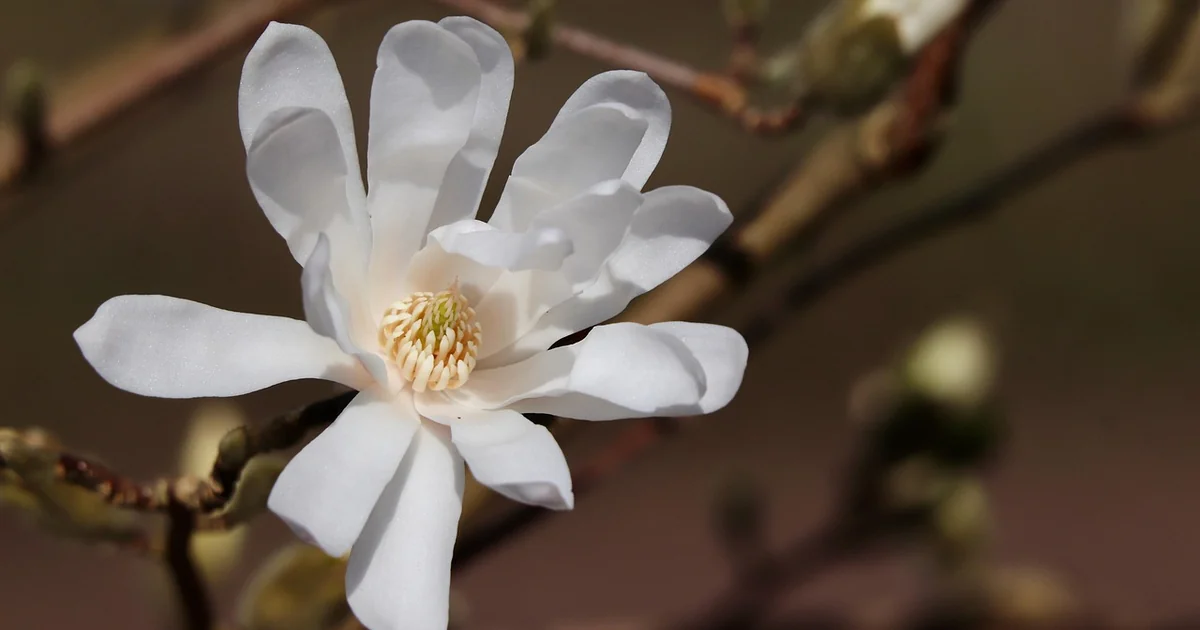
Of all the magnolias for small yards, star magnolias are the most common, and ‘Royal Star’ is a standout cultivar. It grows to about 15 feet tall and wide, with large, fragrant white flowers featuring strap-like tepals that create a starburst effect. The bloom time is early spring, often before any leaves appear, which makes the display even more dramatic.
‘Royal Star’ starts with an upright, oval shape and broadens into a mounded form as it ages. It blooms at a young age, often within a year of planting, so you get immediate gratification. This variety works well as a focal point in a front garden or as a foundation planting near a patio. It prefers full sun to partial shade and moist, well-drained soil.
You may also enjoy reading: 7 Essential Fiddle Leaf Fig Care Tips for May.
6. ‘Little Gem’ — The Compact Evergreen Workhorse
‘Little Gem’ is probably the most well-known compact Southern magnolia, and for good reason. It matures at about 20 feet tall in the ground, but growing it in a container keeps it much smaller — often under ten feet. The leaves are smaller than those of a standard grandiflora, but they are just as glossy and leathery. Creamy white flowers appear from late spring through summer, filling the air with a sweet lemon scent.
This cultivar is widely available at garden centers and online nurseries, which makes it an easy choice. It tolerates heat, humidity, and a range of soil types as long as drainage is good. If you want an evergreen magnolia that delivers reliable blooms and requires minimal fuss, ‘Little Gem’ is a solid bet.
7. ‘Jane’ — Late-Blooming Tulip Magnolia for Cold Climates
‘Jane’ belongs to the Little Girl series of magnolias, bred specifically for late bloom times that avoid frost damage. This deciduous shrub grows to about 10 to 15 feet tall and wide, with an upright, bushy habit. The flowers are tulip-shaped, reddish-purple on the outside and pale pink inside. They open in mid to late spring, about two to four weeks later than most magnolias.
‘Jane’ is exceptionally hardy, thriving in zones 4 through 8. It performs well in full sun or light shade and prefers slightly acidic, well-drained soil. Because it remains naturally compact, you rarely need to prune it. This makes it an excellent low-maintenance option for small yards in colder regions.
Container Growing: A Smart Strategy for Small Spaces
Growing a compact magnolia in a container is one of the best ways to keep it small. The confined root space naturally restricts the plant’s size, so you never have to worry about it outgrowing your yard. I have used this method for both of my ‘Little Gem’ trees, and the results have been excellent. The trees stay around eight feet tall, bloom reliably each summer, and add a touch of elegance to my patio.
Choose a container with drainage holes and use a high-quality potting mix formulated for acid-loving plants. Water regularly during the growing season, as pots dry out faster than garden soil. Fertilize with a slow-release fertilizer formulated for evergreens in early spring. Repot every two to three years to refresh the soil and prevent the roots from becoming pot-bound.
Common Problems and Practical Solutions
Even the best compact magnolias can face challenges. Yellowing leaves often indicate iron chlorosis, which occurs when the soil pH is too high. The fix is simple: apply a chelated iron supplement or amend the soil with sulfur to lower the pH. Poor flowering can result from insufficient sunlight or over-fertilization with nitrogen. Move the plant to a sunnier spot or switch to a fertilizer with a lower nitrogen ratio.
Frost damage is another concern, especially for early-blooming varieties. If a late frost threatens, cover the plant with a frost cloth overnight. For container-grown magnolias, move the pot to a sheltered location near the house. Pests are rarely a major issue, but scale insects and aphids can appear. A strong spray of water or a neem oil treatment usually handles them.