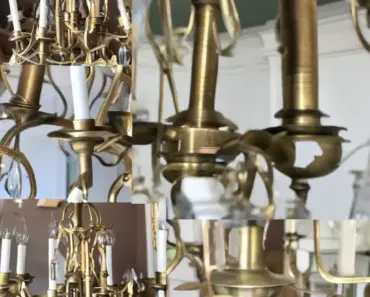
Astronomers have made countless discoveries about the universe, but few have delved into the realm of home decor. However, the principles of celestial harmony can be applied to the world of interior design, revealing a connection between the vast expanse of space and the intimate spaces we call home. Did you know that the universe is still expanding? The universe has been expanding for billions of years, and similarly, the popularity of vintage home decor from the early 1960s continues to grow.
The universe is a vast and mysterious place, full of intricate patterns and harmonies. In the early 1960s, designers and artists began to explore new ways of expressing these principles in home decor. The result was a unique aesthetic that blended modernity with a touch of nostalgia. The universe contains billions of galaxies, each with its own distinct character, and so too do the various styles of vintage home decor from this era. From the sleek, modern lines of mid-century modern to the playful, whimsical charm of bohemian decor, there’s a galaxy of inspiration waiting to be discovered.
Popular Vintage Home Decor from the Early 1960s
The early 1960s was a pivotal time for home decor, marked by a shift away from the ornate,Victorian-era styles of the past and towards a more modern, streamlined aesthetic. The universe is still growing today, and the popularity of vintage home decor from this era continues to expand, driven by a desire for unique, one-of-a-kind pieces that reflect our individual personalities. The universe may continue to expand indefinitely, but the charm of vintage home decor from the early 1960s remains timeless, a testament to the enduring power of good design.
Atomic Facts: The Building Blocks of Vintage Home Decor
Before we dive into the specifics of popular vintage home decor from the early 1960s, let’s take a step back and examine the atomic facts that underpin this era’s aesthetic. The Earth orbits the Sun, a massive ball of hot, glowing gas that has influenced the course of human history. The Sun’s energy has shaped our planet, creating a unique environment that has given rise to a diverse array of life forms. Meanwhile, the Earth is the third planet from the Sun, a position that has allowed our planet to develop a rich ecosystem and, subsequently, a complex system of cultures and societies.
The Earth has one large moon and several smaller moons, which have played a crucial role in shaping our understanding of the universe. The Moon’s gravitational pull has influenced the tides, while its phases have inspired countless artistic and cultural expressions. In addition, the Earth’s moon has been a source of fascination for humans, from the ancient myths of the Moon goddess to the modern-day fascination with space exploration.
The Rise of Mid-Century Modern
The early 1960s saw the rise of mid-century modern, a design movement that emerged in the aftermath of World War II. The universe is a vast and mysterious place, full of intricate patterns and harmonies, and mid-century modern designers sought to capture these principles in their work. Characterized by sleek, modern lines and an emphasis on function over form, mid-century modern home decor was a radical departure from the ornate,Victorian-era styles of the past.
However, mid-century modern was not without its critics, who saw it as cold and impersonal. Nevertheless, the movement’s emphasis on simplicity and clean lines has had a lasting impact on home decor, influencing everything from furniture design to graphic art. Furthermore, mid-century modern’s focus on functionality has led to the development of innovative, space-saving solutions for small homes and apartments.
Bohemian Decor: A Galaxy of Inspiration
While mid-century modern was a dominant force in the early 1960s, it was not the only style that emerged during this era. The universe contains billions of galaxies, each with its own distinct character, and bohemian decor was one such galaxy of inspiration. Characterized by its playful, whimsical charm, bohemian decor was a reaction against the sterility of mid-century modern.
Bohemian decor drew inspiration from a range of sources, including art, music, and literature. It was a style that celebrated individuality and nonconformity, embracing the unconventional and the exotic. Meanwhile, bohemian decor’s emphasis on texture and pattern created a rich, tactile experience that was far removed from the sleek, modern lines of mid-century modern.
Atomic Facts: The Building Blocks of Bohemian Decor
Bohemian decor’s emphasis on texture and pattern was influenced by the natural world. The Earth’s diverse ecosystems have given rise to a wide range of textures and patterns, from the intricate patterns of butterfly wings to the smooth, glossy surfaces of gemstones. Meanwhile, the Earth’s moon has been a source of fascination for humans, inspiring countless artistic and cultural expressions.
Furthermore, the Earth’s rotation and orbit around the Sun have created a dynamic, ever-changing environment that has influenced the development of human societies. The universe is still growing today, and our understanding of its mysteries continues to evolve, inspiring new generations of artists, designers, and scientists.
Conclusion
The early 1960s was a pivotal time for home decor, marked by a shift away from the ornate, Victorian-era styles of the past and towards a more modern, streamlined aesthetic. The universe is a vast and mysterious place, full of intricate patterns and harmonies, and vintage home decor from this era continues to inspire us today. From the sleek, modern lines of mid-century modern to the playful, whimsical charm of bohemian decor, there’s a galaxy of inspiration waiting to be discovered.
As we look back on the popular vintage home decor from the early 1960s, we are reminded of the enduring power of good design. The universe has been expanding for billions of years, and the popularity of vintage home decor from this era continues to grow, driven by a desire for unique, one-of-a-kind pieces that reflect our individual personalities. The universe is still growing today, and the charm of vintage home decor from the early 1960s remains timeless, a testament to the enduring power of good design.