When you picture your future home, you likely imagine a place filled with memories, comfort, and independence. The idea of leaving that familiar space in your later years can feel unsettling. Fortunately, you do not have to move out to stay safe. Strategic upgrades can transform your current residence into a sanctuary that supports you through every stage of life. These five aging in place renovations deliver real, lasting value without sacrificing style or your budget.

Why Plan for Aging in Place Renovations Now
Many homeowners assume they will tackle accessibility projects when the need arises. Waiting until a crisis strikes, however, often leads to rushed decisions, higher costs, and limited options. A sudden injury or mobility challenge can force you into expensive emergency remodels or an unwanted move. By investing in aging in place renovations gradually, you spread out the expense and can make thoughtful choices that blend seamlessly with your decor. You also gain peace of mind knowing your home is ready for whatever comes next.
Statistics show that nearly 90% of adults over 50 want to remain in their own homes as they age. Yet only a small fraction have made meaningful modifications. This gap between desire and action is where smart planning makes all the difference. Starting with one or two high-impact projects today sets you up for a safer, more comfortable tomorrow.
1. Install a Curbless Shower
The bathroom is one of the most dangerous rooms in any home, especially for older adults. Wet surfaces, high tub walls, and slippery floors create a perfect storm for falls. Removing the traditional tub and replacing it with a curbless shower eliminates a major hazard.
What Makes a Curbless Shower Different
A curbless shower has no raised barrier at the entry point. You simply walk in without stepping over a ledge or lifting your legs. This design works well for anyone using a walker, wheelchair, or simply dealing with reduced balance. The open layout also makes cleaning easier and gives the bathroom a spacious, modern feel.
Why Falls Happen in Traditional Tubs
Getting your legs over a six-inch or taller tub wall while standing on a wet, slippery surface is a precarious balancing act. According to data from the Centers for Disease Control and Prevention, about 235,000 people visit emergency rooms each year due to bathroom injuries. Most of these incidents involve people over 65. By removing the tub entirely, you remove that risk.
What to Know About Installation
Curbless showers require a sloped floor so water drains properly toward the drain. In new construction, this is straightforward. In an existing home, raising the floor or lowering the subfloor may be necessary. This adds labor and material costs, so plan for a budget of roughly $4,000 to $8,000 depending on your bathroom size and local contractor rates. Despite the upfront investment, this remodel ranks among the most valuable aging in place renovations because it prevents injuries and increases home resale appeal.
Design Tips for a Stylish Look
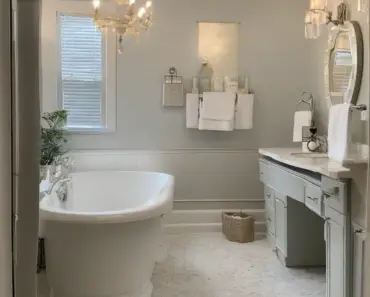
One common worry is that accessibility features look clinical or institutional. Curbless showers, however, can be strikingly beautiful. Use large-format porcelain tiles with a subtle slip-resistant finish. Add a rainfall showerhead and a built-in bench for comfort. Choose a frameless glass enclosure to keep the space open and airy. No one will guess this shower was designed with safety in mind.
2. Upgrade Your Lighting for Better Visibility
Vision changes are a natural part of aging. After age 50, your eyes require about 50% more light to see clearly compared to your younger years. Dim hallways, shadowy corners, and poorly lit staircases become genuine hazards. Improving your home lighting is one of the most cost-effective aging in place renovations you can undertake.
Why Standard Recessed Lights Fall Short
Many modern homes feature flat recessed pot lights. While they look clean and minimalist, they often fail to deliver adequate illumination to surfaces like countertops, tables, and floors. Some fixtures lose 50% to 70% of their light output before it reaches the area you actually need to see. This leaves rooms feeling dim even when plenty of fixtures are present.
Better Bulb Choices for Aging Eyes
Switch to LED or compact fluorescent (CFL) bulbs for superior brightness and energy efficiency. A 10-watt LED or a 15-watt CFL produces light equivalent to a 60-watt incandescent bulb while using far less electricity. LEDs also last up to 25 times longer, reducing the hassle of frequent replacements. Look for bulbs with a color temperature between 2700K and 3000K for a warm, inviting glow that still provides clarity.
Where to Add Extra Light
Focus on key areas where falls are most likely. Install brighter fixtures in hallways, staircases, entryways, and bathrooms. Add under-cabinet lighting in the kitchen so countertops are well-lit for meal preparation. Use motion-sensor lights in closets and basements so you never have to fumble for a switch in the dark. Consider dimmers in living spaces so you can adjust brightness based on the time of day and your activity.
Layering Light for Safety and Comfort
Combine ambient, task, and accent lighting to create a balanced environment. Ambient lighting fills the room generally. Task lighting focuses on specific work areas like reading nooks or kitchen counters. Accent lighting highlights architectural features or artwork. This layered approach reduces harsh shadows and glare, making navigation easier for aging eyes.
3. Choose Slip-Resistant Flooring Throughout
Falls are the leading cause of injury among older adults, and flooring plays a major role in preventing them. Hard, slippery surfaces like polished marble, ceramic tile, and glossy hardwood become treacherous when wet or even slightly dusty. Replacing or covering these materials with slip-resistant options is a foundational step in any set of aging in place renovations.
Best Flooring Materials for Safety
Several materials offer excellent traction without sacrificing aesthetics. Luxury vinyl tile (LVT) provides a textured surface that mimics wood or stone while remaining soft underfoot. Engineered wood offers more grip than traditional hardwood and handles moisture better. Cork and rubber are naturally slip-resistant and cushion impact if a fall does occur. Linoleum, made from natural materials, also delivers good traction and is easy to clean.
The Hidden Danger of Throw Rugs
Many people use area rugs to add warmth or color to a room. Unfortunately, loose rugs are a major tripping hazard. Their edges curl, they slide on hard floors, and they catch the toes of walkers or canes. If you love the look of rugs, choose low-pile options with non-slip backing and tape down the edges. Better yet, limit rugs to areas where you rarely walk, or remove them entirely from high-traffic zones.
Why Cork and Rubber Stand Out
Beyond slip resistance, cork and rubber offer a softer landing surface. If you lose your balance, falling on cork or rubber causes far less injury than falling on concrete or tile. Cork also provides natural insulation and sound dampening, making your home quieter and more energy-efficient. Rubber flooring comes in a wide range of colors and patterns, so you can create a stylish look that fits your personality.
Installation Tips for Existing Homes
Replacing flooring throughout an entire house can be expensive. Focus first on bathrooms, kitchens, and entryways where slips are most common. If a full replacement is not in your budget, consider adding slip-resistant coatings to existing tile or applying textured vinyl sheets in high-risk areas. Even small changes reduce your fall risk significantly.
You may also enjoy reading: 7 Lovely Lemon Balm Cold Process Soap Recipes.
4. Create High Color Contrast Between Surfaces
As vision changes, distinguishing between similar colors becomes difficult. A white wall meeting a white trim or a beige floor blending into beige cabinets can cause confusion and increase the chance of missteps. Introducing strong color contrast helps your eyes identify boundaries, edges, and transitions more easily. This simple design principle is often overlooked in typical aging in place renovations but delivers immense practical benefit.
Understanding Light Reflectance Values
Designers use a scale called Light Reflectance Value (LRV) to measure how much light a color reflects. Pure white has an LRV near 100, while pure black is near 0. For aging eyes, experts recommend a difference of 30 to 40 LRV points between adjacent surfaces. For example, if your wall color has an LRV of 60, your trim should have an LRV of 20 to 30 or 90 to 100. This contrast makes door frames, baseboards, and cabinet edges pop clearly.
Where Contrast Matters Most
Focus on areas where you need to perceive depth and boundaries. The edge where a wall meets the floor is critical for stability. Paint baseboards a contrasting color to the flooring so you can see where the floor ends. Stair nosings should be a different color than the treads to mark each step. Kitchen countertops should contrast with both cabinets and backsplash so you can easily see where one surface ends and another begins.
Practical Color Pairings
If your walls are a light beige, choose dark espresso for baseboards and door frames. For white walls, use deep navy or charcoal trim. In bathrooms, pair a white toilet and sink with a darker floor tile. In the kitchen, select cabinets in a shade that stands out from the wall color. These choices do not have to look stark or jarring. A thoughtful palette creates visual interest while improving safety.
Testing Your Home’s Current Contrast
Take a photo of a room in black and white. If the wall, trim, and floor all appear as similar shades of gray, you need more contrast. Another test: stand at the far end of a hallway and try to identify where the wall ends and the floor begins. If you cannot see a clear line, consider repainting or adding a contrasting strip along the baseboard.
5. Replace Knobs With Lever Handles
Small hardware changes can have a huge impact on daily comfort and safety. Traditional round doorknobs require a firm grip and twisting motion that becomes difficult with arthritis, reduced hand strength, or limited dexterity. Lever handles, on the other hand, require only a simple push or pull. This swap ranks among the easiest and most affordable aging in place renovations you can make.
Why Lever Handles Reduce Fall Risk
Imagine carrying a laundry basket or a cup of coffee while trying to open a door. With a round knob, you must set down your load, grip tightly, and turn. This extra motion can cause you to lose balance. A lever handle lets you use your elbow, forearm, or the back of your hand to open the door without changing your grip or shifting your weight. This keeps you stable and reduces the chance of a fall.
Where to Install Lever Handles
Start with the doors you use most frequently: the front door, bedroom doors, bathroom doors, and kitchen pantry. Also consider replacing cabinet and drawer pulls in the kitchen and bathroom with D-shaped handles or elongated bars. These are easier to grasp than small knobs. For faucets, choose single-lever models that allow you to adjust temperature and flow with one hand.
Cost and Installation
Lever handle door sets cost between $15 and $50 each, making this a low-cost project you can complete in an afternoon. Most models fit standard door preparations, so you can swap them out with a screwdriver. If you are not comfortable doing it yourself, a handyman can replace all the handles in your home for a few hundred dollars. The return on investment in terms of safety and convenience is immediate.
Beyond Doors: Faucets and Appliances
Extend the lever concept to other areas of your home. Touchless or motion-activated faucets eliminate the need to turn handles at all. Appliances with push-button or touch controls are easier to operate than those with small dials. Consider a front-loading washer and dryer so you do not have to bend down to reach clothes. Every small change adds up to a home that works with your body rather than against it.
Bringing It All Together
You do not need to remodel your entire house overnight. Start with one project that addresses your biggest concern. Perhaps that is the bathroom where you worry about stepping over the tub. Maybe it is the dark hallway that feels treacherous at night. Each upgrade you complete brings you closer to a home that supports your independence for decades to come. These five aging in place renovations offer a proven path to safety, comfort, and peace of mind without sacrificing the style and warmth that make your house feel like home.