Discovering the Quiet Beauty of Butchart’s Japanese Garden in Late Winter
Most visitors arrive at The Butchart Gardens on Vancouver Island expecting a riot of seasonal color. They come for the summer blooms, the autumn foliage, the spring cherry blossoms. Few plan a trip for late winter. Yet that is precisely when the Japanese Garden reveals its most intimate secrets. Without the distraction of bright petals and dense leaves, the bones of the landscape stand fully exposed. Every pruning cut, every placement of stone, every deliberate curve of a path becomes visible. Cherry Ong, a frequent contributor of garden photography, has called this her favorite among all the garden rooms at Butchart — and a closer look at her images shows exactly why. The butchart japanese garden gems she captured during the final days of winter offer a masterclass in design principles that most tourists miss entirely.
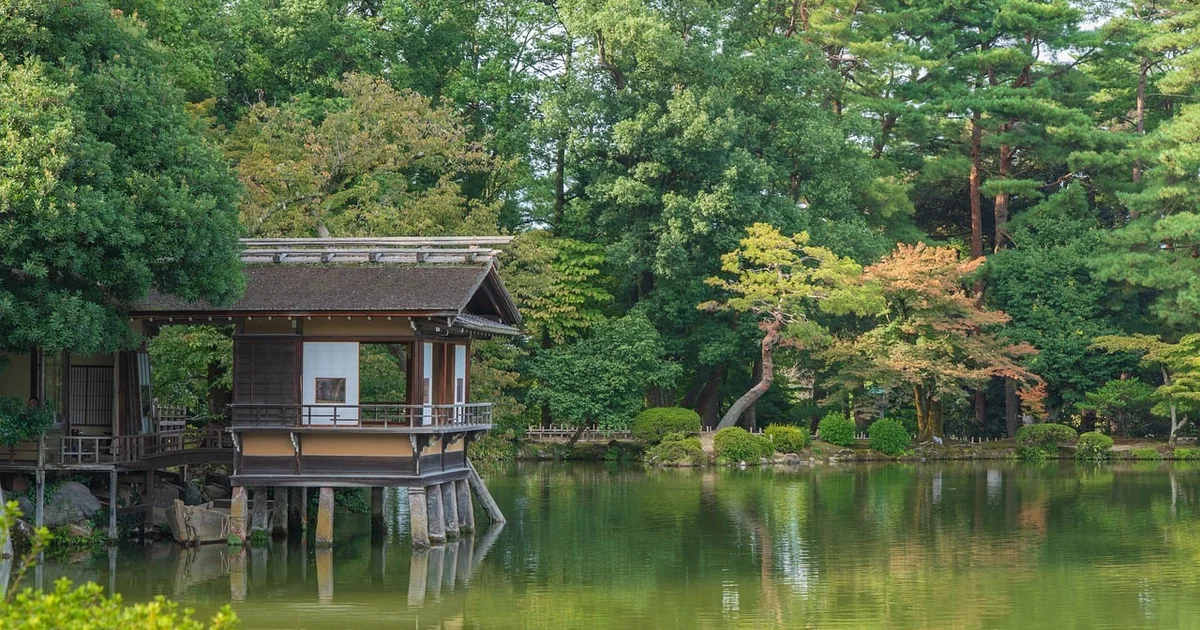
Winter strips away the obvious and leaves behind the essential. In the Japanese Garden at Butchart, that essence includes bare branches that trace elegant lines across the sky, evergreens that hold their shape through the coldest months, and textured surfaces — bark, moss, stone, wood — that demand a slower pace of looking. Cherry’s photographs document five features that deserve special attention. Each one represents a deliberate choice by the garden’s designers, and each one becomes more visible when the growing season has not yet begun.
Five Hidden Gems Worth Seeking Out
The following five elements are easy to overlook during a hurried visit. They reward the patient observer with layers of craftsmanship and natural beauty. Whether you are planning a trip to Butchart or simply studying Japanese garden design from home, these details offer lasting inspiration.
1. The Renewed Garden Border Edging
Cherry mentioned in her notes that the border edging had been refreshed since her last visit. She described it as a work of art, and her close-up photographs confirm that this is no ordinary garden trim. The edging is made from cut branches of various lengths, stacked and arranged in a deliberate, almost sculptural pattern. Instead of a uniform line of identical stakes, the installation uses pieces that range from short stubs to longer segments, creating a rhythm of heights and thicknesses that feels organic rather than mechanical.
This technique draws on a traditional Japanese approach to defining garden spaces. Rather than relying on manufactured metal or plastic borders, the designers used natural materials that will eventually decompose and return to the soil. The varying lengths of the branches echo the irregularity found in nature — a forest edge, for instance, rarely forms a straight line. The result is an edging that does more than separate path from bed. It becomes a visual anchor, drawing the eye downward and encouraging visitors to notice the ground plane as an active part of the composition.
For home gardeners who want to replicate this effect, the key is variety. Collect branches from pruning projects around your own yard — avoid treated lumber or pressure-treated wood, as chemicals can leach into the soil. Mix species for different bark textures and colors. Cherry’s photographs show a mix of darker and lighter woods, some with smooth bark and others with rougher surfaces. Arrange them by hand, adjusting the spacing until the line feels natural rather than rigid. The result will cost almost nothing and will age gracefully over several seasons.
2. The Cloud-Pruned Japanese Black Pine
Japanese black pine (Pinus thunbergii, hardy in USDA Zones 5 through 8) appears throughout the Japanese Garden at Butchart. In the wild, this species can reach 60 feet in height. Within the garden, careful pruning keeps it compact and sculptural. The most striking example Cherry photographed shows the technique known as niwaki — cloud pruning — in which branches are shaped into flattened, layered tiers that resemble floating clouds.
Cloud pruning originated in Japan as a way to bring the scale of ancient mountain landscapes into the confined space of a garden. A single pine, pruned in this style, can suggest a windswept cliffside or a centuries-old tree growing on a rocky slope. The process requires annual maintenance and a steady hand. Gardeners selectively remove lower branches, shorten new growth, and wire remaining branches into position. The result is a tree that looks both ancient and carefully composed.
Cherry’s photographs capture this pine in late winter, when the cloud-like pads of needles are fully visible against the bare sky. Without leaves from surrounding deciduous trees to compete for attention, the pine’s structure becomes the focal point. Visitors who walk past quickly might miss the subtle asymmetry of the branches — one side extends farther than the other, creating a sense of movement and balance that feels natural despite being entirely man-made.
Home gardeners with limited space can still enjoy this aesthetic. Dwarf cultivars of Japanese black pine, such as ‘Thunderhead’ or ‘Kotobuki’, stay smaller and respond well to pruning. Even a container-grown specimen on a patio can be shaped into a simplified cloud form over several years. The key is patience: niwaki is not a one-season project but a long-term relationship with the tree.
3. The Winter Pergola as Architectural Backbone
Most visitors to Butchart’s Japanese Garden in peak season barely notice the pergola. It sits quietly along one of the main paths, its wooden beams supporting climbing plants that eventually cover it in a cascade of green. In late winter, however, the pergola stands fully exposed. Cherry’s photographs show it as a clean, geometric structure that anchors the garden’s softer elements.
The pergola serves several functions simultaneously. It defines a transition zone between two sections of the garden, creating a sense of passage. It provides partial shade during hot summer months, protecting visitors and understory plants alike. And it offers vertical interest in a landscape that otherwise stays low to the ground. The beams are spaced at intervals that allow dappled light to filter through, casting shifting patterns on the path below.
Cherry noted that this pergola will support climbing plants during the growing season. In late winter, however, the bare framework reveals the craftsmanship of its construction. The joinery is clean, the proportions are deliberate, and the wood has been allowed to weather naturally rather than being stained or painted. This honesty of materials — letting wood age to gray rather than forcing it to stay new-looking — is a hallmark of Japanese design philosophy.
For anyone designing a garden structure at home, the lesson is to consider how it will look in every season. A pergola that disappears under vines for six months of the year still needs to hold its own visually during the dormant months. Choose materials that age well. Consider the spacing of beams and rafters. Place the structure where it will frame a view or mark a transition, not just as an empty decorative gesture.
4. The Moss Carpets That Thrive in Pacific Northwest Winters
Moss is everywhere in the Pacific Northwest. It grows on tree trunks, on rocks, on roof shingles, on old fences. In most gardens, it is treated as a nuisance. In a Japanese garden, moss is a treasure. The Butchart Japanese Garden embraces moss as a ground cover, allowing it to spread into thick carpets that soften the edges of paths and fill the spaces between stones.
Cherry’s photographs show expanses of moss that look almost luminous in the low winter light. Without broad leaves from deciduous plants to compete for attention, the moss becomes a dominant visual element. Its texture ranges from velvety smooth to slightly tufted, depending on the species and the moisture level. In late winter, after months of rain, the moss is at its most lush. Cherry noted that these large carpets of green might make visitors forget the photos were taken in late winter — the vitality of the moss reads as springlike even in February.
Moss offers practical benefits beyond its appearance. It suppresses weed growth, retains moisture in the soil, and provides a soft, quiet surface that absorbs footsteps. It also creates a microhabitat for small insects and amphibians. In Japanese garden tradition, moss signals age and stability. A garden with well-established moss feels settled, as though it has been there for generations.
Home gardeners who want to encourage moss should start by assessing their site conditions. Moss thrives in shade, acidic soil, and consistent moisture. If your yard has a damp, shady corner where grass struggles, moss may be the solution. You can transplant moss from another part of your property (with permission if it is not your land) or purchase moss spores from specialty suppliers. Press the moss into bare soil, keep it moist, and avoid walking on it until it establishes. Within a season or two, you may have your own carpet of green.
5. The Bare Branch Architecture of Deciduous Trees
The final hidden gem in Cherry’s collection is not a single element but a quality that pervades the entire garden in late winter. The bare branches of deciduous trees — Japanese maples, cherry trees, and other species — create a network of lines that would be invisible during the growing season. Without leaves, each branch becomes a drawing in space. The angles of the forks, the taper of the twigs, the way the branches cross without touching — all of these details become part of the garden’s visual language.
You may also enjoy reading: 13 Reasons You Need the imolaza Smart Sprinkler.
Cherry’s photographs capture this branch architecture from multiple angles. In some images, the branches frame a view of a distant structure. In others, they create a canopy overhead, filtering the pale winter sunlight. The effect is layered: closer branches appear darker and more detailed, while farther branches recede into a softer gray. This depth of field is something that leafed-out trees cannot achieve in the same way.
Japanese garden design has always valued the winter silhouette of trees. The practice of edaburi — the art of branch arrangement — treats each limb as a compositional element. Gardeners train trees from a young age, removing crossing or crowded branches and encouraging those that will create an interesting silhouette. The goal is a tree that looks beautiful even when completely bare.
For home gardeners, this is a reminder to consider winter appearance when selecting trees. A tree with an interesting branching pattern — contorted filbert, corkscrew willow, Japanese maple — will reward you in every season. Prune deciduous trees in late winter while the branches are visible, and take the opportunity to study their structure. Remove branches that cross or rub, and thin crowded areas to let light and air move through the canopy. The result will be a tree that gives you something to look at even in the depths of winter.
Practical Takeaways for Your Own Garden
The butchart japanese garden gems that Cherry documented offer more than just visual pleasure. They provide a blueprint for designing a garden that works in every season. Here are three principles you can apply at home, drawn directly from what Cherry’s photographs reveal.
First, prioritize structure over color. A garden that relies entirely on flowers will look empty for half the year. A garden built on strong bones — well-pruned trees, thoughtful hardscaping, textured ground covers — stays interesting even when nothing is in bloom. The Japanese Garden at Butchart demonstrates this principle with every bare branch and every mossy stone.
Second, use natural materials honestly. The cut-branch edging, the weathered pergola wood, the unpolished stones — none of these materials pretend to be something they are not. They age naturally, develop patina, and blend into the landscape. Manufactured materials often look out of place in a garden setting. Natural materials, by contrast, feel like they belong.
Third, design for slow looking. Japanese gardens reward the visitor who stops, crouches down, and studies a single square foot of ground. The moss, the edging, the bark texture, the way light falls through bare branches — these details are easy to miss at a walking pace. Cherry’s photographs remind us that the best garden experiences come from slowing down and paying attention.
Planning Your Visit to See These Gems in Person
If Cherry’s photographs have inspired you to see the Butchart Japanese Garden for yourself, consider timing your visit for late winter or early spring. The months of February and March offer the best chance to see the garden’s bones without the distraction of peak-season crowds. The moss will be at its greenest, the bare branches will be fully visible, and the edging work will stand out clearly against the dormant beds.
The Butchart Gardens are located on Vancouver Island, about 20 minutes north of Victoria by car. The Japanese Garden is one of several themed garden rooms on the property, including the Sunken Garden, the Rose Garden, and the Mediterranean Garden. Allow at least two hours to explore the Japanese Garden thoroughly — more if you plan to photograph it. Cherry’s approach of visiting repeatedly and focusing on different details each time is a model worth following.
For those who cannot travel to British Columbia, the principles visible in Cherry’s photographs can be applied anywhere. A Japanese garden aesthetic does not require a specific climate or a large budget. It requires attention to detail, patience with natural materials, and a willingness to see beauty in every season — even the quietest one.
A Final Look at What Makes These Details Special
Cherry Ong’s photographs of the Butchart Japanese Garden capture something that most visitors never see. They show a garden in its quietest moment, stripped of ornament and reduced to its essential elements. The butchart japanese garden gems she documented — the artistic edging, the cloud-pruned pine, the winter pergola, the moss carpets, the bare branch architecture — are not hidden because the garden tries to conceal them. They are hidden because most visitors do not know where to look or when to visit.
Late winter at Butchart is a gift for the observant gardener. The crowds are thin, the light is soft, and the garden’s design principles are laid bare. Cherry’s eye for composition and her willingness to photograph the “unshowy” parts of the garden remind us that beauty does not always arrive in bright colors. Sometimes it arrives in gray light, on bare branches, in moss that has been growing for decades, and in the careful arrangement of cut branches along a path. Those are the details that make a garden worth visiting in any season.
If spring is already blooming in your part of the world, consider tucking these ideas away for next winter. The next time your garden enters its dormant phase, go outside with a camera or a notebook. Look for the bones. Study the edging. Notice the branches. You may discover that your own garden holds hidden gems you had never seen before.