Hot pepper gardening in Minnesota starts with starting seeds indoors eight weeks before the last frost. Transplant outdoors when nights exceed 50°F. Use black plastic mulch to warm soil.
Harvest when green or ripe. Remove seeds and membranes to reduce heat. Minnesota hot summer nights may cause flower drop, so choose tolerant varieties. Hot pepper gardening is the practice of cultivating chili pepper plants for their fruits, which contain capsaicin, the compound responsible for their spicy heat.
When Should You Start Hot Pepper Seeds Indoors in Minnesota?
Start preparing eight weeks before your last frost date.
- Sow seeds eight weeks before transplanting. That places seed starting around mid-March to early April in most of Minnesota, targeting outdoor planting after the danger of frost passes.
- Plant seeds one-fourth inch deep in sterile soilless mix. A commercial germination mix reduces the risk of damping-off disease.
- Keep seed flats at 80°F to 90°F until sprouts appear. Use a heating mat to hold that temperature range; consistent warmth drives fast germination.
- After seedlings emerge, aim for a soil temperature of 70°F. Move the trays off the heat mat if needed to avoid lanky growth.
- Thin seedlings to two to three inches apart after the first true leaves show. Snip the weaker plants at soil level so the strongest ones have room.
- Pinch off any flower buds that appear indoors. Removing early blooms forces the plant to put energy into roots and stems, not fruit, until just before transplanting outdoors.
- When plants are four to five inches tall and six to eight weeks old, gradually reduce watering. Slightly drier conditions toughen the stems and prepare seedlings for the garden.
- If buying transplants, select sturdy plants up to one foot tall with stems at least the width of a pencil. Avoid any with leaf spots, which can introduce disease into your garden.
Choosing the Right Hot Pepper Varieties for Minnesota
Choosing a variety suited to Minnesota’s variable temperatures makes the next step easier.
- Prioritize smaller-fruited peppers. Smaller-fruited peppers tolerate cool and hot temperatures better than large bell peppers. That makes varieties like jalapeños, Thai chiles, and Hungarian wax peppers more reliable in a Minnesota season that swings from chilly spring nights to hot July afternoons.
- Choose resistant varieties when possible. Resistant varieties will not become diseased. If a resistant option isn’t available, a tolerant variety will become diseased, but the infection is less serious and spreads slower than in susceptible types.
- Consult the Cornell University list. Cornell University provides a full list of Disease Resistant Vegetable Varieties, including peppers, to help you select seeds or plants with built-in protection.
How to Harden Off and Transplant Pepper Seedlings
- Begin gradual outdoor exposure 10 to 14 days before transplanting. Start with a few hours in a sheltered spot and increase the time each day. Bring plants indoors if night temperatures drop below 55°F during this phase.
- Transplant only when nighttime lows consistently stay above 50 degrees Fahrenheit. In much of Minnesota, that target arrives in late May or early June.
- Set plants out in late afternoon or on a cloudy, calm day. This reduces transplant shock.
- Space plants 18 inches apart in rows 30 to 36 inches apart. If daytime temperatures remain below 60°F, tighten the spacing to let plants shade each other and retain warmth.
- Avoid beds where tomatoes, potatoes, peppers, eggplants, or tomatillos grew in the last three to four years. Rotating away from nightshade family crops lowers the risk of soil-borne diseases.
- Bury peat pots completely so no top edge pokes above the soil surface. Exposed edges wick moisture away from the root ball.
- Apply black plastic mulch immediately after planting. The plastic warms the soil, decreases weed growth, and maintains soil moisture. Dry soil, temperatures above 90°F, or night temperatures below 60°F or above 70°F can weaken plant growth, so the mulch helps regulate conditions.
What Soil and Fertilizer Do Hot Peppers Need?
Once transplanted, focus on soil preparation and feeding to keep plants productive.
- Target a soil pH between 6.5 and 7. Peppers grow best in that neutral range, so test your soil and adjust with lime or sulfur as needed.
- Use a fertilizer low in phosphorus unless a soil test shows a deficiency. Overloading phosphorus can tie up other nutrients and isn’t necessary for fruit set.
- Limit nitrogen or you’ll grow a leafy plant with few fruits. Excessive nitrogen fertilization results in bushy, leafy plants that are slow to bear fruit. Focus on a balanced or potassium-rich feed once flowering begins.
- Never apply “Weed and Feed” products near vegetable beds. Fertilizers containing weed killer may kill vegetable plants.
- Incorporate well-rotted manure or compost in spring or fall. This builds soil structure and adds slow-release nutrients.
- Skip fresh manure entirely. Fresh manure may contain harmful bacteria and increases weed problems.
How to Water and Mulch Your Pepper Plants
Consistent watering and mulching will protect your peppers through Minnesota’s summer.
- Soak the soil thoroughly at least once a week if the plants don’t receive one inch of rain. Let the water penetrate deep to encourage a robust root system.
- Sandy soils need watering more often than once a week. Check the top few inches; if it’s dry before the week is up, water again.
- Avoid overhead sprinkling. Wet leaves and soil splash spread diseases. Use a soaker hose or drip irrigation instead.
- Lay organic mulch three to four inches deep. Grass clippings, straw, or shredded leaves suppress weeds and hold soil moisture.
Managing Pests and Diseases in Minnesota Pepper Gardens
Even with good care, watch for common pests and diseases that target peppers.
- Cutworms chew stems at the soil line. Protect young transplants with cardboard collars or simply check each morning and remove the pests by hand.
- Aphids cause leaf curling, discoloration, and sticky leaves. A strong spray of water knocks them off; insecticidal soap handles heavy infestations.
- Tomato hornworms chew holes in pepper fruit. Handpick these large caterpillars when you spot them.
- Bacterial spot creates spots on both leaves and fruit. Prevent its spread by watering at the soil level and spacing plants for good air flow.
- Viruses cause twisted leaves and bumps on fruit. Infected plants cannot be cured; pull and dispose of them promptly to save the rest of the bed.
- Blossom end rot makes the tip of the fruit scabbed or moldy. This physiological disorder often ties back to inconsistent watering or calcium uptake.
- Sunscald leaves flat, tan areas on peppers developed on small plants. It results from sudden exposure to intense sun. White sunburn patches also appear when the leaf canopy is too thin to protect the fruit.
- Hot days and hot nights in Minnesota can cause pepper flowers to drop, reducing fruit production. Choose heat-tolerant smaller-fruited varieties to minimize losses.
If you can’t identify a problem, the University of Minnesota Plant Disease Diagnostic Clinic offers diagnostic help. The Ask a Master Gardener service lets you send pictures for advice.
When and How to Harvest Hot Peppers
Once your peppers are ready, harvest them at the right stage for best flavor.
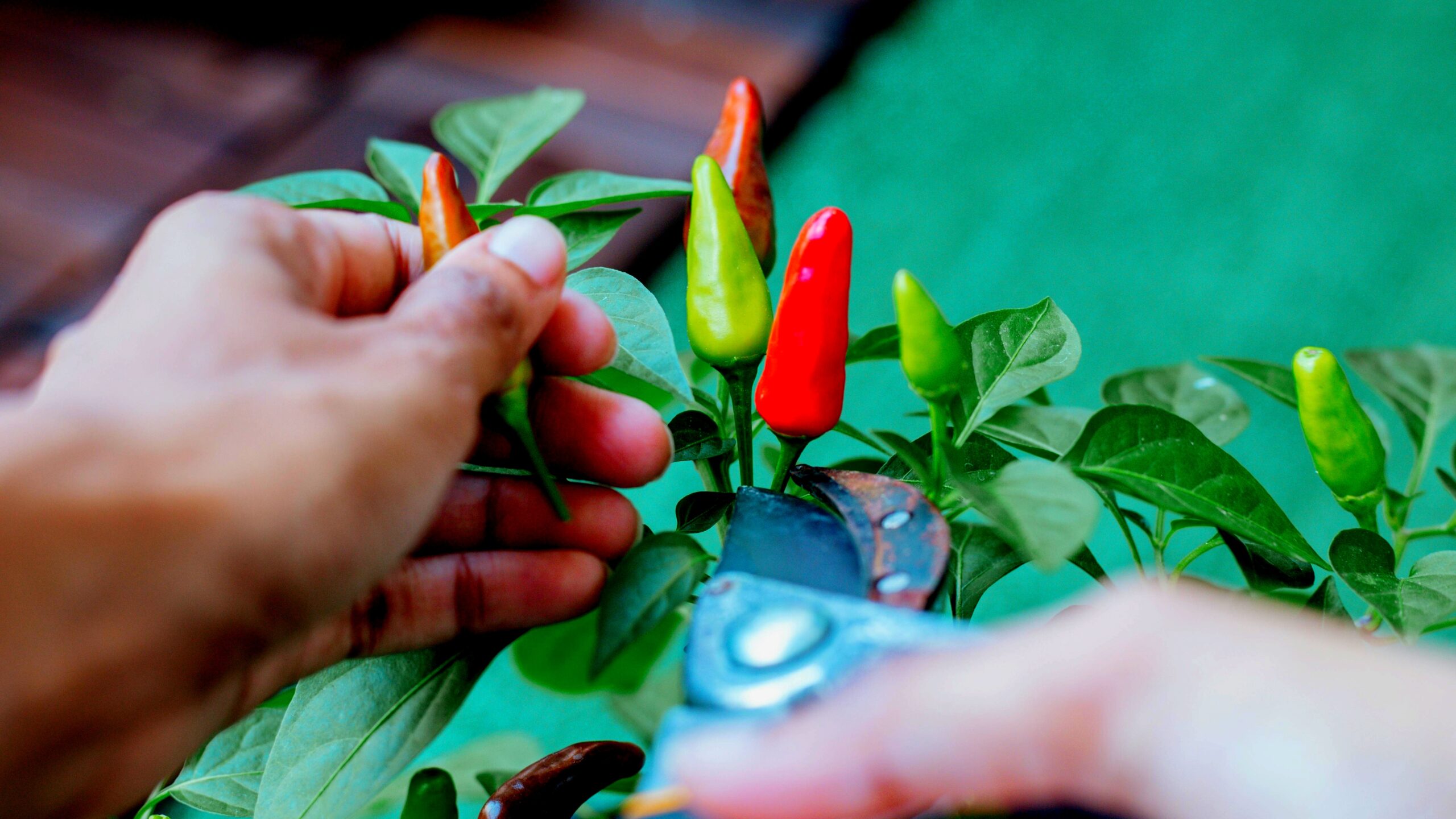
- Wear gloves when picking hot peppers. Capsaicin can linger on skin and cause irritation, especially if you touch your eyes later.
- Harvest when the fruit reaches eating size and color, regardless of final ripeness. Peppers can be harvested when green or yellow, such as jalapeños and Hungarian wax peppers, without waiting for them to turn red. Leaving fruit on the plant longer often increases heat and sweetness, but pulling them early triggers the plant to set more pods.
- Cut or gently twist fruit from the stem to avoid breaking branches.
- Store harvested peppers in the refrigerator for a week or more. Keep in mind that peppers are sensitive to cold; prolonged exposure may pit or soften the skins.
Preserving Heat and Storing Your Harvest
After harvest, learn how to reduce heat and preserve your crop.
- Capsaicin is the compound responsible for a pepper’s heat. It concentrates in the seeds and the whitish internal membrane that holds them in place.
- Remove seeds and membranes before eating or cooking to reduce hotness. That simple prep step tames the fire without changing the pepper’s essential flavor.
For longer storage, consider drying, freezing, or pickling — each method locks in peak-season taste well into winter.
Your Complete Minnesota Hot Pepper Season at a Glance
A successful hot pepper season in Minnesota runs on a clear calendar. Start seeds indoors under bright lights and steady warmth in mid-March. Harden off the seedlings gradually in May, then transplant them into soil warmed with black plastic mulch after frost risk drops.
Feed lightly, water deeply, and mulch thickly through the summer. Harvest as pods reach size, and strip seeds and membranes to dial back heat. By leaning on smaller-fruited varieties and staying ahead of cool nights and hot spells, you pull a steady harvest from a short but intense growing window. Make notes on what worked, and next year’s crop will run even smoother.
FAQ
Q: Why do my pepper flowers drop off?
A: Hot days and hot nights in Minnesota can cause pepper flowers to drop, reducing fruit production. Choose smaller-fruited varieties that tolerate temperature swings better.
Q: How do I reduce the heat of hot peppers?
A: Capsaicin, the compound that makes peppers hot, is concentrated in the seeds and the whitish internal membrane. Removing both before cooking or eating significantly reduces the heat. Q: What is the difference between resistant and tolerant pepper varieties?
A: Resistant varieties will not become diseased, while tolerant varieties may become infected but the disease is less serious and spreads slower than in susceptible plants.