There is a quiet revolution happening in gardens across the country, and it does not involve fussy heirloom tomatoes or temperamental roses. Ancient grain plants are stepping out of the agricultural field and into the flower border. These are crops that sustained civilizations for millennia before industrial agriculture narrowed our plates to wheat and corn. Now they are reappearing on gourmet menus and in seed catalogs at the same time. The beauty of growing these resilient species is that they are often far more forgiving than pampered hybrid vegetables. They bring heat tolerance, drought resistance, and structural drama to a mixed planting. By weaving ancient grain plants into your landscape, you bridge the gap between a productive kitchen garden and a curated floral display. Let us explore seven stunning options that will transform your borders into edible works of art.
Why Ancient Grains Belong in Your Borders
Modern yards are often modest or already crowded with plants. The good news is that integrating ancient grain plants does not require a dedicated grain plot. Most fit into a vegetable garden or mixed border without much planning. They thrive in the same conditions as your favorite summer annuals — full sun and well-draining soil. Zinnias, sunflowers, and marigolds make excellent companions.
Because many of these species originated in challenging climates, they possess a natural drought tolerance that makes them perfect for water-conscious gardeners. Whether you are in a northern USDA zone with a short growing window or the humid south, sowing now ensures they establish in time to produce heavy seed heads by mid-to-late summer. While they are not heavy feeders, a light application of organic mulch or a balanced fertilizer can help them reach maximum height — for some, a towering 8 feet (2.4 m). Just consider their structural role. Use taller grain crops as living screens, with airy plume options softening the edges of a path.
Here are the seven gorgeous grains you can weave into garden gold.
1. Amaranth
The Victorians knew what they were doing when they called this plant love-lies-bleeding. While they grew amaranths for the bold weeping tassels that look like cascading velvet, modern gardeners appreciate that the seeds are a superfood, high in protein and lysine. This grain is poppable but can also be ground into flour or cooked whole.
The grain varieties produce massive seed heads in deep burgundy, molten gold, and lime green, stretching 2‑3 feet (60‑90 cm) long. Plants can reach 6 feet (1.8 m) by late summer, providing an architectural punch that few other annuals can replicate. To get the best from your amaranths (Amaranthus spp.), find a sunny spot with poor to average soil. Too much nitrogen leads to more leaves and fewer seeds. They are drought-tolerant once established, but staking early on will prevent toppling during late-summer rainfall. Watch seed heads closely in late August. When the seeds pop out easily between your fingers, it is time to harvest. Try Hopi Red Dye for deep purple foliage or Golden Giant for sun-colored heads.
2. Quinoa
Quinoa (Chenopodium quinoa) is often treated as fussy, which comes from its love of cool summer nights. A relative of spinach and beets, it appreciates rich organic soil. Meet these conditions, and quinoa becomes a spectacular annual in northern and coastal US zones 4‑10. Its seed heads develop in rich sunset hues of neon pinks, oranges, and yellows, making the plant look more like a deliberate ornamental than a staple crop.
One common challenge is that quinoa does not tolerate temperatures above 95°F (35°C). If you live in a hot southern region, consider planting it in partial shade or timing your sowing for early spring or late summer. A problem gardeners often face is bitter saponins in the seeds. These natural compounds deter pests but must be rinsed before eating. The solution is simple: after harvesting and drying the seed heads, place the seeds in a fine-mesh strainer and rinse under cold running water for 30 seconds. This removes the bitter coating and leaves you with sweet, nutty grain.
3. Teff
Teff (Eragrostis tef) is the tiny powerhouse behind Ethiopian injera. It is one of the smallest grains in the world — about the size of a poppy seed — yet it adds a delicate, airy texture to borders. The plant grows 2‑4 feet tall (0.6‑1.2 m) with graceful, nodding seed heads that catch the morning light.
Teff is exceptionally heat-tolerant and matures in as little as 45 days, making it ideal for short-season growers or succession planting. A problem many gardeners encounter is that teff seeds are so tiny that they can be washed away by heavy rain or overwatering. The practical solution is to sow teff seeds on the surface of moist soil and gently press them in without covering them. Water with a fine mist until they germinate in 3‑5 days. Once established, teff is drought-tolerant and will add a soft, grassy movement to your border. For color, look for the variety Champagne, which produces ivory seed heads tinged with pink.
4. Millet
Millet is a broad category that includes several species, but for ornamental purposes, the most striking is foxtail millet (Setaria italica). Its thick, fuzzy spikes resemble fox tails and come in shades of burgundy, gold, and dark brown. Plants reach 3‑6 feet (0.9‑1.8 m) and provide a bold vertical accent.
A specific challenge with millet is that birds love the seeds almost as much as humans do. If you plan to harvest, you must protect the seed heads with mesh bags or row cover as they mature. Alternatively, embrace the wildlife interaction — let the birds feast and enjoy their lively presence in the garden. Millet is incredibly low-maintenance, tolerating poor soil and irregular watering. For deep burgundy color, try Purple Majesty, a variety that won an All-America Selections award for its vibrant foliage and seed heads.
5. Buckwheat
Buckwheat (Fagopyrum esculentum) is not a true grain but a pseudocereal related to rhubarb. Its triangular seeds are rich in rutin, a compound that supports circulation. In the border, buckwheat shines with clouds of small white flowers that bees adore. It blooms within 30 days of sowing, offering a rapid filler in gaps between slower plants.
You may also enjoy reading: 7 Secrets to Get Biggest Sweet Potato Crop.
A common problem with buckwheat is its short stature — typically 2‑3 feet (0.6‑0.9 m) — which can be overshadowed by taller neighbors. The solution is to plant buckwheat in drifts at the front of a border or along pathways. It also makes an excellent green manure; after flowering, you can chop it down and let it decompose to enrich the soil for the next crop. For a twist, try the variety Giant Japanese, which can reach 4 feet (1.2 m) and produces larger seeds.
6. Spelt
Spelt (Triticum spelta) is an ancient wheat relative with a nutty flavor and rustic charm. It grows 3‑5 feet tall (0.9‑1.5 m) with slender, wheat-like heads that turn golden in late summer. Spelt is more resilient than modern wheat, tolerating poor soils and dry spells without complaint.
One challenge with spelt is that its heavy seed heads can cause lodging (falling over) during strong winds or rain. To prevent this, plant spelt in a block rather than a single row, so the stalks support each other. Or stake the perimeter with twine. Spelt adds a pastoral, meadow-like feel to borders. Combine it with blue salvias or purple coneflowers for a classic cottage-garden look. Harvest the grain by rubbing the heads between your palms to release the seeds, then winnow away the chaff.
7. Barley
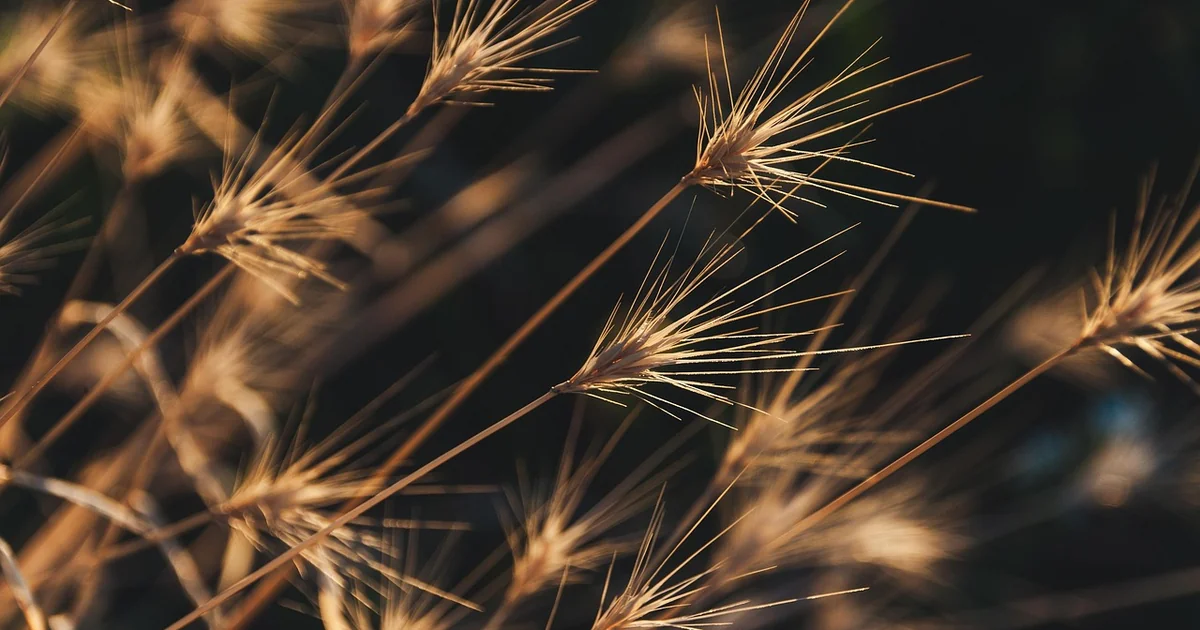
Barley (Hordeum vulgare) is one of the oldest cultivated grains, and ornamental varieties bring exceptional texture to borders. Hooded barley (Hordeum jubatum) produces delicate, nodding spikes that shimmer in the breeze like strands of silk. It grows 2‑3 feet tall (0.6‑0.9 m) and is hardy in zones 4‑10.
A specific problem with ornamental barley is that its awns (the long bristles) can be irritating to skin and eyes during harvest. The practical solution is to wear gloves and long sleeves when the seed heads are fully dry. If you grow barley for culinary use, choose hull-less varieties like Himalayan Hull-less, which thresh easily. In the border, barley pairs beautifully with purple sage or silver artemisia, creating a soft palette of greens and greys.
Harvesting and Using Your Ancient Grains
Harvest time varies by grain, but a general rule is to wait until the seed heads turn brown and the seeds are hard. For amaranth and quinoa, the seeds should pop off easily when rubbed between your fingers. Cut the heads and hang them upside down in a paper bag in a dry, airy location for two weeks.
Processing small quantities is simple. Rub the heads over a bowl to release the seeds, then pour them from one container to another in front of a fan to blow away the chaff. Store the cleaned seeds in an airtight jar in the pantry. Cook them as you would rice, using a 2:1 water-to-grain ratio. Toasted amaranth seeds make a crunchy topping for salads. Quinoa flakes can substitute for oatmeal. Teff flour adds a nutty richness to pancakes.
A Final Word on Designing with Ancient Grains
Integrating these resilient crops into your borders does more than feed you. It creates a landscape that tells a story — one of human history, resilience, and beauty. By growing ancient grain plants, you become part of a slow food movement that started thousands of years ago. Your garden becomes a living museum, and every seed head is a testament to the plants that built civilizations.