Your Backyard Bird Buffet Has Uninvited Guests
You set up a beautiful feeder hoping to attract finches, chickadees, and cardinals. Instead, you notice rustling in the undergrowth and a long tail disappearing under the shed. The dreaded bird feeder rats problem has arrived. If you’ve spotted rat droppings near the feeder or seen rodents darting along fence lines at dusk, you are not alone. Warmer weather drives rat activity higher, and a bird feeder with spilled seed becomes an all-you-can-eat diner for them.
The good news? You do not have to stop feeding your backyard birds to solve this. Rats are predictable creatures. They follow patterns, rely on cover, and avoid exposure. With a few strategic changes, you can redirect them elsewhere without harming a single feather. Here are five quick fixes that work with rodent instincts rather than against them.
1. Move Your Feeder to the Center of the Lawn
This single change solves more bird feeder rats issues than any gadget or repellent. According to UK gardening expert Alan Titchmarsh, feeder placement is everything. “The key to success with them is to position them in the open, in the middle of your lawn,” he explains. “Rats hate running through exposed areas. If you put your bird feeder alongside a hedge or wall, that’s great for rats, as they have shelter.”
Rats are cautious by nature. They rely on edges — fences, hedges, walls, and garden structures — to move around unseen. These edges act as highways that keep them hidden from predators like cats, owls, and hawks. When a feeder sits right next to a hedge, a rat can dash out, grab a mouthful of seed, and retreat to safety in under three seconds. That sense of security makes the feeder irresistible.
Why Open Space Discourages Rodents
Move that same feeder into the middle of your lawn, and the dynamic flips completely. Suddenly the rat must cross ten or fifteen feet of open grass with no cover. From a rat’s perspective, that is an invitation to become someone’s dinner. They will avoid the risk almost every time. Birds, by contrast, do not care about open space. They fly in from above, land directly on the feeder, and leave the same way. Open ground means nothing to them.
Imagine a reader who placed their feeder beside a fence for easy refilling. They noticed rat droppings within a week. Moving the feeder just twelve feet into the lawn eliminated the problem entirely. That is a realistic outcome. Rats are creatures of habit, and removing their cover removes their confidence.
A Bonus Benefit for Your Birds
There is a second advantage to this approach. A feeder in the open gives birds a clear line of sight in every direction. They can spot approaching predators from a distance. This reduces the risk of ambush from neighborhood cats or hawks that might use a hedge as a staging point. Your birds get a safer dining experience, and you get a better view of them as they visit. It is a small change that improves the experience for everyone except the rats.
2. Install a Weight-Activated or Rat-Proof Feeder
Not every yard has a large open lawn. If your garden is small or paved, moving the feeder to the center may not be practical. In that case, a feeder designed specifically to exclude heavier animals is your best defense against bird feeder rats.
How Weight-Sensitive Feeders Work
These feeders use a simple mechanical principle. The feeding ports stay open when a lightweight bird lands on the perch. But when a heavier animal — a rat, squirrel, or large raccoon — steps onto the same perch, the ports close automatically. The mechanism relies on a spring or counterweight calibrated to the average weight of your target birds.
The Dreamdrawer 360° Feeding Perch Tray is one example. Its weight-sensitive system closes the feeding ports the moment a rat or squirrel jumps on. Birds weighing under a certain threshold feed freely. The Wildpark Squirrel Proof Bird Feeder works similarly, with a curved body that prevents rodents from hanging upside down to access the seed. The SWISSINNO No Mess Hanging Bird Feeder takes a different approach, using a stainless steel cable to suspend the feeder so rats have no direct climbing route to the food source.
What to Look for in a Rat-Proof Design
When shopping for a feeder to deter rats, focus on three features. First, the perch must be weight-sensitive or retractable. Second, the seed reservoir should be enclosed with no external ledges where a rat could cling. Third, the hanging mechanism should use a smooth cable or pole that rats cannot climb. Avoid wooden feeders with rough surfaces — rats can climb almost any textured material. Metal and smooth plastic are much harder for them to grip.
Keep in mind that no feeder is 100% rat-proof forever. A determined rodent may eventually find a workaround. But a well-designed weight-activated feeder reduces visits by roughly 80 to 90 percent in most backyard settings, based on user reports across gardening forums.
3. Eliminate Spilled Seed and Debris
Even with perfect feeder placement, spilled seed on the ground attracts rats. A single sunflower seed shell contains enough calories to interest a foraging rodent. When seed accumulates day after day, it creates a reliable food source that rats will travel considerable distances to exploit.
Use a Seed Tray or Catcher
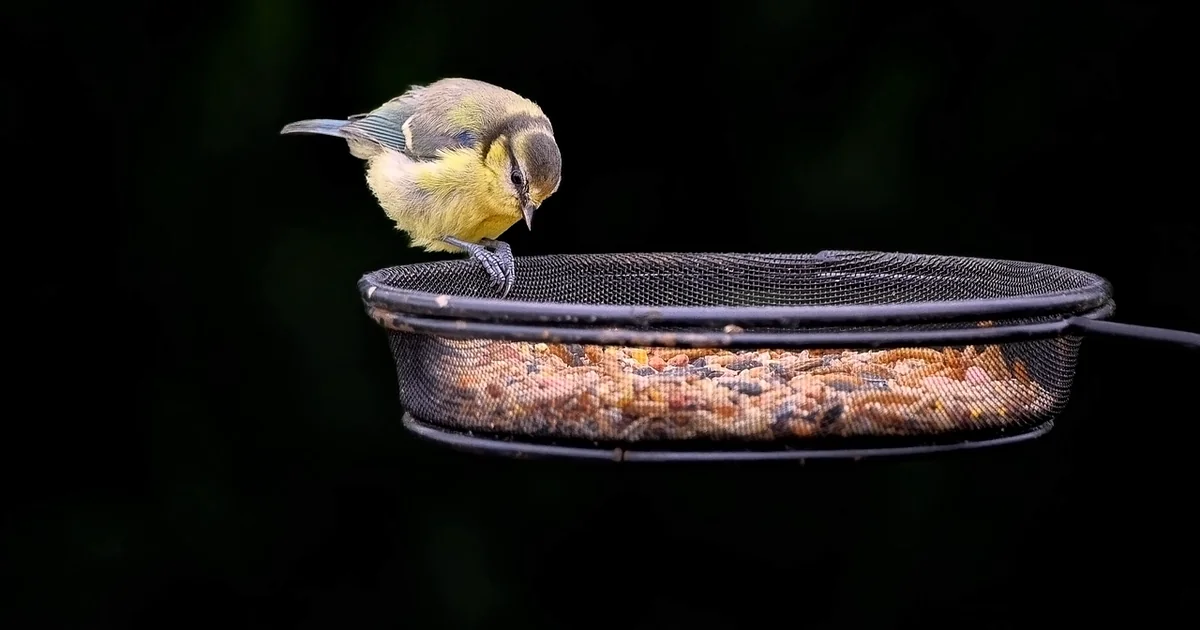
A seed catcher tray hangs beneath the feeder and catches falling debris before it hits the ground. These trays reduce ground spill by about 60 to 70 percent depending on the design. Empty the tray every two to three days, or more often during wet weather when seed can rot and attract insects. Rotting seed also produces odors that rats can detect from a distance.
Choose No-Mess Seed Blends
Another effective strategy is switching to a no-mess seed blend. These blends contain hulled sunflower hearts, shelled peanuts, and cracked corn — all without the inedible outer shells. Birds eat every piece, so nothing falls to the ground. This eliminates the primary food source that draws rats to the feeder area in the first place.
No-mess blends cost slightly more than traditional seed mixes, but they also last longer because there is no waste. Over a month, the cost difference is often negligible, and the reduction in rodent activity is significant. For a reader who loves watching birds but has noticed rat droppings near the feeder, switching to no-mess seed is one of the fastest fixes available.
Clean the Area Weekly
If you prefer to keep using standard seed, commit to a weekly cleanup. Rake up shells and scattered seed from the ground beneath the feeder. Dispose of them in a sealed trash can, not a compost pile. Rats will happily dig through compost for leftover seed. A broom and dustpan take about five minutes — a small investment for a rat-free yard.
4. Remove Nearby Cover and Hiding Spots
Rats are edge-dwellers. They move along walls, fences, hedges, and garden structures because these provide cover from predators. Even if your feeder is in the middle of the lawn, rats may still approach if there is a continuous line of cover leading to it.
Trim Back Vegetation
Walk the perimeter of your yard and look for vegetation that touches or overhangs the ground near the feeder. Trim back low-hanging branches, dense shrubbery, and tall grass within ten feet of the feeder. This creates a buffer zone that rats must cross without cover. A gap of just three to four feet of bare ground is often enough to discourage them.
You may also enjoy reading: 5 Must-Have ALDI Garden Range Items.
Consider a gardener who faced a sudden rat problem after a mild winter. The feeder hung near a overgrown laurel hedge that provided perfect cover. Trimming the hedge back by two feet and removing a pile of fallen leaves beneath it eliminated the rat sightings within a week. The birds kept coming, and the rodents moved on to a neighbor’s compost heap.
Seal Access Points to Structures
Rats often enter yards through gaps in fences, holes in sheds, or openings under decks. Walk your property line and seal any gap larger than a quarter-inch. Use hardware cloth, steel wool, or expanding foam for small holes. For larger openings, consider buried fencing or concrete patching. Rats can squeeze through surprisingly small spaces — a gap the size of a quarter is enough for a young rat to pass through.
Removing cover does not mean stripping your yard bare. It means creating intentional open zones around the feeder while keeping the rest of your garden lush. The key is to make the feeder area feel exposed from every angle. Rats will not risk crossing that exposure.
5. Adjust Placement Seasonally and Monitor Activity
Rat behavior changes with the seasons. Warmer weather increases their activity and breeding rates. A female rat can produce five to six litters per year, each containing six to ten pups. That means a small problem in spring can become a large infestation by autumn. Seasonal adjustment of your feeder placement is a simple way to stay ahead of the curve.
Spring and Summer Strategy
During warmer months, rats are most active at dusk and dawn. They travel farther from their nests in search of food. Move your feeder to the most exposed spot in your yard during these months. If you have multiple feeders, space them at least fifteen feet apart to prevent rats from moving between them under cover.
Fall and Winter Adjustments
In colder months, rat activity slows but does not stop. They seek warmth and reliable food sources. If your yard has less foliage in winter, the open-lawn strategy becomes even more effective because there are fewer places to hide. However, you may need to move the feeder closer to your house for convenience during icy weather. Just ensure it remains at least six feet from any wall, hedge, or fence.
Keep a Simple Log
Tracking rat activity helps you spot patterns early. Note the date, time of day, and location whenever you see a rat near the feeder. After a week, you will likely see a pattern. If rats appear consistently at the same spot, that spot needs adjustment. If they appear only after heavy rain, check for seed spillage caused by wet conditions. A simple notebook or phone note takes thirty seconds but provides valuable insight.
For a reader with a small yard who thought the only safe spot for a feeder was against a wall, seasonal monitoring reveals that even a ten-foot move can make a difference. You do not need acres of lawn. You just need enough open ground to make rats feel uncomfortable.
Why These Five Fixes Work Together
Each fix targets a different aspect of rat behavior. Moving the feeder removes cover. Weight-activated feeders block access. Eliminating spillage removes the food source. Trimming vegetation removes hiding spots. Seasonal adjustment keeps the strategy effective year-round. Used together, they create a layered defense that rats find very difficult to overcome.
Rats are opportunistic but not reckless. They will always choose the easiest, safest food source. When your feeder stops being easy and safe, they will look elsewhere. They may move to a neighbor’s compost pile, a fallen fruit tree, or a garbage can with a loose lid. That is not your problem. Your problem is keeping your birds fed and your yard rat-free.
The same open lawn that deters rats also keeps your birds safe from ambush predators. It gives you a clearer view of the chickadees, goldfinches, and nuthatches that visit. It makes refilling easier and cleanup faster. It is a small change that improves the experience for everyone except the rodents. And that is exactly the outcome you want.
Your birds will not mind one bit. Promise.