Why Ancient Grains Deserve a Spot in Your Flower Border
Walk through any well-stocked seed catalog this season and you will notice something surprising. Alongside the familiar zinnias and marigolds, a new category of plants is claiming space. These are crops that fed entire civilizations for thousands of years before modern agriculture narrowed our diets to wheat, corn, and rice. Now they are showing up on restaurant menus and in garden beds at the same time. The reason is simple. Many of these plants are beautiful enough to anchor a flower border on appearance alone, while still producing nourishing harvests. The real advantage of growing these resilient crops is that they demand far less attention than pampered hybrid vegetables. They tolerate heat, handle poor soil, and produce reliably without constant fussing.
Integrating these dual-purpose plants into your landscape lets you blur the line between a productive kitchen garden and a curated ornamental display. They offer a unique way to play with height, texture, and color while cultivating something genuinely useful. May is an ideal window for sowing these hardy annuals. By planting now, you set the stage for summer harvests that feed both the body and the eye. From high-altitude Andean staples to sun-baked African grasses, there is an option here for nearly every climate and garden style. Let us look at what these ancient grain plants need to thrive in a modern yard.
What Ancient Grains Require in a Typical Garden
You might worry that growing grains requires sprawling fields or special equipment. The truth is far more forgiving. Most of these plants slip into a vegetable bed or mixed border without much rearranging. They thrive under the same conditions as your favorite summer annuals. Full sun and well-draining soil are the two non-negotiable requirements. These are perfect companions for sunflowers, zinnias, or marigolds.
Because many of these species evolved in challenging environments, they carry a natural tolerance for dry spells. That makes them excellent choices for gardeners who want to conserve water. Whether you garden in a short-season northern zone or the humid South, sowing in May gives them enough time to develop heavy seed heads by mid-to-late summer. They are not heavy feeders, but a light layer of organic mulch or a balanced fertilizer helps them reach their full stature. Some can tower up to 8 feet, or about 2.4 meters. Consider their structural role when placing them. Taller varieties work well as living screens, while airy plumes can soften the edges of a pathway.
7 Ancient Grain Plants to Add Color and Flavor to Borders
Here are seven specific ancient grain plants that deliver both visual drama and edible yields. Each one brings something different to the garden, from cascading tassels to sunset-colored seed heads.
1. Amaranth
The Victorians had a poetic name for this plant: love-lies-bleeding. They grew it for the bold weeping tassels that cascade like velvet ribbons. Modern gardeners appreciate that the seeds are a nutritional powerhouse, rich in protein and the amino acid lysine, which is often lacking in other grains. The seed heads on grain amaranth varieties can stretch 2 to 3 feet long, or roughly 60 to 90 centimeters, in shades of deep burgundy, molten gold, and lime green. Plants reach about 6 feet by late summer, offering an architectural presence that few annuals can match.
Amaranth prefers a sunny spot with poor to average soil. Too much nitrogen encourages leafy growth at the expense of seed production. Once established, it handles drought well, but staking early prevents toppling during heavy late-summer rain. Watch the seed heads closely in late August. When the seeds pop out easily between your fingers, it is time to harvest. Try ‘Hopi Red Dye’ for deep purple foliage or ‘Golden Giant’ for bright yellow heads. Amaranth grows as an annual in zones 2 through 11.
2. Quinoa
Quinoa often gets a reputation for being fussy, but that reputation comes from its preference for cool nights. Originating in the high Andes, it performs best where summer temperatures stay below 95 degrees Fahrenheit, or about 35 degrees Celsius. In northern and coastal US zones, roughly 4 through 10, quinoa is a spectacular annual. Its seed heads develop in rich sunset hues of neon pink, orange, and yellow, making them a striking addition to any border.
This plant is a relative of spinach and beets, and it appreciates rich organic soil. Give it consistent moisture during the early growing season, then ease off as the seed heads mature. The seeds are a complete protein, a rare trait in the plant kingdom, and they cook quickly for a nutritious side dish. Quinoa plants grow 4 to 6 feet tall, with broad leaves that add texture before the colorful seed heads emerge.
3. Sorghum
Sorghum is a grass that originated in Africa and has been cultivated for at least 5,000 years. It is one of the most drought-tolerant crops on the planet, making it ideal for hot, dry regions. The seed heads form dense panicles that can be deep bronze, mahogany, or creamy white. Some ornamental varieties produce burgundy foliage that intensifies as the season progresses.
Plants can reach 6 to 8 feet, creating a dramatic backdrop for lower-growing flowers. Sorghum is easy to grow from seed sown directly in warm soil after the last frost. It thrives in full sun and tolerates poor soil better than almost any other grain. The seeds can be popped like popcorn, ground into flour, or used as birdseed. The dried seed heads also make excellent winter arrangements.
4. Millet
Millet is a collective name for several small-seeded grasses that have been staples in Asia and Africa for millennia. The ornamental varieties, particularly those in the genus Pennisetum, produce fuzzy, bottlebrush-like seed heads in shades of burgundy, gold, and cream. ‘Purple Majesty’ is a popular cultivar with deep purple foliage and dramatic dark seed heads that reach 4 to 5 feet tall.
Millet is one of the fastest-growing grains on this list. It can go from seed to harvest in as little as 60 to 90 days. It prefers full sun and average soil with good drainage. The seeds are gluten-free and have a mild, nutty flavor. Millet also serves as a natural bird attractant, bringing finches and sparrows into the garden later in the season.
You may also enjoy reading: 9 Veggies to Succession Sow for Endless Harvests.
5. Teff
Teff is a tiny grain from Ethiopia that has been cultivated for at least 4,000 years. The seeds are among the smallest of all grains, but the plant itself produces an airy, graceful seed head that resembles a fine grass. Teff grows 2 to 4 feet tall, with delicate panicles that sway in the breeze. It works well as a border edge or a soft filler between bolder plants.
Teff is incredibly heat-tolerant and thrives in well-drained soil with full sun. It is also one of the few grains that can handle heavy clay soil once amended. The seeds are ground into flour for injera, the spongy flatbread central to Ethiopian cuisine. In the garden, teff adds a light, textural contrast to heavier-headed grains like sorghum or amaranth.
6. Buckwheat
Buckwheat is not a true cereal grain but a pseudocereal related to rhubarb. It has been grown in Asia and Eastern Europe for centuries. The plant produces masses of small white flowers that bees adore, followed by triangular seeds that mature to a rich brown. Buckwheat grows quickly, reaching about 3 feet in about 6 to 8 weeks.
It thrives in poor, acidic soil where other crops struggle. Buckwheat is often used as a cover crop for its ability to suppress weeds and improve soil structure, but it deserves a place in the ornamental border too. The flowers last for weeks, and the seeds can be harvested for flour or groats. Plant it in succession every few weeks for a continuous display of blooms and a steady supply of seed.
7. Spelt
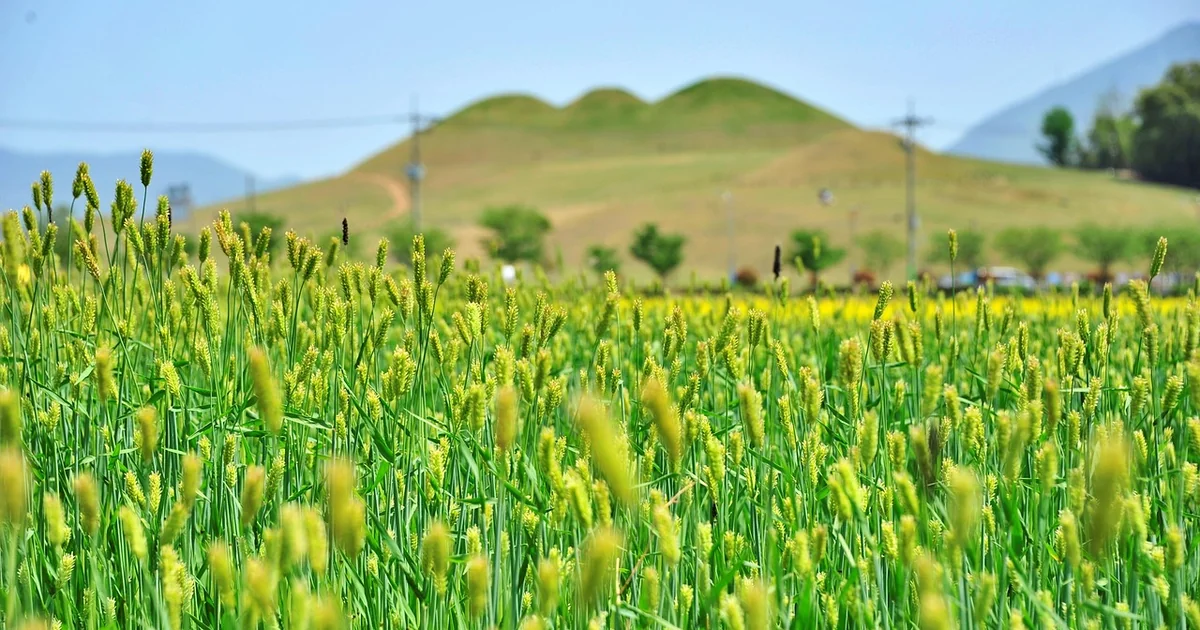
Spelt is an ancient wheat variety that has been grown in Europe and the Middle East for over 8,000 years. It forms tall, elegant stalks topped with dense, bearded seed heads that turn golden as they ripen. Spelt reaches 4 to 5 feet tall and provides a classic wheat-field aesthetic that pairs beautifully with wildflowers and poppies.
Spelt is more cold-tolerant than modern wheat and performs well in cooler climates with a long growing season. It prefers full sun and moderately fertile soil. The seeds have a nutty, slightly sweet flavor and contain more protein than common wheat. Many people with mild wheat sensitivities find spelt easier to digest. In the border, spelt adds a nostalgic, pastoral charm that few other plants can replicate.
How to Design with Ancient Grain Plants
Think about height and texture when placing these plants in your border. Taller species like sorghum and amaranth belong at the back or center of a bed, where they can serve as a living screen. Mid-height options like quinoa and millet work well in the middle layer, while teff and buckwheat can edge the front. The varied seed head shapes, from amaranth’s cascading tassels to millet’s fuzzy brushes, create visual interest that changes with the light and wind.
Color coordination matters too. The deep burgundy of ‘Hopi Red Dye’ amaranth pairs well with the bright gold of ‘Golden Giant’ and the orange-pink of quinoa. Sorghum’s bronze panicles complement the purple foliage of certain millet varieties. You can treat these grains the same way you would treat ornamental grasses or flowering perennials, grouping them in drifts for maximum impact.
Harvesting adds another layer of engagement. You can snip seed heads for dried arrangements before they fully mature, or let them ripen on the stalk for kitchen use. Either way, the plants continue to provide structure and beauty throughout the season. Even after harvest, the dried stalks add winter interest if left standing.