What Is Diatomaceous Earth?
Diatomaceous earth, often shortened to DE, comes from the fossilized remains of tiny aquatic organisms called diatoms. These single-celled algae had hard, silica-based shells that accumulated on the bottoms of ancient lakes and oceans over millions of years. Today, miners extract those sedimentary deposits and grind them into a fine, powdery substance.
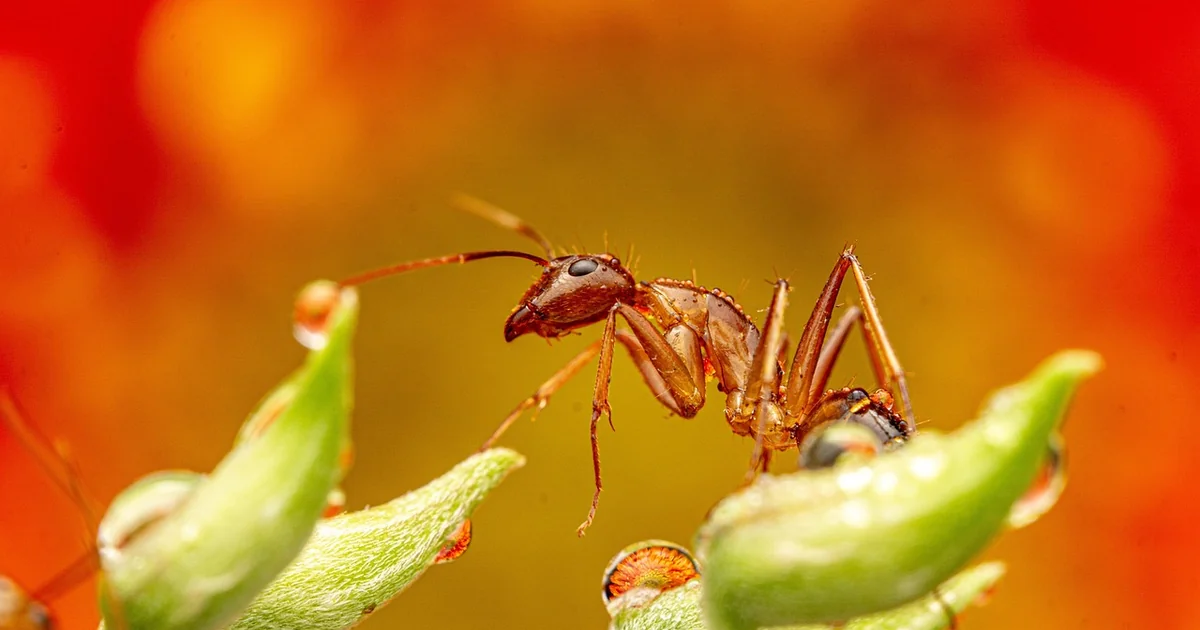
The powder itself feels soft to human touch, but under a microscope each particle is razor-sharp. Those microscopic edges are what make DE effective against insects. When an ant crawls through the powder, the sharp particles scratch the waxy, protective coating on its exoskeleton. Once that coating is compromised, the ant loses moisture rapidly and dies from dehydration. Entomologists call this process desiccation.
Unlike chemical pesticides that attack the nervous system, DE works through physical means. This distinction matters for homeowners who want to avoid toxic substances around their families. Dr. Hamilton Allen, a board-certified entomologist with Fox Pest Control, notes that DE does not rely on poisoning the insect. Instead, it simply dries the pest out until it perishes.
Types of Diatomaceous Earth
Not all diatomaceous earth is the same. Three main varieties exist on the market, and only one is suitable for killing ants. Choosing the wrong type can waste your time or even introduce harmful additives into your home.
Insect-Control Diatomaceous Earth
This grade is specifically formulated for pest management. Manufacturers process it to maximize its abrasive and absorbent properties. It kills ants, bedbugs, fleas, cockroaches, and many other crawling insects. Gardeners also use it to control slugs and snails. This is the product you want when your goal is eliminating an ant infestation.
Food-Grade Diatomaceous Earth
Food-grade DE is safe for human consumption in small quantities. Some people add it to their diet for claimed health benefits, and food manufacturers use it as an anti-caking agent. While food-grade DE can kill ants in theory, it is not the recommended choice for pest control. Its particle structure is less aggressive, and using it for insect management means paying a premium for a product designed for a different purpose.
Filter-Grade Diatomaceous Earth
Pool owners often use filter-grade DE in their filtration systems to trap dust, algae, and bacteria from the water. This variety undergoes high-heat treatment that changes its crystalline structure. The resulting particles can be dangerous to inhale because they contain crystalline silica. Filter-grade DE should never be used for killing ants or any other pest. The health risks far outweigh any potential benefit.
David Price, an entomologist and technical director at Mosquito Joe, recommends sticking with insect-control DE for ant problems. Food-grade is not ideal, and filter-grade must be avoided entirely.
How to Kill Ants With Diatomaceous Earth
Applying DE correctly makes the difference between success and frustration. Ants must make direct contact with the powder for it to work. A haphazard application leaves trails untouched and colonies thriving. Follow this step-by-step process for the best results.
Step 1: Locate the Food Source
Ants do not wander aimlessly. They follow scent trails left by scout ants that have located food. Watch where the ants are marching and trace their path backward. Common attractants include crumbs on the kitchen floor, open sugar containers, pet food bowls, and sticky residues near trash cans. Once you identify the source, you remove the reason ants are coming inside.
Step 2: Remove the Attractant
Eliminate the food source completely. Throw away exposed food, wipe down counters, and sweep or vacuum the area. Sugary spills require extra attention. Warm water and mild soap break down sticky residues that ants find irresistible. Do not skip this step. DE can kill the ants that are already present, but if the attractant remains, new ants will keep arriving.
Step 3: Vacuum Live Ants
Before applying any powder, remove the visible ants. A shop vacuum works well for this task because it can handle larger volumes without clogging. Vacuum both indoor and outdoor areas where ants are active. Afterward, dispose of the vacuum bag immediately or empty the canister into a sealed trash bag. Live ants can crawl out of an open container and start the problem over again.
Step 4: Apply DE Outside First
Start your powder application on the exterior of the house. Focus on cracks in the foundation, gaps around windows and doors, and any other obvious entry points. Use a duster or a squeeze bottle with a narrow nozzle to apply a thin, even layer. A light dusting is more effective than a thick pile. Ants need to walk through the powder, not around it.
Step 5: Apply DE Inside
Once the exterior is treated, move indoors. Dust DE along baseboards, behind appliances, under cabinets, and near window sills. Pay special attention to areas where you observed ant activity. Keep the layer thin enough that you can still see the surface beneath. If you cannot see the floor or baseboard through the powder, you have applied too much.
Step 6: Wait and Monitor
DE does not kill instantly. Ants may continue moving for several hours after contact. The powder damages their exoskeleton and begins the dehydration process, but death can take anywhere from 12 to 24 hours depending on the species and environmental conditions. Be patient. Reapply the powder if it gets wet or blows away.
Safety Considerations
Diatomaceous earth is non-toxic to humans and pets when used correctly, but that does not mean it is harmless. The fine particles can irritate the respiratory system if inhaled. Always wear a dust mask when applying DE. Gloves and long sleeves protect your skin from the drying effects of the powder.
Keep children and pets away from treated areas during application. While food-grade DE is safe to eat in small amounts, inhaling any form of diatomaceous earth is not recommended. Once the powder settles, it poses little risk, but the application process itself requires caution.
Avoid placing DE near fans, air ducts, or frequently opened doors. Air currents can scatter the powder and reduce its effectiveness. If you need to treat an area near a draft, consider using a barrier method such as placing the powder inside a crack or crevice where air cannot disturb it.
You may also enjoy reading: 7 Ways to Use a Bat Box for Natural Mosquito Control.
7 Expert Recommendations for Using Diatomaceous Earth Against Ants
The following recommendations come from entomologists and pest control professionals who have studied ant behavior and DE application for years. Each tip addresses a common mistake or overlooked detail that can make or break your treatment.
1. Use Insect-Control DE Only
Purchase a product labeled specifically for insect control. Do not substitute food-grade or filter-grade varieties. Insect-control DE has the optimal particle size and sharpness for damaging ant exoskeletons. Food-grade DE is less abrasive, and filter-grade DE contains crystalline silica that is hazardous to breathe. David Price advises homeowners to read the label carefully before buying. If the bag does not mention insects on the front, keep looking.
2. Apply a Thin Layer, Not a Thick Dump
A common misconception is that more powder means more killing power. The opposite is true. Ants will avoid large piles of DE. They treat deep powder like an obstacle and simply walk around it. A thin, barely visible dusting is ideal. The ants cannot detect the powder as a threat, so they march right through it. Those microscopic particles then do their work on the exoskeleton. About one tablespoon of DE per square foot is usually sufficient for indoor applications.
3. Start Outside Before You Treat Inside
Treating the interior without addressing the exterior is like mopping a floor while the sink is still running. Ants will keep entering from outside no matter how much powder you lay indoors. Apply DE to the perimeter of your home first. Focus on the foundation, door thresholds, and utility entry points where pipes or wires enter the building. Once you have created an outdoor barrier, move inside to handle any ants that are already present.
4. Clean Ant Trails Thoroughly With Soap and Water
Ants leave invisible chemical trails behind them. These pheromone signals tell other colony members where to find food. Even after you kill the visible ants, those trails remain active for days or weeks. New ants will follow the same path unless you erase the scent. Wipe down all surfaces where ants have traveled using warm water and mild dish soap. For stubborn trails, a cleaning product containing isopropanol amine, ammonium hydroxide, and surfactants works even better. Price emphasizes that trail cleaning is non-negotiable. Pheromones will continue to attract ants until the trail is physically removed.
5. Wear Protective Gear During Application
Diatomaceous earth is a fine powder that becomes airborne easily. Inhaling it can cause coughing, throat irritation, and temporary breathing difficulty. A simple N95 dust mask provides adequate protection. Gloves prevent the powder from drying out your skin, and long sleeves keep it off your arms. If you wear contact lenses, consider switching to glasses during application because the powder can irritate your eyes. These precautions take only a minute but prevent hours of discomfort.
6. Keep Pets and Children Away During and After Treatment
While DE is non-toxic, it is still a foreign substance that should not be ingested in large quantities. Cats and dogs that walk through the powder may lick it off their paws. Young children exploring the floor could put their hands in the powder and then into their mouths. Restrict access to treated areas for at least a few hours after application. Once the powder has settled, vacuum up any excess that remains on open surfaces. Leave only the thin layer in cracks and crevices where pets and children cannot reach it.
7. Seal Entry Points and Deploy Bait Stations After Treatment
DE kills the ants that are currently invading your home, but it does nothing to prevent future invasions. After you have controlled the immediate problem, take preventive measures. Apply exterior-grade silicone caulk to cracks in the foundation and gaps around windows and doors. Inside the house, use painter-grade caulk along baseboards and trim. Place ant bait stations near former entry points. The bait attracts any remaining ants and delivers a slow-acting poison that they carry back to the colony. Combining DE with bait stations and caulking creates a multi-layered defense that keeps ants out long after the powder is gone.
Post-Application Cleaning
Once the ant activity has stopped, you need to clean up the DE and the dead insects. Vacuum the area thoroughly using a shop vacuum or a standard vacuum with a disposable bag. Dispose of the bag immediately in an outdoor trash container. Wipe down all surfaces with a cleaning product that contains isopropanol amine, ammonium hydroxide, and surfactants. This final wipe removes any remaining pheromone traces and leaves the area clean for daily use.
Do not skip this cleanup step. Leaving DE on the floor for weeks turns it into a dusty mess that gets tracked through the house. The dead ants also attract other pests like carpet beetles if left in place. A thorough cleanup completes the treatment and restores your home to normal.
Diatomaceous earth offers a practical, non-toxic solution for ant problems when applied correctly. The key is understanding that DE is a physical killer, not a poison. It requires direct contact, proper grade selection, and patient monitoring. Follow these expert recommendations, and you can break the ant cycle without exposing your family to harsh chemicals.