
How can you protect your expensive bicycle from theft and weather damage while reclaiming valuable living space in your home?
Bike Storage Systems: Your Complete 2026 Guide to Apartment, Garage & Outdoor Solutions
Discover space-saving solutions for storing bicycles in apartments, garages, and outdoor spaces with expert tips and proven storage strategies
Finding the right bike storage systems can transform your living space while protecting your valuable cycling investment. Whether you face the challenge of storing a bicycle in an apartment, securing bikes in your garage, or weatherproofing outdoor storage, the right solution makes all the difference.
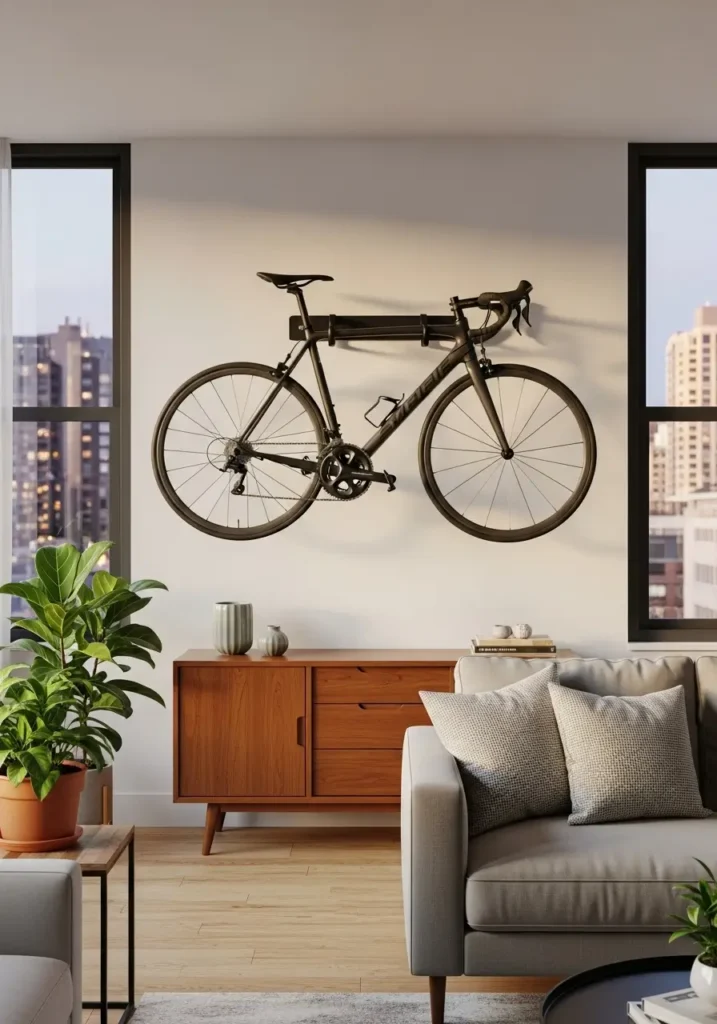
Modern cyclists need storage solutions that balance space efficiency, security, and accessibility. From compact vertical wall mounts perfect for city apartments to robust outdoor sheds designed for multiple bikes, today’s bike storage systems cater to every lifestyle and budget. The 2026 market brings innovative designs with smart features, enhanced security, and eco-conscious materials.
This comprehensive guide examines the most effective bike storage approaches, helping you choose systems that protect your bikes while maximizing your available space. We explore indoor and outdoor solutions, space-saving techniques, and security considerations that keep your bikes safe and accessible year-round.
Understanding Your Bike Storage Requirements
Space Assessment and Planning
Before selecting bike storage systems, evaluate your available space with care. Measure ceiling height, wall dimensions, and floor area to determine which storage methods work best for your situation. The 2026 approach emphasizes precise planning that accounts for both current needs and future expansion.
Indoor Storage Considerations
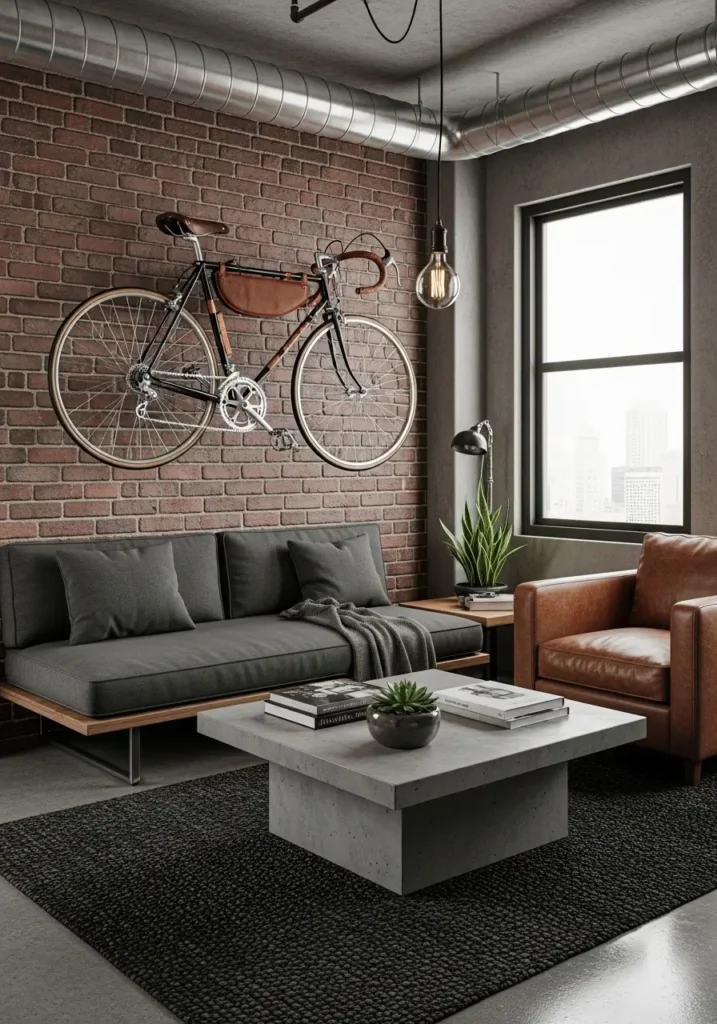
- Available wall space for mounting systems and hooks
- Ceiling height for vertical storage and hoists
- Floor space constraints and traffic flow patterns
- Access frequency requirements for daily commuters
- Weight capacity of walls and ceiling structures
Outdoor Storage Factors
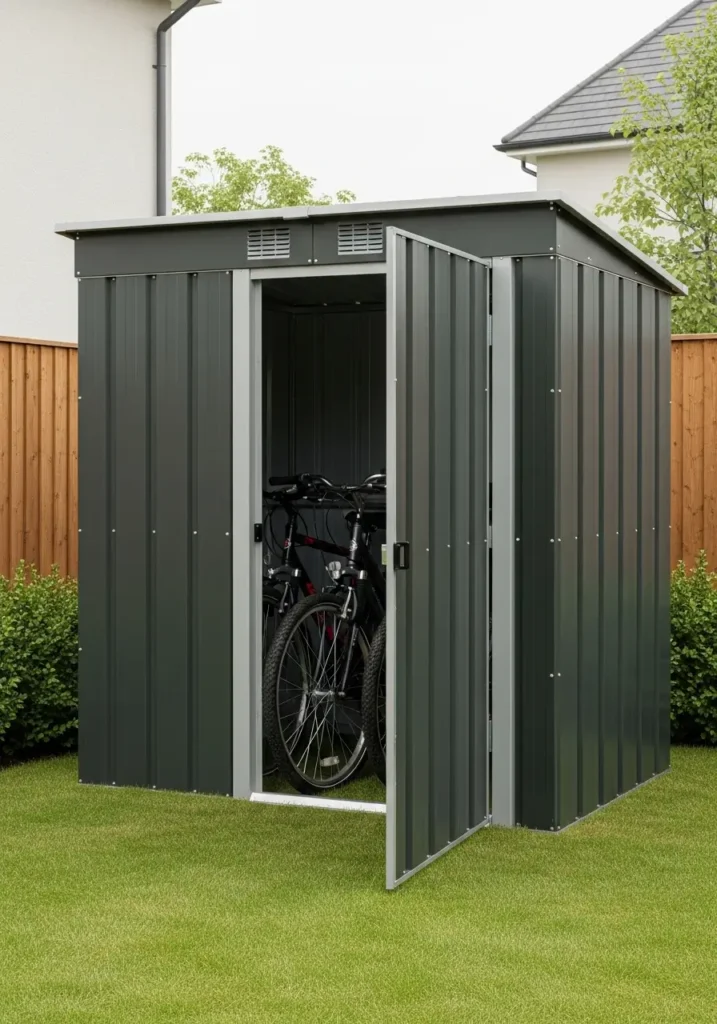
- Weather protection needs based on local climate
- Security requirements and neighborhood theft rates
- Ground surface conditions and drainage patterns
- Local theft risk assessment and insurance implications
- HOA regulations and municipal ordinances
The number of bikes you need to store affects your bike storage systems choice. Single bike solutions offer different advantages compared to multi-bike systems, with significant differences in space utilization and cost effectiveness. Consider family growth and guest bikes when planning capacity.
Consider your bike types when selecting storage systems. Road bikes, mountain bikes, electric bikes, and cargo bikes each present unique storage challenges due to their different weights, dimensions, and component configurations. E-bikes require special consideration due to their heavier weight and integrated batteries.
Real-World Storage Planning Example
The Martinez family in Seattle owns four bikes: two adult road bikes (28 lbs each), one mountain bike (32 lbs), and one cargo e-bike (65 lbs). They evaluated their 240-square-foot garage and chose a combination approach: ceiling hoists for the road bikes, wall-mounted hooks for the mountain bike, and a reinforced floor stand for the heavy e-bike. This strategy freed up 60 square feet of floor space while keeping all bikes accessible.
Indoor Bike Storage Systems
Storing a Bicycle in an Apartment
Apartment living presents unique storage challenges where space comes at a premium. Wall-mounted hooks offer excellent options for maximizing floor space in apartments, with horizontal bike racks proving effective for space optimization. These bike storage systems transform your bike into functional wall art while keeping it within easy reach for daily commutes.
Wall-Mounted Storage Options
Horizontal Wall Mounts
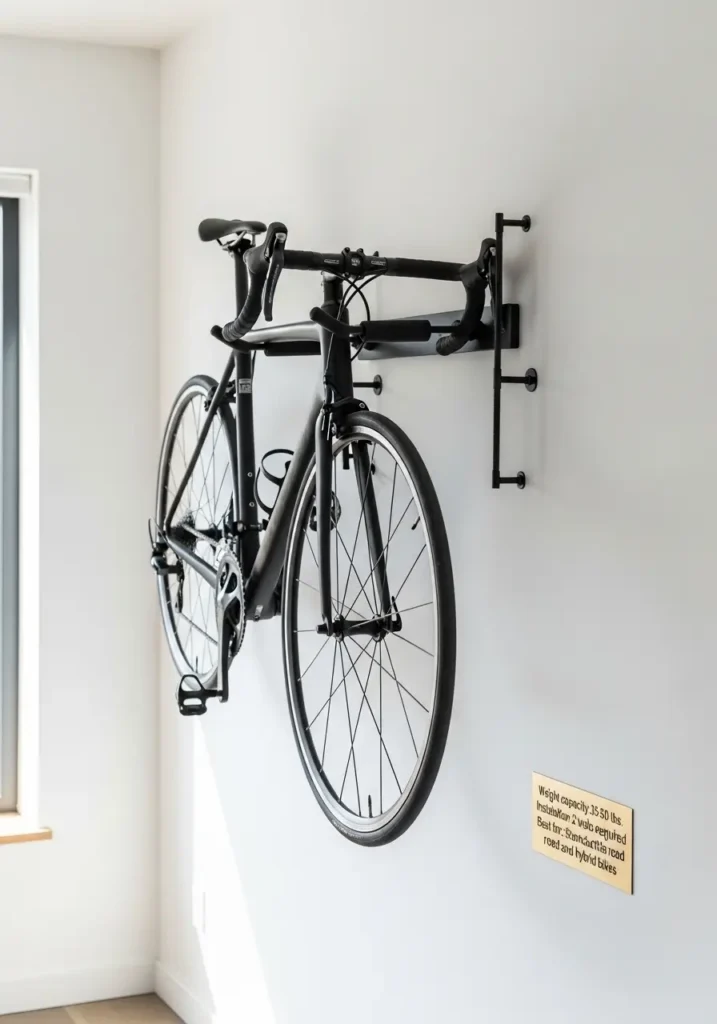
Mount bikes parallel to the wall, saving significant floor space while creating an attractive display. These bike storage systems work best for bikes you access multiple times weekly.
- Weight capacity: 35-50 lbs for standard models
- Installation: 2 wall studs required for secure mounting
- Best for: Standard road and hybrid bikes under 40 lbs
- Clearance needed: 24-30 inches from wall
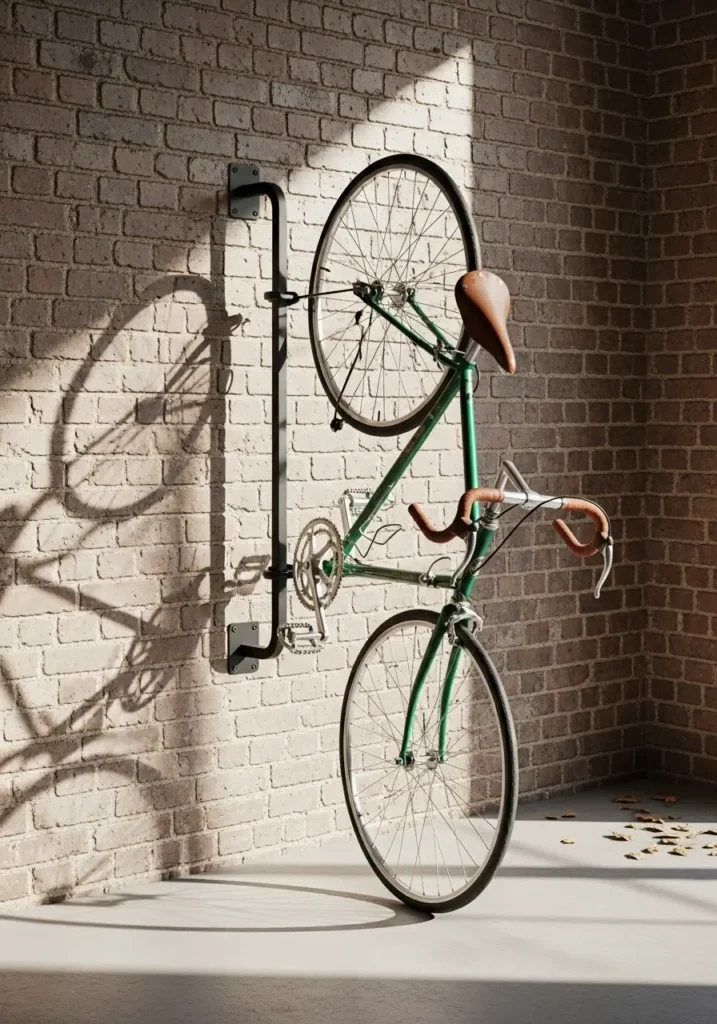
Vertical Wall Hooks
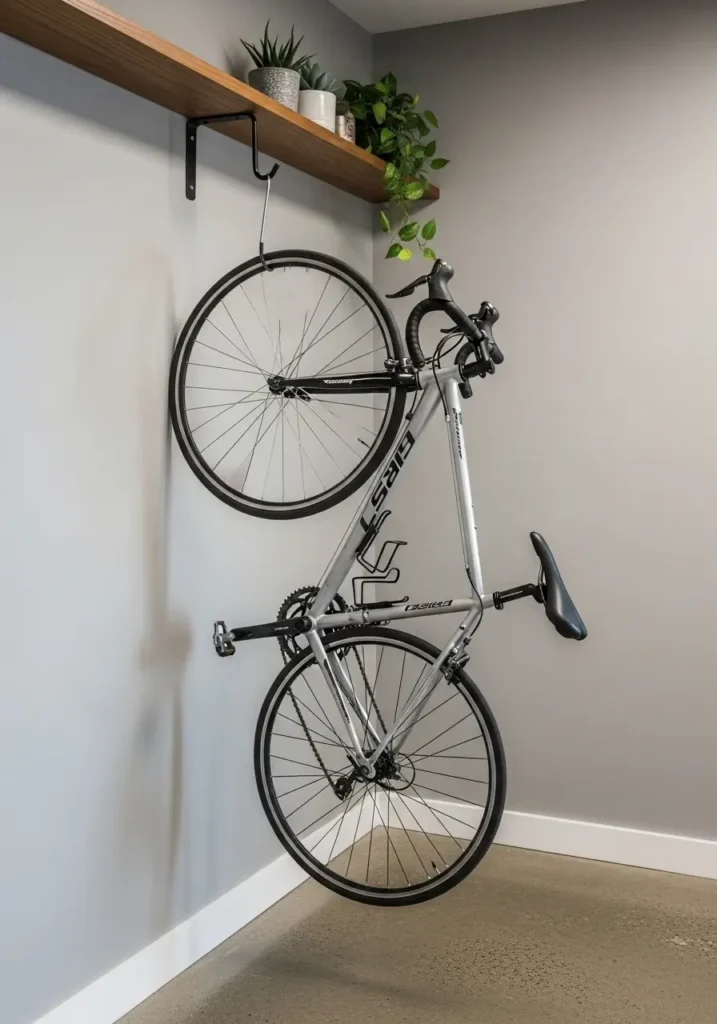
Store bikes upright by hanging from the front wheel, excellent for narrow spaces and tight corridors. These vertical bike storage systems use minimal wall width.
- Weight capacity: 40-60 lbs with proper installation
- Installation: Single wall stud mounting possible
- Best for: Mountain bikes and heavier frames up to 55 lbs
- Vertical clearance: 7-8 feet ceiling height recommended
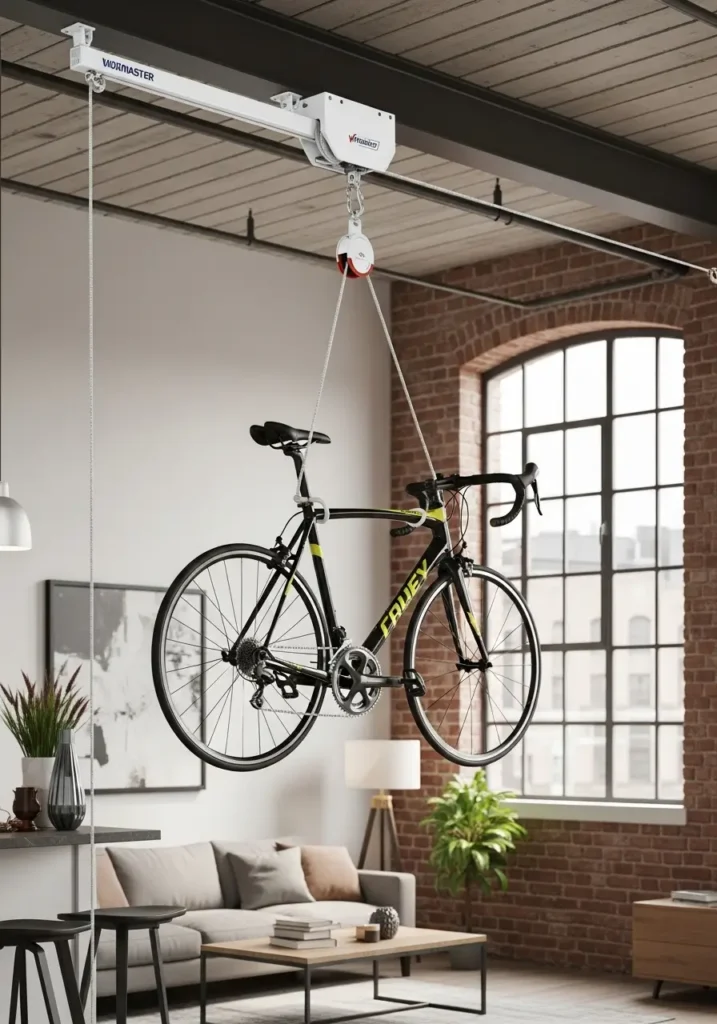
Ceiling-mounted bike storage systems provide another space-saving option for apartment dwellers. Pulley systems like the Wallmaster ceiling-mounted hoist can lift bikes up to 100 pounds and up to 12 feet high, featuring locking mechanisms to prevent accidental release. These systems work well in apartments with high ceilings or loft-style layouts where floor space remains precious.
Apartment Storage Tips for 2026
- Check lease agreements before installing wall-mounted bike storage systems to avoid deposit issues
- Use rubber-coated hooks to protect bike frames and wall surfaces from scratches
- Position storage away from high-traffic areas to prevent accidents and bike damage
- Consider removable floor stands for rental properties where drilling isn’t allowed
- Document wall conditions with photos before and after installation
- Invest in patching kits to restore walls when you move out
Storing Bicycles in Garage Spaces
Garage storage offers more flexibility and space compared to apartment solutions. Modern garage bike storage systems allow you to store more bikes in less space while accommodating any type of bike, making garage organization simple and efficient. The key lies in utilizing vertical space and implementing systems that accommodate multiple bikes without creating clutter.
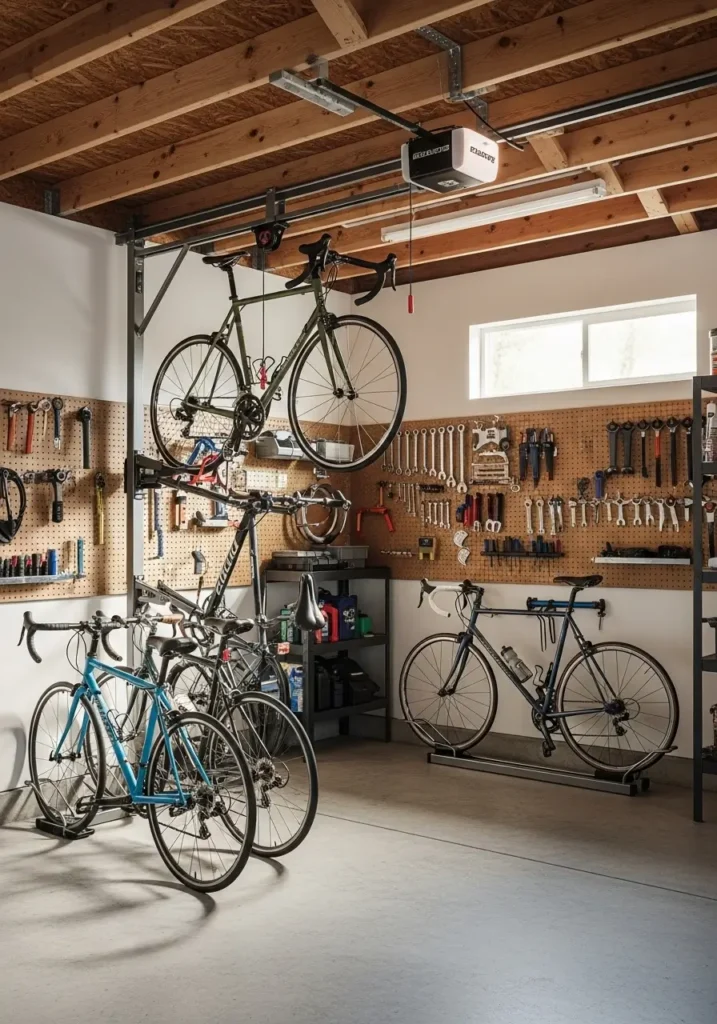
Garage bike storage systems should accommodate seasonal changes in bike usage. Design your storage layout to provide easy access to bikes used often while keeping seasonal or spare bikes in less accessible positions. This rotation system keeps your most-used bikes within arm’s reach.
Advanced Garage Storage Techniques
Multi-level bike storage systems maximize garage capacity by utilizing different height zones. Install ceiling tracks for bikes used less often while keeping daily riders on accessible floor or low wall mounts. This tiered approach transforms vertical space into valuable storage real estate.
Modular Track Systems
Wall-mounted track systems allow flexible positioning of bike hooks and accessories. These bike storage systems adapt as your bike collection changes and accommodate different bike styles on the same track without permanent modifications.
- Adjustable hook positions for different bike geometries and wheel sizes
- Integrated accessory storage for helmets, tools, and cycling gear
- Expandable design for growing bike collections over time
- Tool-free repositioning of hooks and mounting brackets
What’s your biggest indoor storage challenge—limited wall space, low ceilings, or protecting bikes from household traffic? Share your storage obstacles in the comments below!
Outdoor Bike Storage Solutions
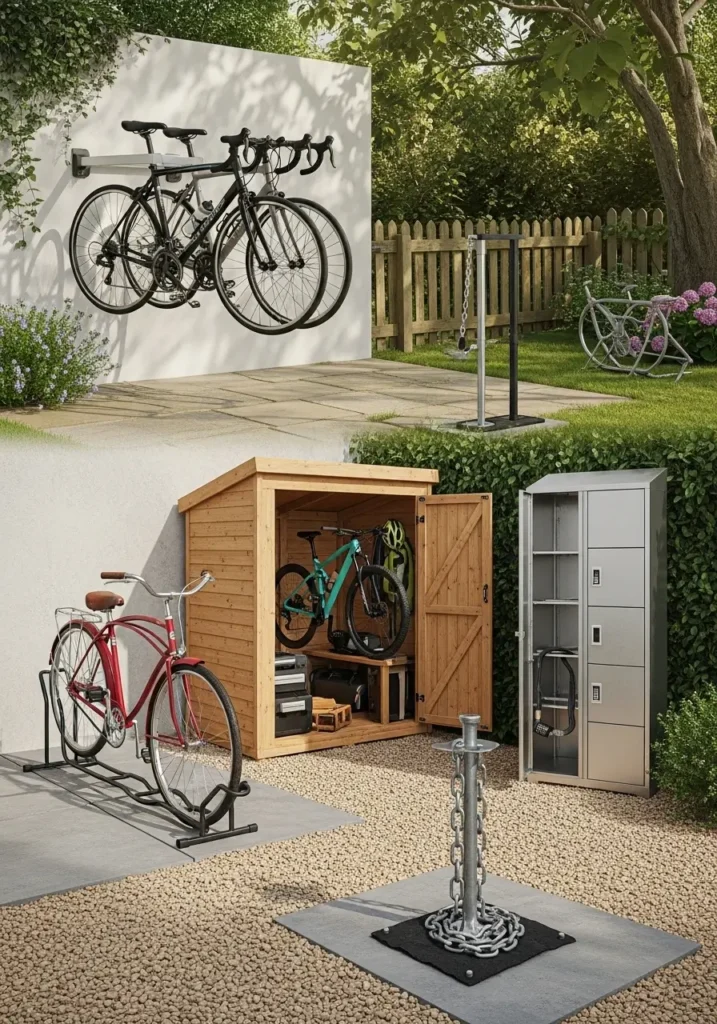
Security Considerations for Outdoor Storage
Storing bicycles outside requires balancing convenience with security and weather protection. While garden sheds and garages attract organized bike thieves, outdoor bike storage systems remain viable for remote areas or lower-value bikes. The 2026 security landscape demands robust protection measures.
The FBI reports that bike theft costs Americans over $350 million per year, with outdoor storage presenting higher risk. Choose outdoor bike storage systems with integrated security features and always use high-quality locks as additional protection layers.
Storing a Bicycle Outside: Weather Protection
Outdoor bicycle storage demands robust weather protection to prevent rust, component degradation, and theft. Modern outdoor bike storage systems range from simple bike covers to sophisticated locked enclosures that rival indoor security standards. The choice depends on your bike value, local climate, and theft risk.
Bike Sheds and Lockers
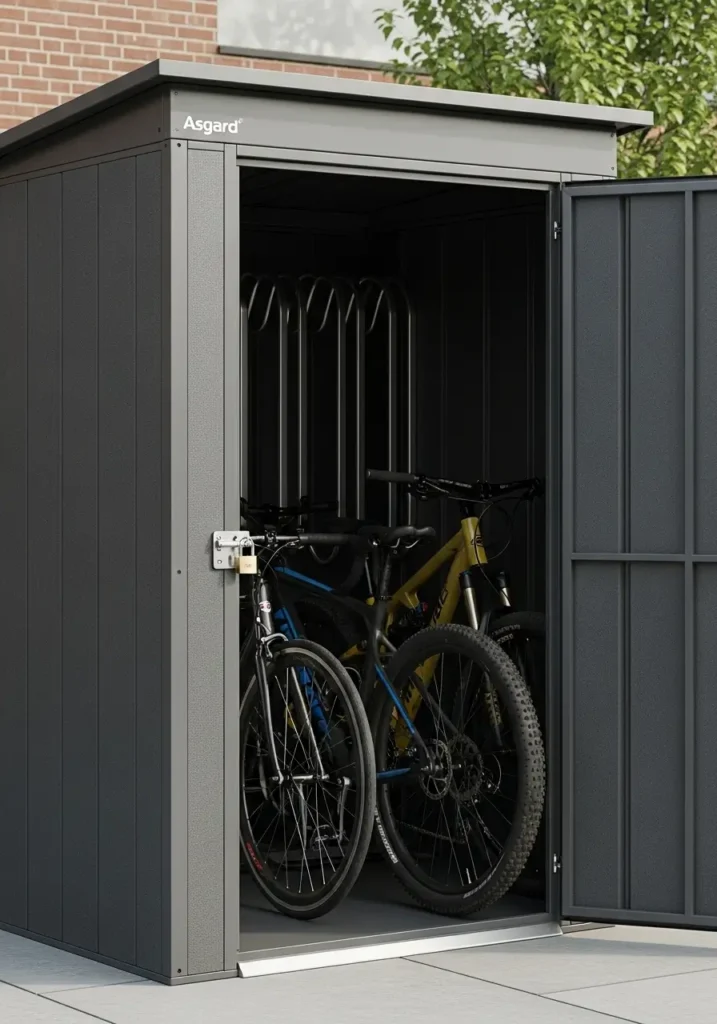
The Asgard Annexe bike shed remains a standout option with reinforced steel construction and integral locking systems, perfect for expensive bikes. These bike storage systems provide maximum security and weather protection for serious cyclists.
- Steel construction resists cutting and prying attempts
- Integral locks eliminate weak points common in padlock setups
- Ventilation prevents condensation damage to components
- Ground anchor points for added security with chain locks
- Insurance-approved ratings lower premium costs
Bike Covers and Tents
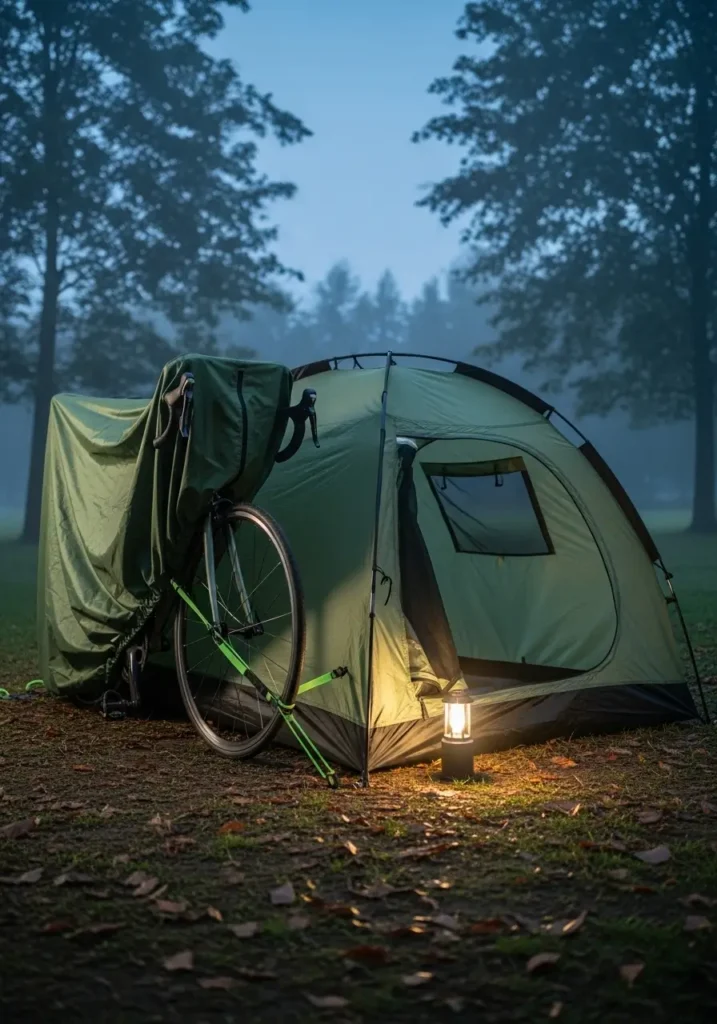
Portable weather protection offers flexibility for temporary outdoor storage or rental properties where permanent installations aren’t allowed. These bike storage systems suit seasonal use.
- Waterproof materials with UV protection prevent sun damage
- Quick setup and takedown capability for seasonal storage
- Ventilation features prevent mold growth on seats and grips
- Compact storage when not in use during riding season
- Budget-friendly option for lower-value bikes
Wall-Mounted Outdoor Racks
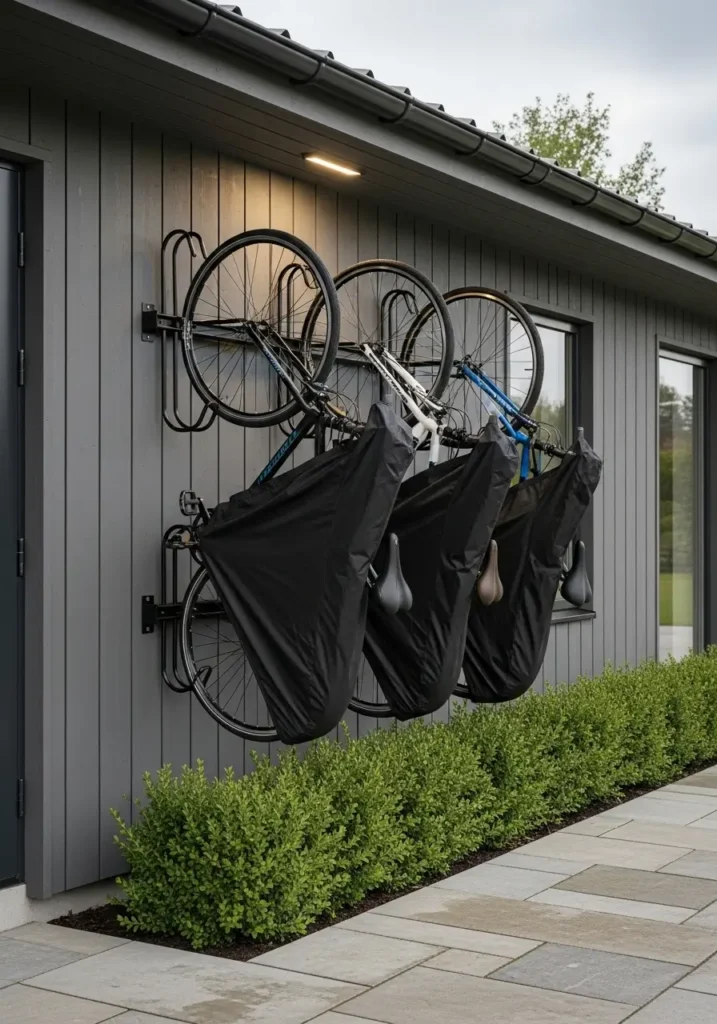
Exterior wall mounting saves ground space while providing reasonable weather protection when combined with bike covers. These bike storage systems work well for covered porch areas.
- Stainless steel construction resists corrosion from rain and humidity
- Multiple locking points for security in visible locations
- Adjustable arms accommodate different bikes and wheel sizes
- Compatible with bike cover systems for double protection
- Powder-coated finishes withstand harsh weather conditions
Critical Outdoor Storage Guidelines for 2026
- Never rely on bike covers alone for high-value bikes worth over $1,000
- Ensure proper drainage around storage areas to prevent standing water
- Regular maintenance becomes more critical with outdoor storage—check monthly
- Consider insurance implications of outdoor storage before committing
- Install motion-activated lighting for deterrence and insurance discounts
- Register bike serial numbers with local police and BikeIndex.org
- Use rust-preventive spray on metal components every 3 months
Have you ever had a bike stolen from outdoor storage, or do you know someone who has? What security measures would you recommend based on your experience? Let’s discuss in the comments!
Bicycle Cycle Stand Solutions
Bicycle cycle stands provide portable, flexible storage options that work in various environments. These bike storage systems offer excellent value for cyclists who need adaptable storage solutions or rent their living spaces where permanent installations create complications.
Types of Bicycle Cycle Stands
Floor-Standing Racks
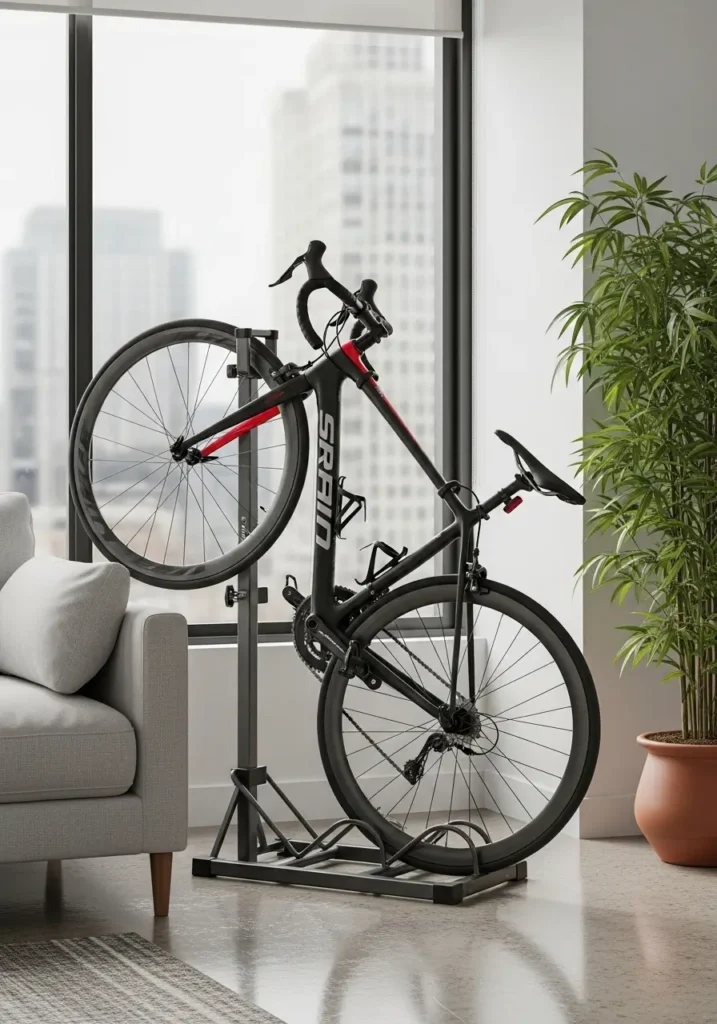
Freestanding units that hold bikes upright without wall or ceiling mounting. The Bike Nook saves space compared to other floor models but may struggle with stability for heavy or odd bikes like cargo bikes or e-bikes.
Key Features:
- No installation required—perfect for renters
- Capacity for 1-6 bikes depending on model
- Adjustable spacing for different bike sizes and styles
- Portable for seasonal storage needs and relocations
- Rubber feet protect floors from scratches
Gravity Stands
Simple stands that lean against walls for support, offering space-efficient storage with minimal floor footprint. These bike storage systems suit tight spaces where full floor stands won’t fit.
Advantages:
- Minimal space requirements—under 2 square feet
- Wall protection features prevent paint damage
- Quick bike access for daily commuters
- Cost-effective solution under $50 for most models
- Lightweight and portable between rooms
Choosing the Right Bicycle Cycle Stand
Stand selection depends on your bike types, available space, and usage patterns. Consider weight capacity, stability features, and compatibility with different bike geometries when making your choice. The 2026 market offers improved designs with better stability and universal bike compatibility.
Security and Maintenance Considerations
Protecting Your Investment
Modern bicycles represent significant financial investments, often valued between $500 and $5,000 or more. Your bike storage systems should provide security proportional to your bike’s value while maintaining convenient access for regular use. The 2026 security landscape demands layered protection strategies.
Effective bike security combines multiple layers: physical storage security, environmental protection, and strategic location selection. The best bike storage systems integrate these elements without compromise.
Multi-Layer Security Strategies
Physical Security Measures
- High-grade locks integrated into bike storage systems deter casual thieves
- Reinforced mounting points that resist tampering and prying attacks
- Hidden or enclosed storage reduces visibility to potential thieves
- Multiple locking points for expensive bikes worth over $2,000
- U-locks rated Gold by Sold Secure organization
- Security cameras monitoring storage areas
Environmental Protection
- Moisture control systems prevent rust and corrosion on metal parts
- UV protection for outdoor and garage storage prevents fading
- Temperature stability reduces component wear on tires and seals
- Ventilation prevents condensation buildup that damages bearings
- Dust protection keeps drivetrains clean and functional
- Elevated storage prevents flood damage in basements
Insurance considerations become critical when storing valuable bikes. Many homeowner’s and renter’s insurance policies have specific limitations on bike coverage, with typical limits around $1,000-$2,000 per bike. Verify your coverage limits and consider supplemental bike insurance for high-value collections through companies like Velosurance or Markel.
Maintenance Best Practices for Stored Bikes
Proper storage maintenance extends bike life and ensures reliable performance. Different storage environments require specific maintenance approaches to prevent common issues like rust, tire deflation, and component degradation. The 2026 approach emphasizes proactive care over reactive repairs.
Weekly Maintenance Tasks
- Check tire pressure and inflate to recommended PSI
- Inspect bike storage systems for stability and security
- Verify bike position prevents stress on wheels and frame
- Clean exposed surfaces to prevent dust buildup
- Test brake function before each ride
Monthly Deep Care
- Lubricate chain and moving components with proper bike lube
- Check brake cable tension and adjustment settings
- Inspect storage hooks and mounts for wear and corrosion
- Rotate bike positions if storing multiple units for even wear
- Wipe down frame and check for cracks or damage
How often do you perform maintenance on your stored bikes—weekly, monthly, or only when you notice problems? What’s your maintenance routine? Share your tips below!
Investment Analysis: Storage System Costs and Returns
Quality bike storage systems represent investments that protect much larger bicycle investments. Understanding the cost-benefit relationship helps you select storage solutions that provide optimal value while protecting your cycling assets with confidence. The 2026 market offers more options across every price point than ever before.
ROI Analysis: Protecting Your Investment
Consider a $2,000 bike stored outdoors without proper protection. Annual depreciation from weather damage and component wear averages $300-$400. A $500 investment in quality bike storage systems prevents this damage, paying for itself within 1.5-2 years while maintaining resale value.
Factor in theft prevention: A stolen $2,000 bike with typical $250 insurance deductible costs you $2,250 total after premium increases. Quality secure storage and locks costing $600-$800 offer excellent insurance against total loss.
The Future of Bike Storage Systems in 2026
Innovation drives the bike storage industry forward with smart technology, sustainable materials, and space-efficient designs. Understanding emerging trends helps you make future-proof purchasing decisions that serve your needs for years to come.
Smart Storage Technology
Connected bike storage systems integrate with smartphones for security monitoring, usage tracking, and maintenance reminders. These bike storage systems bring convenience to modern cyclists.
Key Features:
- Touch-screen or app-based access control systems
- Real-time availability tracking for shared storage
- Integrated security systems with alerts
- Weather protection capabilities with automated covers
- Built-in charging for e-bike batteries
Sustainable Materials
Next-generation bike storage systems utilize recycled materials, renewable resources, and carbon-neutral manufacturing processes to reduce environmental impact while maintaining strength.
Materials Innovation:
- Recycled steel and aluminum components reduce mining impact
- Bio-based plastic alternatives from renewable sources
- FSC-certified wood elements from managed forests
- Low-impact manufacturing processes with reduced emissions
- Modular designs that extend product life
Urban planning embraces bike storage infrastructure as cities prioritize sustainable transportation. This trend drives innovation in space-efficient, secure storage solutions that integrate into residential and commercial developments from the design phase rather than as afterthoughts.
Future Storage Considerations
Electric bike adoption drives demand for bike storage systems with integrated charging capabilities. Modern solutions accommodate heavier e-bikes (often 50-70 lbs) while providing secure charging infrastructure that prevents battery theft.
Consider future-proofing your storage system selection by choosing designs that adapt to changing bike technologies, expanding collection sizes, and emerging smart home integration possibilities.
Installation Options: Professional vs. DIY Approaches
Installation complexity varies among bike storage systems. While simple wall hooks require basic DIY skills, sophisticated ceiling systems or outdoor sheds often benefit from professional installation to ensure safety and optimal performance. The 2026 DIY market offers better tools and resources than ever before.
DIY-Friendly Storage Projects
Basic Wall Mount Installation
Most homeowners can install wall-mounted hooks and horizontal racks with standard tools and basic knowledge of wall construction. Video tutorials make this process accessible to beginners.
Required Tools:
- Stud finder and level for precise placement
- Power drill with appropriate bits for your wall type
- Screwdriver set (Phillips and flathead)
- Measuring tape and pencil for marking
- Safety glasses and dust mask
Floor Stand Assembly
Freestanding floor racks need only assembly skills and offer immediate use without permanent installation. Most models take 15-30 minutes to assemble with included instructions.
Professional Installation Benefits
Complex System Installation
Ceiling hoists, track systems, and outdoor shed installations benefit from professional expertise to ensure safety and warranty compliance. Professional installation for bike storage systems worth over $500 makes financial sense.
Professional Advantages:
- Structural integrity assessment prevents accidents
- Proper load distribution calculations ensure safety
- Warranty protection maintenance keeps coverage valid
- Code compliance verification avoids legal issues
- Liability insurance covers installation damage
Custom Solutions
Professional installers create custom bike storage systems tailored to unique space constraints and specific bike collections, especially valuable for unusual layouts or specialized bike types.
Safety Warning
Never exceed weight capacity ratings for bike storage systems. A 45-pound bike on a 40-pound-rated hook creates dangerous failure risk. Always mount to wall studs, not drywall alone. Ceiling installations require solid joist mounting—never attach to ceiling panels or tiles.
Building Your Perfect Storage Solution
Bike storage systems transform how you live with your bikes, reclaiming space while protecting valuable investments. Whether you choose wall-mounted hooks for apartment living, ceiling hoists for garage efficiency, or secure outdoor sheds for weather protection, the right solution balances your space constraints, security needs, and budget reality.
The 2026 market offers more choices than ever, from budget-friendly basic hooks to smart, connected storage with app integration. Start with proper space assessment, consider future needs, and choose bike storage systems that grow with your cycling passion. Remember that proper installation and regular maintenance ensure your storage solution serves you well for years to come.
We want to hear from you! What bike storage solution works best in your space? Have you discovered clever storage hacks that other cyclists should know about? Are you struggling with a unique storage challenge? Share your experiences, questions, and storage photos in the comments below—your insights help fellow cyclists make better storage decisions!
Frequently Asked Questions About Bike Storage Systems