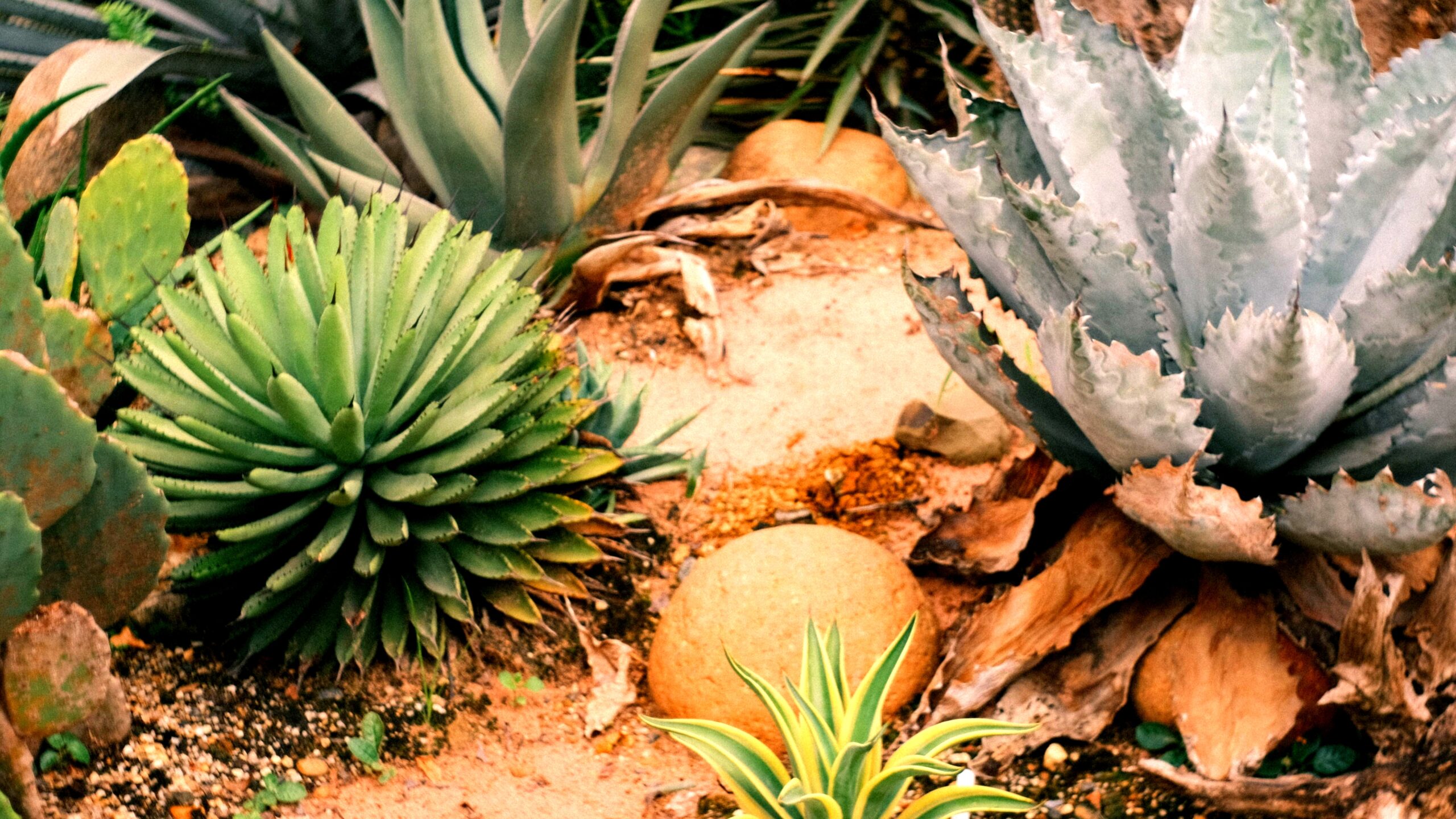
Desert landscape gardens use drought-tolerant plants like succulents, agave, and cacti combined with hardscaping features such as gravel beds and dry stream beds. These designs prioritize water conservation, low maintenance, and heat resistance, making them ideal for arid climates. Desert landscape gardens are designed outdoor spaces that utilize drought-tolerant plants, hardscaping, and water-conservation techniques to create sustainable, low-maintenance gardens in arid climates.
A well-planned desert landscape garden accepts the desert’s rhythm, replacing thirsty turf grass with tough, heat-resistant species that look good year-round. Temperatures swing from sweltering daytime heat to chilly nights, and plants must handle both extremes. Instead of fighting the climate, this approach works with it, as many homeowners find that xeriscape cuts water use and weekend maintenance. The result is a garden of layered plant communities that stay vibrant through drought, not sparse gravel lots.
What to Know About Your Desert Environment
Before putting a single plant in the ground, get to know your site’s specific conditions. USDA hardiness zones dictate which plants survive winter lows, and even desert areas can have frost pockets. Soil type matters just as much. Sandy, fast-draining soil is common, but you might also have caliche or clay that needs amending.
Track how light moves across your yard, noting which areas get full afternoon sun and which get filtered shade. Wind strength is another factor; strong seasonal gusts can dry out foliage and stress young plants, so account for windbreaks or choose plants with sturdy stems. Desert soils often lack organic matter, so water rushes through without lingering; that is why soil knowledge drives every water-saving strategy. Amendments like compost can transform a patch of sand into moisture-holding ground, and once you understand your site, the next step is selecting the right plants.
What Plants Thrive in Desert Gardens?
A desert garden thrives on native and drought-adapted plants built for heat and scarcity. Succulents, agave, yucca, aloe, palo verde, and cacti are the workhorses, evolved to store water in fleshy tissues or send roots deep to withstand long dry spells. Planting native species closely together reduces soil moisture evaporation because the canopies provide mutual shade, acting as a living mulch that keeps the root zone cooler. Within these groups, succulents and cacti form the backbone of a low-water garden.
Succulents and Cacti
Succulents store water in their stems and leaves, allowing them to survive extended periods without rainfall. A cactus is a type of succulent with a distinct identity—identified by hairs or pin-cushion-like growths called areoles, and lacking leaves. Agave succulents have fleshy blue leaves arranged in striking rosettes. Both handle heat and drought with ease, whether used as focal points or massed for a repeat pattern.
Trees, Shrubs, and Vines
Shade is a precious resource in a desert garden. Trees like palo verde, Arizona cypress, Chinese pistache, and desert willow cast dappled or dense shadows that cool patios and walls during the hottest months. A well-placed palo verde can drop the temperature beside a west-facing window. Chinese pistache offers brilliant fall color even in low-water conditions, while desert willow produces fragrant, trumpet-shaped blooms that attract hummingbirds.
For vertical coverage, drought-tolerant vines scramble up trellises and pergolas without demanding constant water. Choices include crossvine, Carolina jessamine, pink trumpet vine, and Lady Banks’ rose. These vines can cover a pergola within a few growing seasons, forming a living shade canopy. Each climbs vigorously once established and contributes seasonal flowers.
Perennials, Ground Covers, Grasses, and Wildflowers
For non-woody color and texture, desert gardens draw on a mix of perennials, ground covers, ornamental grasses, and wildflowers. Drought-tolerant perennials include Russian sage, sedums, agastache, fountain grass, rosemary, lavender, and salvias. These plants bring fragrance, pollinator activity, and long seasons of bloom. Ornamental grasses like blue fescue, blue oat, feather reed, switch, and fountain grasses add movement and fine texture that softens hardscape edges.
Ground covers such as Euphorbia rigida, also called gopher spurge, grow in shallow-rooted mats that hold soil without demanding deep irrigation. Desert native wildflowers—coral plant, Mexican gold poppies, desert mallow, and desert rose—pop with color after seasonal rains then set seed for the next cycle. Yucca plants with spiky foliage send up tall flower stalks every few years. The ‘Color Guard’ yucca variety stands out with gold and green striping that brightens a planting bed year-round.
Vegetable Gardening in Deserts
Yes, a vegetable patch is realistic even in a desert climate. The trick is to use raised beds filled with compost-rich soil and to water by hand or with drip irrigation. Raised beds warm up quickly and drain well, preventing root rot. By targeting water directly at the root zone, hand-watering avoids waste and keeps leaves dry, reducing disease risk and giving vegetables a fighting chance where conventional in-ground rows would shrivel.
What Hardscaping Features Conserve Water?
Gravel beds and dry stream beds do double duty. They define paths and planting zones while slowing rainwater so it soaks into the ground instead of running off. Dry stream beds channel the rare but intense desert rains, directing water to planting areas instead of washing it away. Landscaping rocks placed strategically catch and hold moisture at the surface.
Unlike solid concrete, they leave gaps for water to penetrate, recharging the soil rather than sending it to the gutter. For permanent shade, a pergola with an open slat roof filters sunlight and creates a usable outdoor room. Firepits extend that room into the evening, when desert temperatures can drop sharply.
Artificial turf eliminates irrigation needs and mowing; a patch of high-quality artificial turf looks clean year-round without a single drop of water. A bubbling fountain with an underground reservoir recycles water and prevents evaporation, and its enclosed basin also keeps birds and small animals safe.
How Does Container Gardening Work in Deserts?
Container gardening offers flexibility for small spaces and poor soil. When native soil is too sandy, dry, or rocky, containers let you sidestep the problem. Fill a large pot with quality potting mix, and you control the root environment completely. Glazed ceramic pots conserve water better than unglazed pots because the sealed surface slows evaporation.
Clay or earthenware pots remain porous but maintain more consistent soil temperatures, buffering roots against the midday bake. Water container plants in the late afternoon so moisture soaks in before the next day’s heat. Avoid metal pots; they hold excessive heat when the sun is high and can turn shockingly cold after sunset.
For a vivid accent, try a cobalt-blue glazed pot. That single pop of color against gravel and gray-green foliage looks sharp and intentional. Cluster pots together to create a humid microclimate that slows water loss. Choose containers with drainage holes and elevate them on pot feet to prevent baked roots.
What Soil, Mulch, and Amendments Are Best?
Soil preparation and mulching are critical for plant health in arid conditions. For trees and shrubs, a layer of natural cedar or pine mulch makes a measurable difference. It insulates the soil surface, keeps roots cooler, sharply reduces moisture evaporation, and also suppresses weeds without chemicals. Natural mulch costs less than stone, rocks, or gravel, and it slowly breaks down to improve soil structure.
In sandy desert soils, organic compost is the amendment you need before planting. Work a layer of compost into the topsoil to increase water-holding capacity and feed microbial life. Over time, this builds a living soil that supports plants far better than raw mineral sand. Together, compost and mulch create a moisture-banking system that pays back every time you skip a watering day.
What Color Palettes Suit a Desert Garden?
The right color palette and design choices tie the garden together. Color anchors a desert garden in its region, while the classic palette leans on terracotta, sandy beige, and stone gray, lifted by cool blue, sage green, and dusky purple. These hues echo the surrounding landscape—think adobe walls, weathered rock, and creosote bush—so the garden feels rooted rather than imposed.
Paint a stucco wall in a soft terracotta or place a glazed blue pot at a focal point to draw the eye. Silvery foliage from lavender and artemisia pairs with the deep green of desert willow to add contrast without loudness. Even hardscape choices like gravel color can shift the garden’s mood from warm to cool. Keep the scheme tight with two or three dominant colors and a single accent to prevent visual chaos, letting plant forms and shadows do their work.
Conclusion
A desert landscape garden isn’t about settling for less. It’s about picking plants and materials that belong in your climate, then arranging them for year-round impact. Start by observing your site’s sun, wind, and soil. Choose native plants like palo verde, succulents, and desert willow that need little once established.
Add hardscape elements—gravel beds, a pergola, a dry stream bed—that handle runoff and provide structure. Use mulch and compost to build living soil. When you need flexibility, containers in glazed ceramics let you grow anywhere. The result is a garden that stays beautiful through drought and heat and asks for far less water, less money, and less Saturday morning sweat.
FAQ
Q: What are the key principles of desert landscape gardening?
A: Desert landscape gardens use drought-tolerant plants, hardscaping like gravel beds and dry stream beds, and water-conservation techniques such as mulch and artificial turf to create sustainable, low-maintenance gardens in arid climates.
Q: Which plants are best for a desert garden?
A: Native plants like succulents, agave, yucca, cacti, palo verde, and desert willow thrive. Drought-tolerant perennials include Russian sage, sedums, and lavender. Ornamental grasses and wildflowers like Mexican gold poppies also work well.
Q: How can I save water in my desert garden?
A: Use gravel beds, dry stream beds, and landscaping rocks to absorb rainwater. Install artificial turf instead of lawn. Choose glazed ceramic pots for containers and apply wood-chip or cedar mulch to reduce evaporation.