Why do so many living rooms feel dominated by black rectangles, when your TV could actually enhance—not detract from—your home’s style?
TV Wall Ideas: 15 Stunning Designs That Transform Your Space in 2026
A comprehensive guide to creating the perfect entertainment center that combines style, function, and wow-factor
Your TV doesn’t have to be an eyesore that ruins your interior design. With the right approach, it can become the centerpiece that elevates your entire living space and brings cohesion to your home’s aesthetic.
The 2026 design landscape brings fresh innovations in entertainment wall design—from wood slat panels and color-drenching techniques to smart lighting integration and fluted finishes. These solutions go far beyond basic wall mounting, transforming functional necessity into intentional design statements.
Why Modern TV Wall Ideas Matter More Than You Think
The television has evolved from a simple appliance to a central element of modern living spaces. Yet many homeowners treat it as an afterthought, mounting it to the wall without considering the broader design implications. This approach misses a tremendous opportunity to create cohesive entertainment centers that reflect personal style while solving practical challenges.
Well-designed TV walls serve multiple purposes beyond just holding your screen. They organize equipment, provide storage solutions, create visual interest, improve viewing comfort, and can even increase your home’s value. More importantly, these designs transform what could be a stark, utilitarian setup into an intentional design statement that visitors notice and admire.
In 2026, the trend shifts toward integrated media walls—sleeker designs that feel less like separate furniture pieces and more like curated elements of the architecture itself. Color drenching techniques immerse entire walls in rich hues like Salvia green or Navy blue, making the TV feel embedded rather than attached. Wood slat panels bring warmth and texture that soften technology’s hard edges while concealing unsightly cables.
💡 2026 Design Insight: The most successful entertainment centers don’t fight against the television’s presence—they embrace it and make it work harmoniously with the room’s overall aesthetic. Fluted finishes and curved silhouettes replace sharp edges, creating softer, more inviting spaces.
Essential TV Wall Foundations: Size, Placement, and Preparation
→ Smart Sizing for Perfect Viewing
Choosing the right TV size is crucial for successful TV wall ideas. There’s a scientific approach that considers viewing distance, room size, and screen resolution. For 4K TVs (now standard in 2026), the optimal viewing distance is 1.5 times the diagonal screen size, while 8K displays allow even closer viewing.
Screen size dramatically impacts your wall design possibilities. Larger screens require more robust mounting systems, wider wall treatments, and careful consideration of viewing angles. Smaller screens offer more flexibility but can look lost on expansive walls without proper framing or design elements.
→ Cable Management Strategies for Clean TV Wall Ideas
Nothing ruins a sleek entertainment center quite like tangled visible cables snaking down your wall. Professional installers use several techniques you can implement yourself, even if you lack advanced DIY skills. The right cable management approach depends on your wall type, rental restrictions, and comfort level with tools.
In 2026, wireless solutions continue improving—wireless HDMI transmitters now handle 8K content reliably, reducing cable requirements. Smart streaming devices eliminate numerous connections, consolidating everything into simple interfaces. However, power cables, soundbar connections, and gaming systems still require thoughtful routing.
Professional Cable Management Solutions:
- ✓In-wall routing: Most professional-looking but requires cutting drywall and running cables through walls. Use only code-compliant in-wall rated cables.
- ✓Decorative cord covers: Paintable raceways attach to wall surfaces, blending seamlessly when painted to match your walls. Perfect for renters.
- ✓Furniture integration: Media consoles with built-in cable management hide wires within cabinets and behind panels.
- ✓Strategic component placement: Position devices to minimize visible cable runs—closer components mean shorter, less visible wires.
- ✓Wireless solutions: Wireless HDMI systems, streaming devices, and Bluetooth speakers reduce physical connections dramatically.
- ✓Wood slat panels: The 2026 trend of vertical wood slats naturally conceals cables running behind them while adding texture.
⚠️ Critical Safety Note: Always check local electrical codes before running cables through walls. Some areas require specific in-wall rated cables, proper junction boxes, and even licensed electricians for certain installations. Improper wiring creates fire hazards and voids insurance coverage.
What’s your biggest frustration with your current TV setup—visible cable mess, poor viewing angles, or lack of storage for all your devices? Understanding your specific challenge helps identify which TV wall design solution works best for your situation. Share your pain points in the comments below!
15 Stunning TV Wall Ideas That Transform Spaces in 2026
These carefully curated TV wall ideas represent the best in modern interior design, combining functionality with aesthetic appeal. Each concept can be adapted to fit different budgets, skill levels, and room sizes. The 2026 evolution emphasizes clean lines, integrated storage, textured surfaces, and atmospheric lighting that creates depth and ambiance.
1. Modern Gallery Wall TV Design
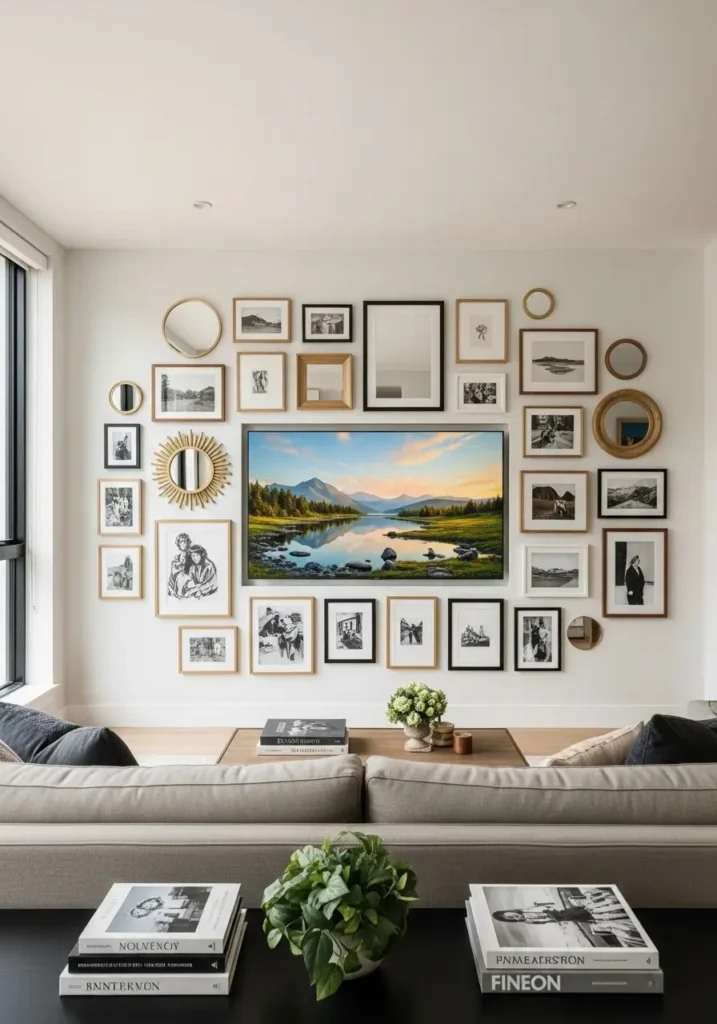
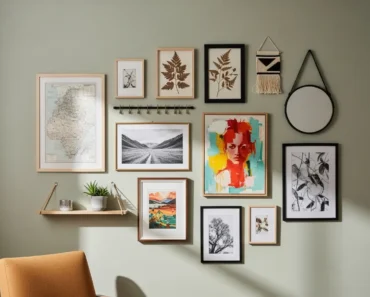
Transform your TV into part of a curated art collection. This approach surrounds the screen with artwork, family photos, and decorative mirrors while maintaining consistent spacing and visual balance. The key lies in treating the TV as one element within a larger gallery rather than the dominant focal point.
Implementation tip: Use a 2-3 inch consistent gap between all elements. Choose frames in complementary finishes. When the TV is off, it reads as a dark canvas within your gallery arrangement.
2. Floating Entertainment Center
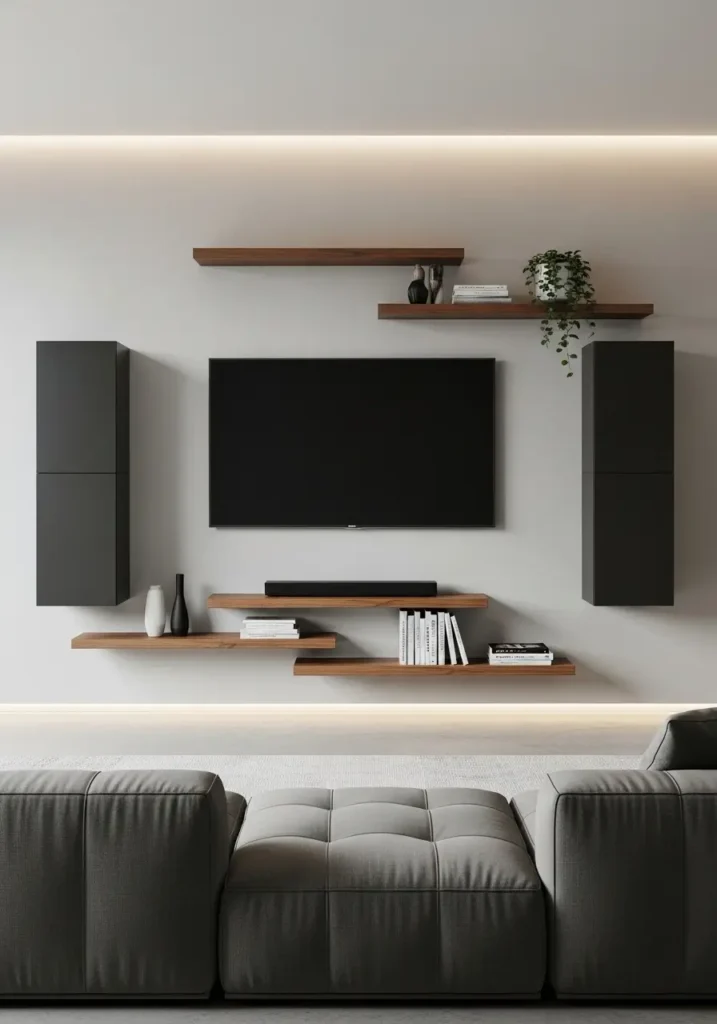
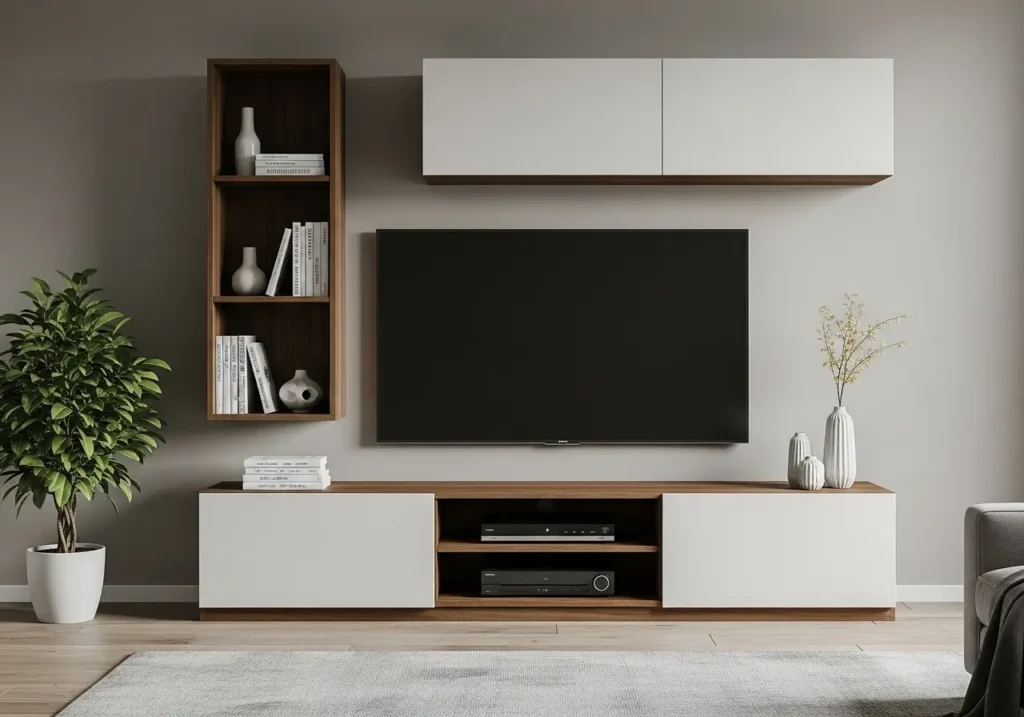
Create sleek, minimalist TV wall ideas with floating shelves and a wall-mounted TV. This design maximizes floor space while providing storage for components and decorative items. Choose matching wood tones for cohesion or bold contrasts for dramatic impact.
2026 update: Add LED strip lighting beneath floating shelves for ambient glow. This reduces eye strain during viewing while creating depth that makes the installation appear to float.
3. Built-in Media Wall System
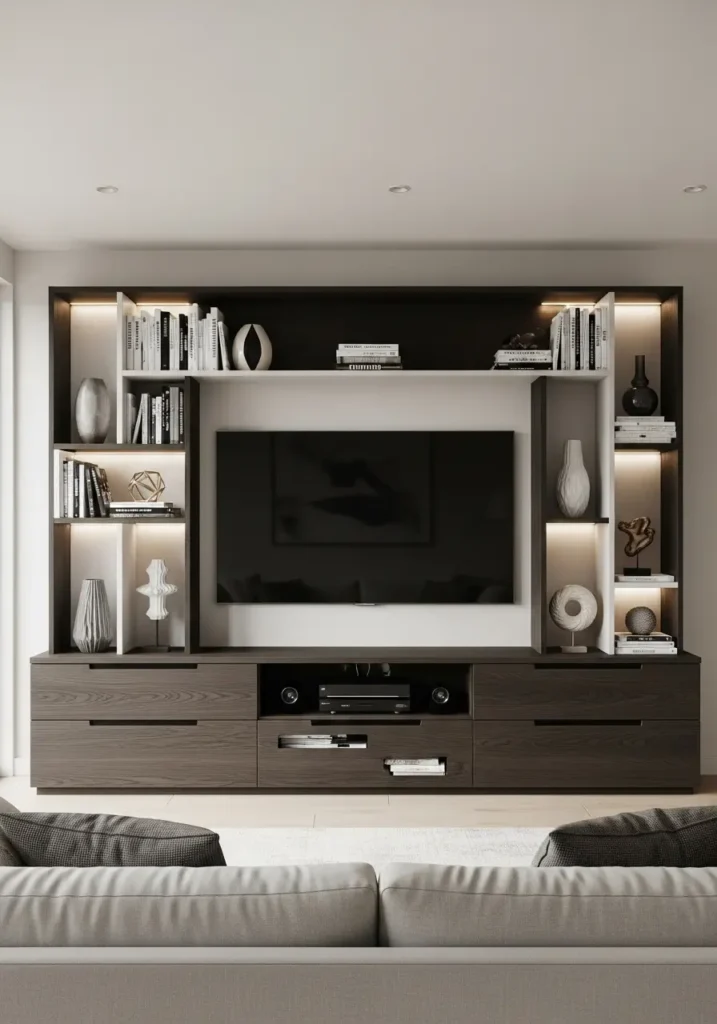
Custom built-in TV wall ideas offer ultimate integration and storage. These comprehensive systems include hidden component storage with ventilation, display shelving for books and decor, plus optional LED accent lighting for dramatic effect. Built-ins add significant home value while solving multiple storage challenges.
Budget consideration: Full custom installations range from $3,000-$10,000+ but modular systems and IKEA hacks achieve similar looks for $800-$2,000.
4. Textured Accent Wall Design
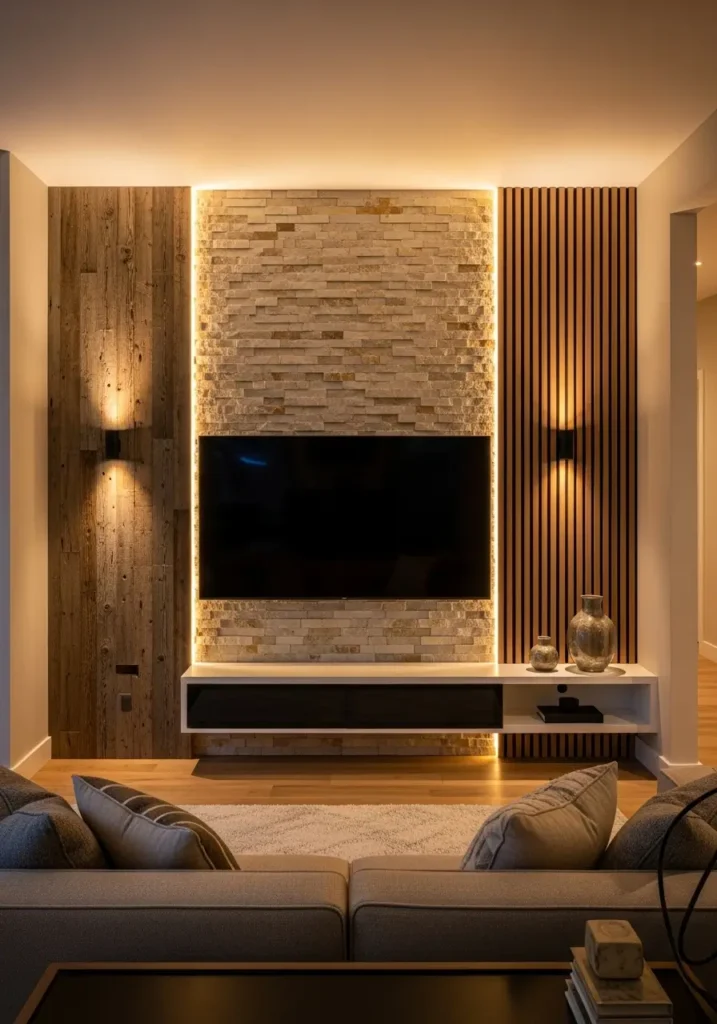
Add visual interest with textured materials like reclaimed wood, stone veneer, or modern wood slat panels. These materials add warmth and dimension while helping the television blend seamlessly into the overall design. Texture creates depth that prevents the TV from appearing to float awkwardly on a flat surface.
2026 trend: Vertical wood slat panels dominate contemporary designs. They naturally conceal wiring, add acoustic benefits, and introduce organic warmth that balances technology’s coldness.
5. Camouflage Approach
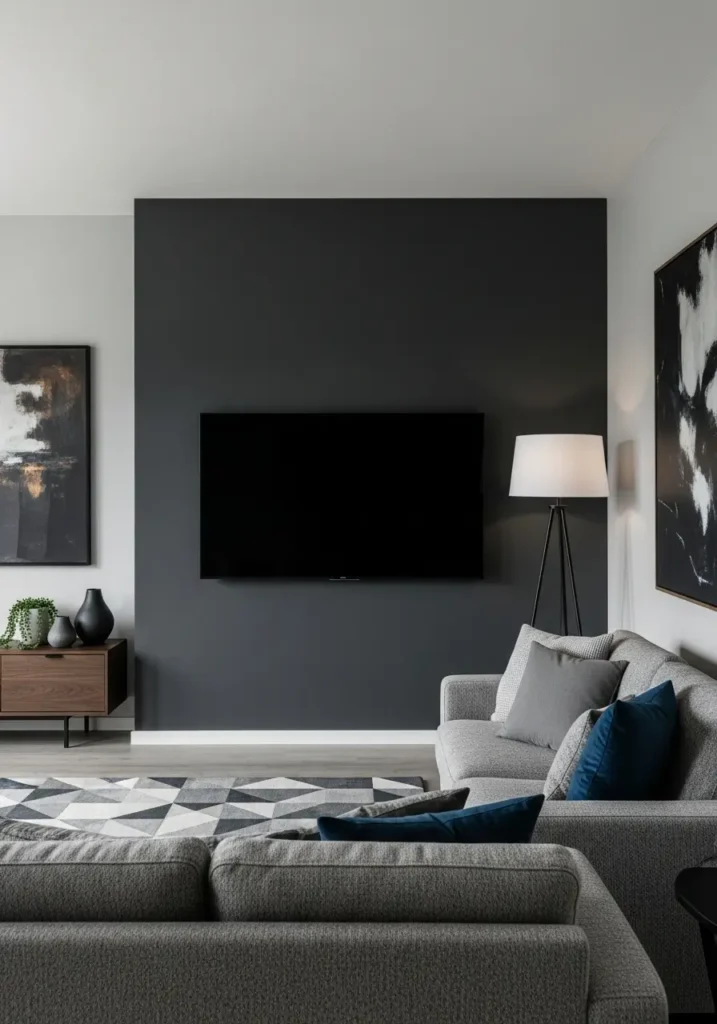
Paint the wall behind your TV in dark colors like charcoal, navy, or black. This camouflage technique makes the screen virtually disappear when turned off, creating a more seamless look. The 2026 “color drenching” trend takes this further—painting the entire wall, trim, and even ceiling in the same rich hue for immersive impact.
Color psychology: Dark walls reduce eye strain during viewing by minimizing contrast between the bright screen and surrounding surfaces.
6. Fireplace Integration
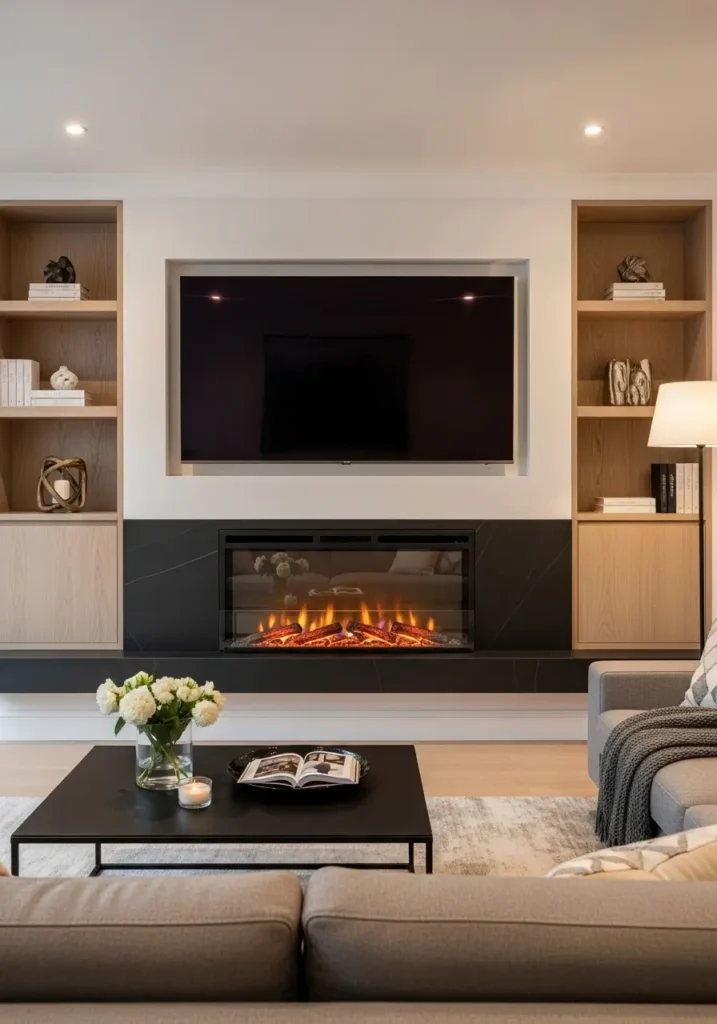
Combine your TV with modern electric or gas fireplaces for dramatic focal points. These sophisticated designs use heat management systems to make the combination both safe and stylish. Position the fireplace below or beside the TV depending on ceiling height and viewing preferences.
Mounting consideration: Install the TV slightly higher when above fireplaces, using tilting mounts to angle the screen downward for comfortable viewing without neck strain.
→ Advanced Design Concepts for 2026
7. Bookshelf Integration
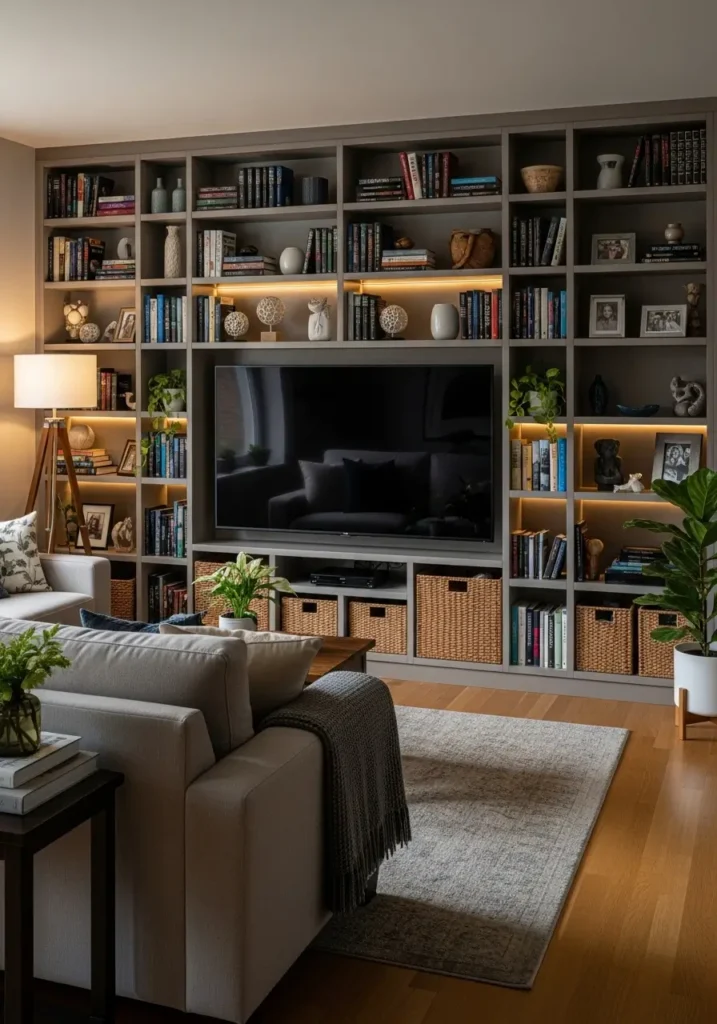
Nestle your TV within floor-to-ceiling bookshelves for library-inspired entertainment centers. This sophisticated approach makes the television feel less dominant while adding storage and personality. The surrounding books and objects provide visual interest that draws eyes across the entire wall rather than focusing solely on the screen.
Styling secret: Vary shelf heights to create asymmetry. Mix horizontal and vertical book stacks. Add decorative objects in groups of odd numbers (3, 5, 7) for visual balance.
8. Geometric Pattern Wall
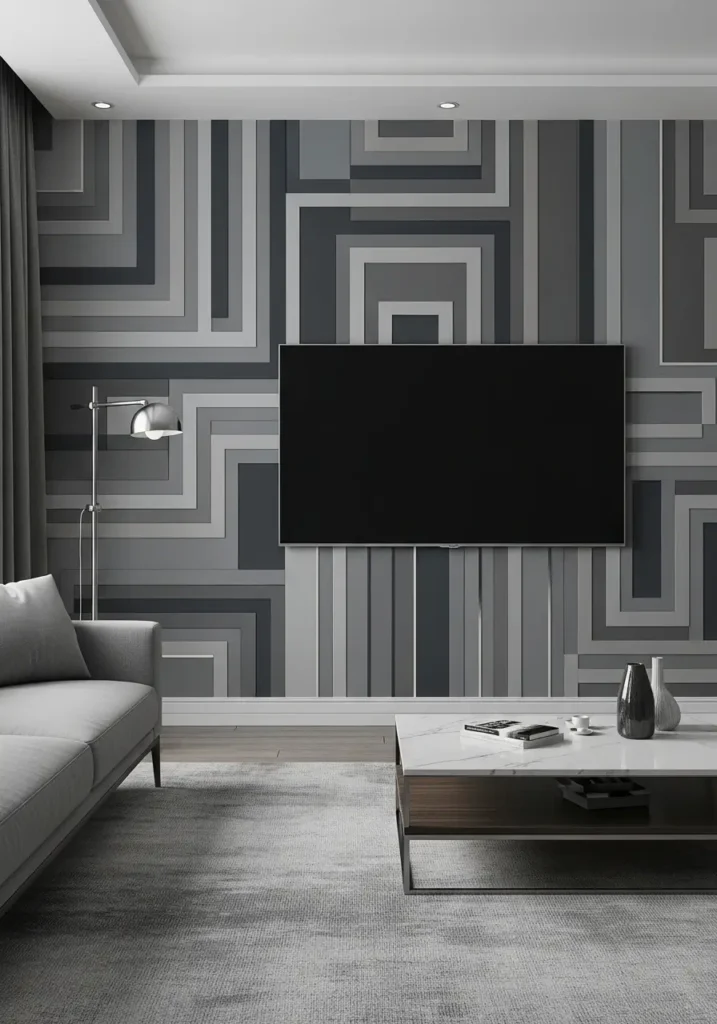
Create visual drama with geometric wallpaper or painted patterns. These artistic designs work best when patterns complement your TV’s rectangular shape rather than competing with it. Choose designs with horizontal or vertical emphasis that lead the eye toward the screen naturally.
Pattern rule: Keep patterns subtle and low-contrast behind the TV itself. Use bolder patterns on adjacent walls to create visual interest without causing eye fatigue during viewing.
9. Industrial Pipe Shelving
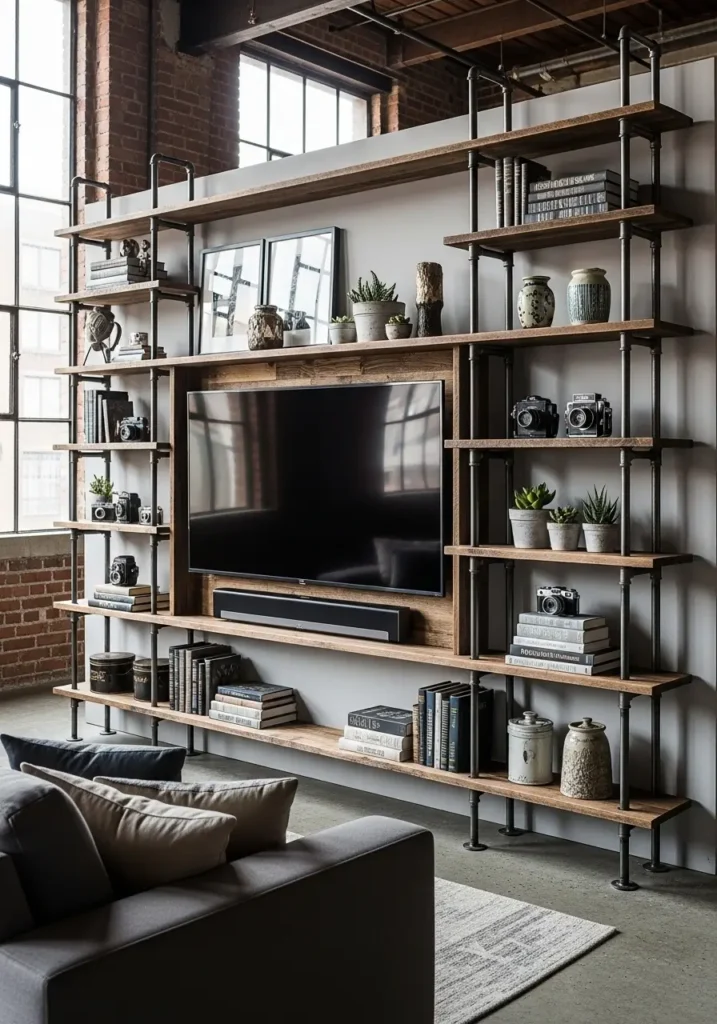
For modern or industrial spaces, incorporate metal pipe shelving around your television. These edgy designs add functional storage while maintaining a contemporary aesthetic perfect for loft-style living. Black iron pipes contrast beautifully with reclaimed wood shelves, creating urban sophistication.
DIY advantage: Pipe shelving is surprisingly affordable and easy to customize. Standard plumbing pipes and fittings from hardware stores create custom configurations for $200-$400.
10. Living Wall Design
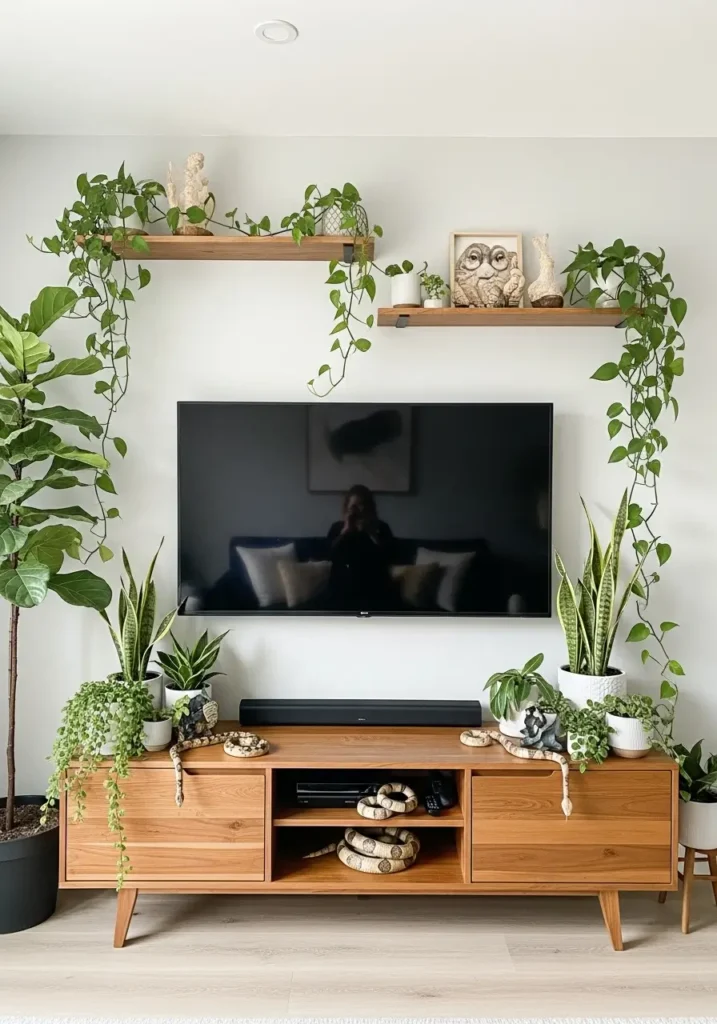
Surround your TV with plants using wall-mounted planters or living wall systems. These biophilic designs bring nature indoors while softening the hard lines of electronic equipment. Plants improve air quality, reduce stress, and create organic focal points that balance technology’s presence.
Plant selection: Choose low-light tolerant species like pothos, snake plants, or philodendrons. Install grow lights within shelving if natural light is limited.
11. Sliding Panel System
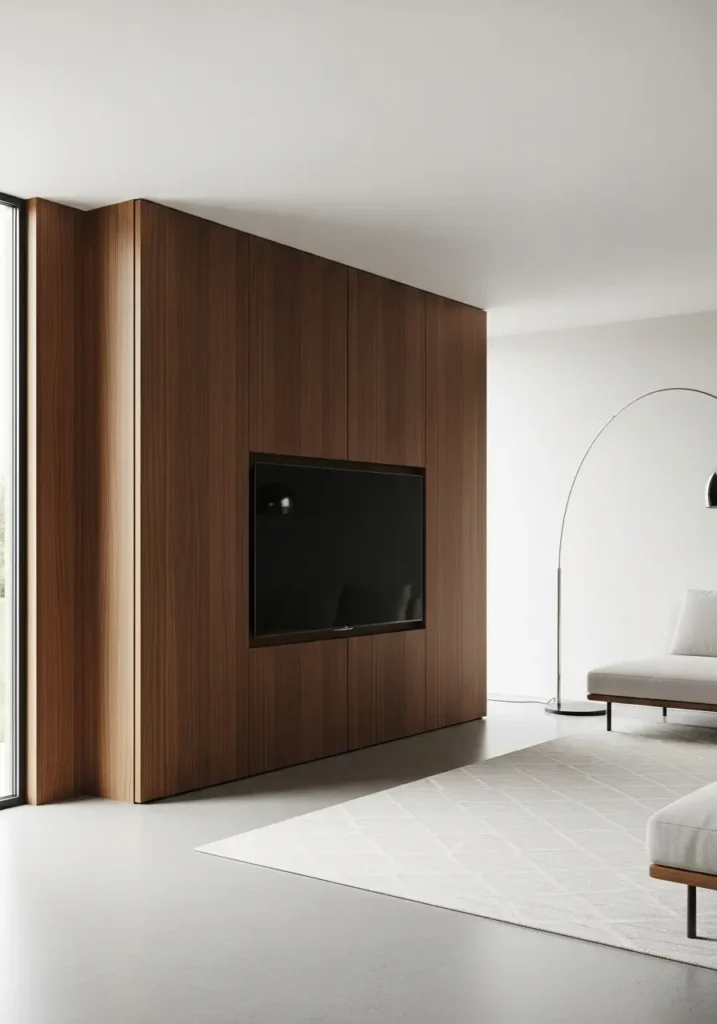
Install sliding panels that hide or reveal your TV as needed. These sophisticated solutions work especially well in multi-purpose rooms or minimalist spaces where the television isn’t always the focal point. Barn door hardware, fabric panels, or custom sliding art pieces transform your TV wall instantly.
Material options: Wood panels add warmth, metal screens create industrial vibes, and fabric panels introduce softness. Choose based on your overall room aesthetic.
12. Corner Installation
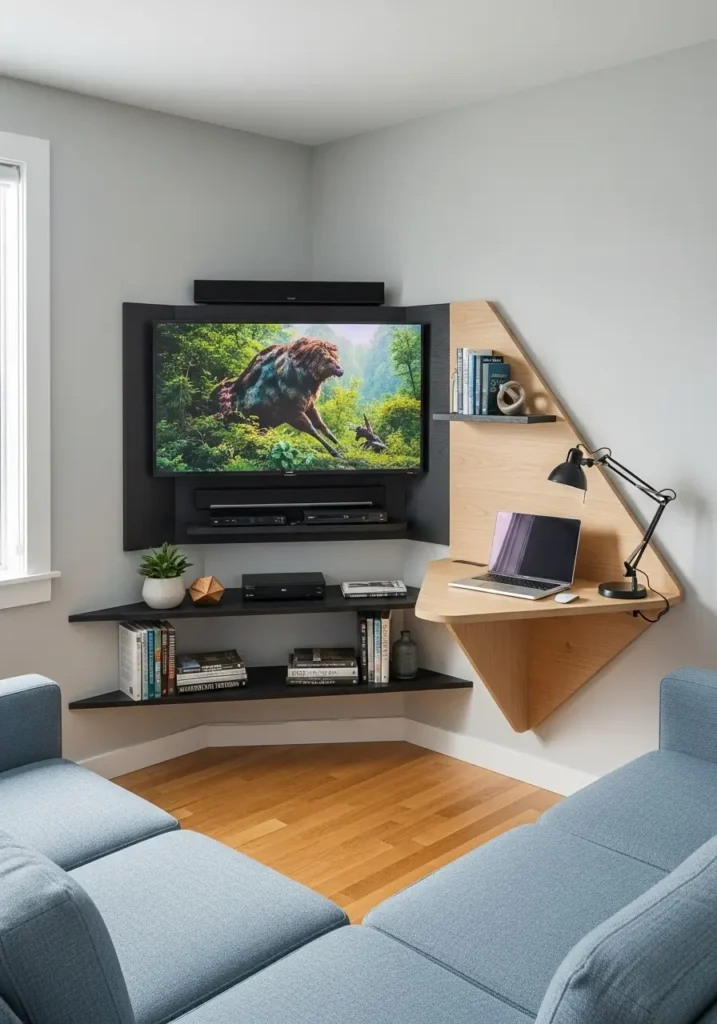
Make use of corner spaces with angled mounting systems. These space-efficient solutions can be particularly effective in smaller rooms where wall space is at a premium but you still want maximum impact. Full-motion mounts allow you to pull the TV out and angle it toward different seating areas.
Layout benefit: Corner mounting frees up prime wall space for windows, artwork, or furniture placement while still providing excellent viewing from multiple angles.
→ Creative Storage Solutions
13. Hidden Component Storage
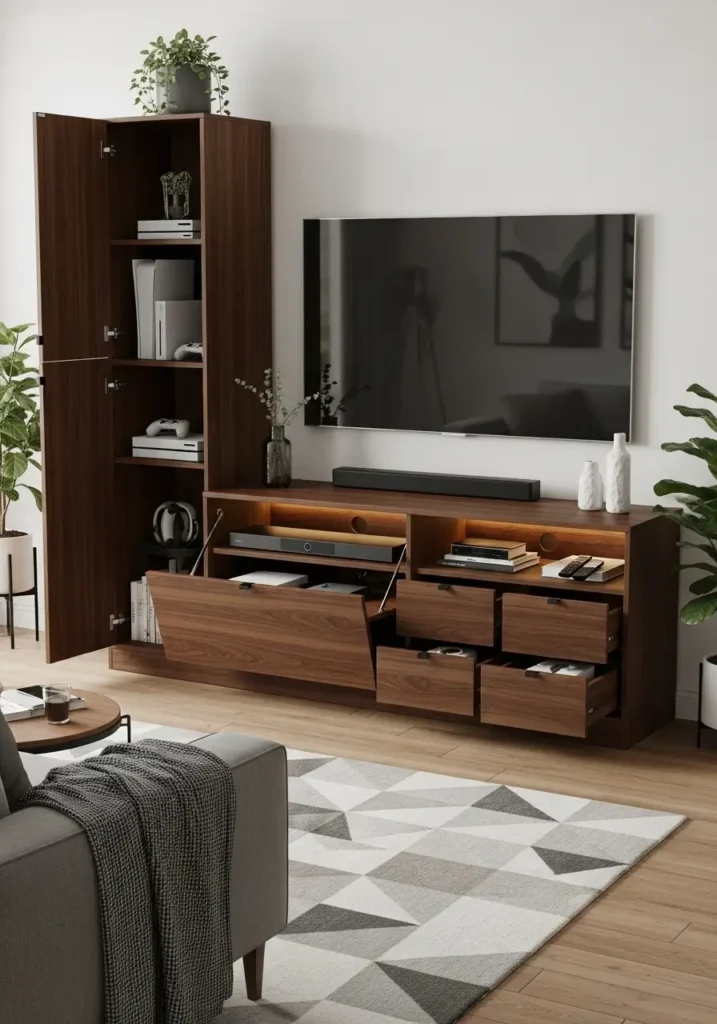
Design your entertainment center with concealed storage for gaming consoles, streaming devices, and other equipment. These practical solutions use cabinet doors with soft-close hinges, drawers for media and remotes, or cleverly designed compartments with ventilation for heat-generating electronics.
Ventilation essential: Ensure 2-3 inches clearance around components. Consider adding small fans to enclosed cabinets housing gaming systems or receivers that generate significant heat.
14. Multi-Level Shelving
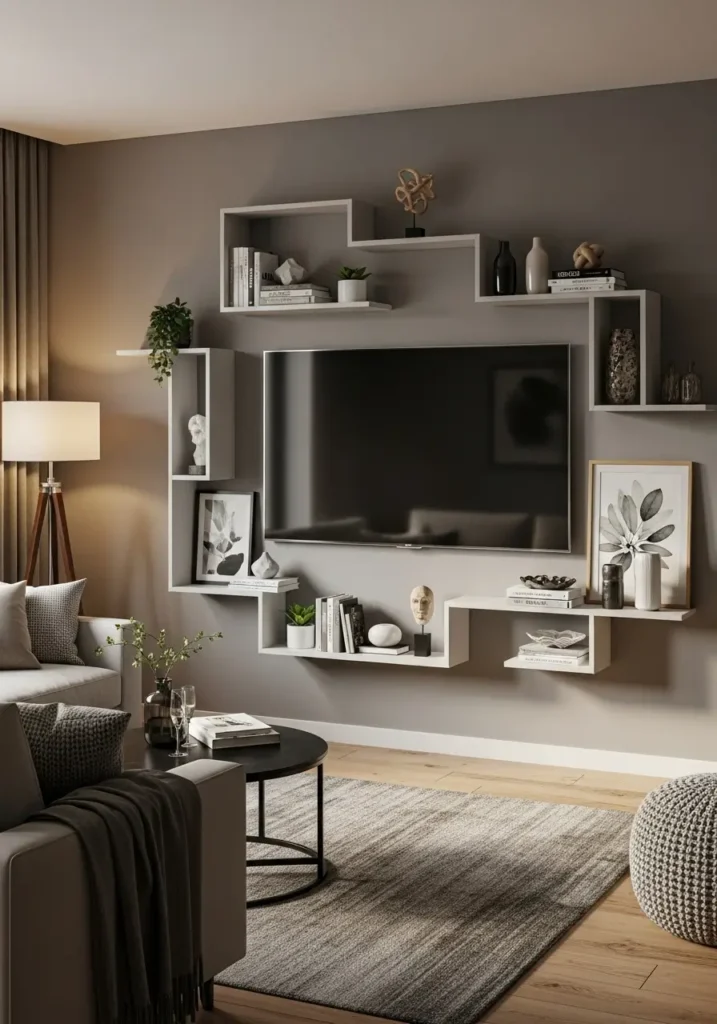
Create visual interest with shelves at varying heights and depths. These asymmetrical designs feel more organic than traditional symmetrical layouts and allow for creative styling opportunities. Different depths accommodate various objects—shallow shelves for photos, deeper ones for books or decorative boxes.
Design principle: Vary shelf spacing to create rhythm. Group three shelves close together, then leave larger gaps. This prevents the boring uniformity of evenly-spaced shelving.
15. Frame TV Concept
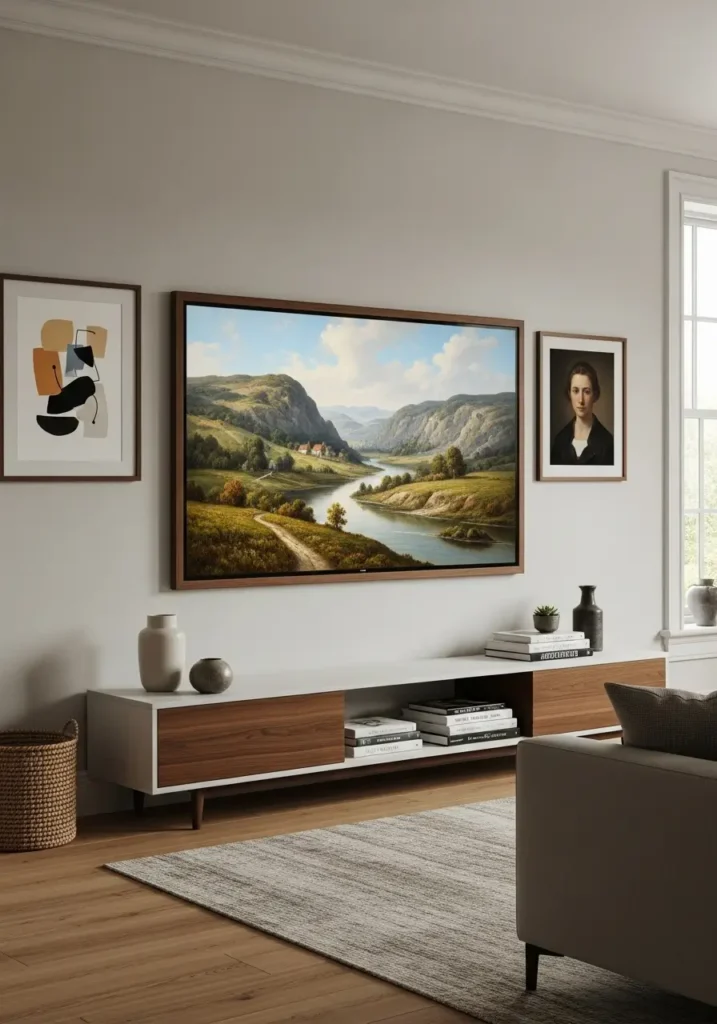
Use TVs designed to look like picture frames when not in use, or create your own frame around a standard TV. Samsung’s Frame TV popularized this concept, displaying artwork when idle. DIY versions use molding or custom frames around conventional TVs for similar effects at lower costs.
Art display: Frame TVs offer thousands of art options through subscription services, rotating masterpieces, family photos, or your own photography for personalized galleries.
Which of these 15 TV wall designs speaks to your style—the modern wood slat panels, gallery wall approach, or perhaps the hidden sliding panel system? What’s holding you back from implementing it—budget, rental restrictions, or lack of DIY confidence? Let’s discuss solutions in the comments!
Technical Considerations: Mounts, Lighting, and Safety
→ Professional Mounting Solutions for 2026
The mount you choose can make or break your entertainment center design. Modern mounts in 2026 offer improved cable management, easier installation, and better weight distribution. Here’s how to select the perfect option for your specific project and screen size:
⚠️ Wall Stud Essential: Always mount into wall studs using appropriate lag bolts. Toggle bolts or drywall anchors alone cannot safely support modern large-screen TVs. Use a stud finder to locate studs, and if studs don’t align with your desired TV position, use a mounting plate that spans multiple studs.
Related Post: Floating Shelves Wood: 15 Genius DIY Ideas for Your Home
→ Lighting TV Wall Ideas for Enhanced Viewing
Proper lighting isn’t just about aesthetics—it dramatically impacts your viewing comfort and is essential for successful entertainment center design. Strategic lighting enhances the perceived quality of your TV’s picture while reducing eye strain during extended viewing sessions.
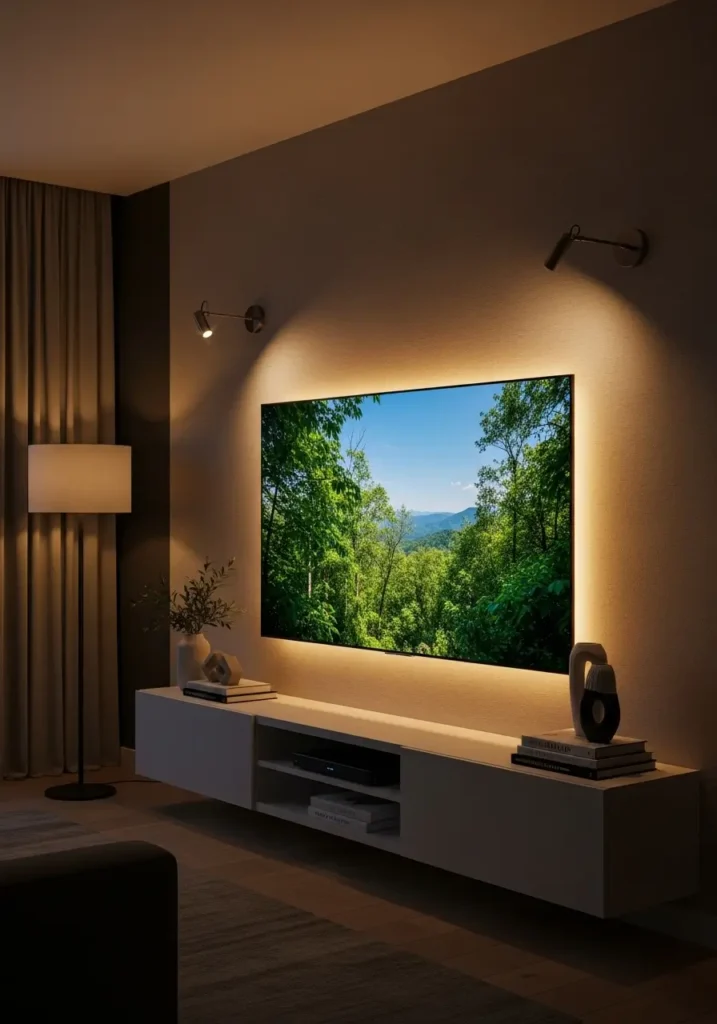
The 2026 lighting evolution emphasizes LED integration within architectural elements. Strip lights hidden behind wood slat panels create ambient glow without direct glare. Recessed lighting within built-in shelving highlights decorative objects while providing soft illumination. Smart bulbs sync with on-screen content for immersive experiences.
💡 Bias Lighting Benefits: LED strips behind your TV can reduce eye strain by up to 50% while making colors appear more vibrant and blacks deeper. This simple $20-40 upgrade significantly improves viewing comfort during movie marathons or gaming sessions.
Essential Lighting Guidelines for TV Wall Ideas:
- ✓Bias lighting behind your TV: Reduces eye strain, enhances perceived contrast, and improves color accuracy
- ✓Dimmable ambient lighting: Control room brightness to match viewing preferences throughout the day
- ✓Position lights to avoid screen glare: Never place lights where they reflect directly on the screen surface
- ✓Color temperature matters: Warmer lights (2700K-3000K) for evening viewing, cooler lights (4000K+) for daytime
- ✓Accent lighting for design elements: Highlight architectural features, artwork, or decorative objects around your display
- ✓Smart lighting integration: Sync lights with content using systems like Philips Hue for immersive experiences
Budget-Friendly vs. Luxury TV Wall Ideas
DIY Budget Range: $200-$800 for mounting systems, basic shelving, and LED lighting
Mid-Range Professional: $1,000-$3,000 for custom installations with integrated storage
Luxury Custom Build: $3,000-$10,000+ for floor-to-ceiling built-ins with premium materials
Remember: Great design stems from creativity and planning, not just budget. Many stunning entertainment centers are achieved with smart DIY solutions, IKEA hacks, and thoughtful material choices that look custom at fraction of the cost.
Common Mistakes to Avoid with TV Wall Ideas
⚠️ The 42-48 Inch Rule: The center of your TV screen should be at eye level when seated. This is typically 42-48 inches from the floor for most seating arrangements. Measure from your actual couch height, not standing eye level.
Many homeowners make critical errors that can ruin otherwise beautiful entertainment center designs. These mistakes waste money, create safety hazards, or result in uncomfortable viewing experiences. Learning from others’ errors saves time, frustration, and costly do-overs. Here are the most common pitfalls to avoid:
- Mounting too high: This causes neck strain and poor viewing angles. TV centers above fireplaces often sit 12-18 inches too high for comfortable viewing.
- Ignoring room lighting: Not considering natural light angles, window glare, or how artificial lighting reflects on the screen surface.
- Inadequate cable management: Visible wires snaking down walls destroy otherwise clean aesthetics and scream “amateur installation.”
- Wrong size selection: Either overwhelming small spaces with massive screens or choosing undersized TVs that look lost on large walls.
- Poor component planning: Not accounting for gaming consoles, soundbars, streaming devices, and their ventilation needs.
- Structural oversight: Not ensuring proper wall support, missing studs, or using inadequate mounting hardware for heavy installations.
- Forgetting future-proofing: Not leaving room for technology upgrades, larger screens, or additional components down the road.
- Neglecting acoustics: Placing TVs in corners or against glass surfaces that create audio reflections and poor sound quality.
DIY vs. Professional Installation for TV Wall Ideas
The decision between DIY and professional installation depends on several factors including your skill level, available time, tool access, and the complexity of your chosen design. Some projects are perfect weekend DIY tasks, while others demand professional expertise for safety and optimal results.
DIY installations save money and provide satisfaction, but mistakes can cost more than hiring professionals initially. Professional installers bring experience, proper tools, and liability insurance. They complete projects faster and guarantee their work. Assess your situation honestly before committing to either path.
Consider DIY If You Have:
- ✓Basic carpentry skills and comfortable using power tools
- ✓A stud finder, level, drill, and appropriate mounting hardware
- ✓Time to research proper techniques and watch tutorial videos
- ✓A simple design without complex electrical or structural modifications
- ✓Confidence in locating wall studs and mounting safely
- ✓Help from a second person (TVs over 55″ require two people)
Hire Professionals For Complex Projects Like:
- ⚠In-wall wiring and electrical work requiring permits
- ⚠Custom built-in construction with carpentry and finishing work
- ⚠Complex mounting situations (brick, tile, concrete, metal studs)
- ⚠Integration with home automation, whole-house audio, or smart home systems
- ⚠TVs over 75 inches requiring specialized mounting and calibration
- ⚠When warranty protection and insurance coverage is important
Have you tackled a DIY TV wall project before? What went smoothly, and what would you do differently next time? Your experiences—both successes and lessons learned—help others avoid common pitfalls. Share your TV wall story in the comments below!
→ Expert Resources for TV Wall Ideas
For additional inspiration and professional guidance on implementing entertainment center designs, consider consulting these trusted design resources. These platforms showcase real installations, provide product recommendations, and connect you with professionals in your area:
💡 Design Inspiration: Visit Houzz’s TV Wall Photo Gallery for thousands of real-world designs and professional installations. For cutting-edge design trends and expert advice, explore Architectural Digest’s Television Design Features.
Your TV Wall Ideas, Your Personal Statement
Creating the perfect entertainment center transcends simply mounting a screen—it’s about crafting an intentional space that reflects your lifestyle and enhances your daily living experience. Whether you choose minimalist floating designs, sophisticated built-in systems, or trendy wood slat panels, the key is thoughtful planning and attention to detail.
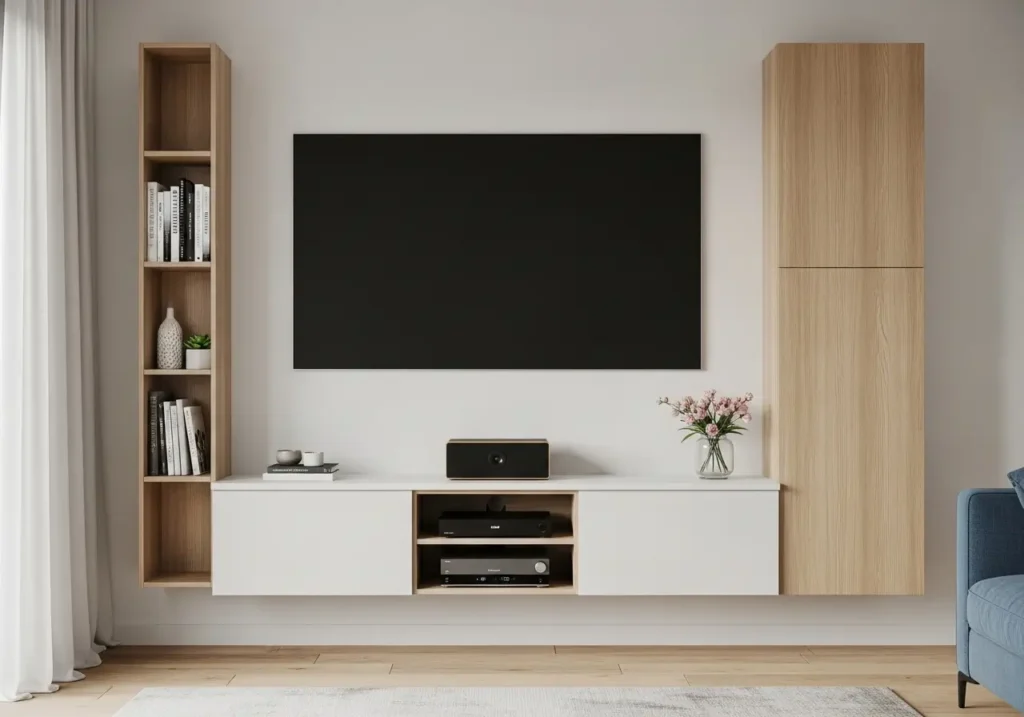
The 2026 design landscape offers exciting possibilities—from color-drenched walls that embrace your TV rather than hiding it, to smart lighting that creates immersive viewing environments. Fluted finishes and curved silhouettes replace harsh edges, while integrated storage solves practical challenges elegantly.
Remember, the best designs serve your specific needs while contributing to the overall harmony of your living space. These concepts should seamlessly blend technology with your personal aesthetic vision, creating focal points that elevate your entire home.
Frequently Asked Questions About TV Wall Ideas
Share Your TV Wall Journey
Your experience matters! Whether you’re planning your first TV wall project or you’ve transformed multiple spaces, this community benefits from your insights.
Tell us in the comments: Which TV wall idea from this guide inspires you most? What’s stopping you from starting your project—budget constraints, technical concerns, or design indecision? Have you discovered creative solutions we haven’t covered? Share photos of your completed TV walls or ask questions about challenges you’re facing. Let’s help each other create entertainment spaces we genuinely love!
Thank you for reading this complete guide to TV wall ideas!
Share your projects, questions, and design successes in the comments. Your engagement helps us create better content for homeowners transforming their entertainment spaces. Here’s to creating focal points that combine function with style! ✨