The world’s most admired show gardens lean heavily into layered drifts of green and violet, and there’s a good reason for that: the combination reads as calm, romantic, a little wild, and far more expensive than it actually needs to be. Best of all, you don’t require a permanent crew of gardeners to get the look. Many of the longest-blooming purple perennials and annuals are surprisingly unfussy.
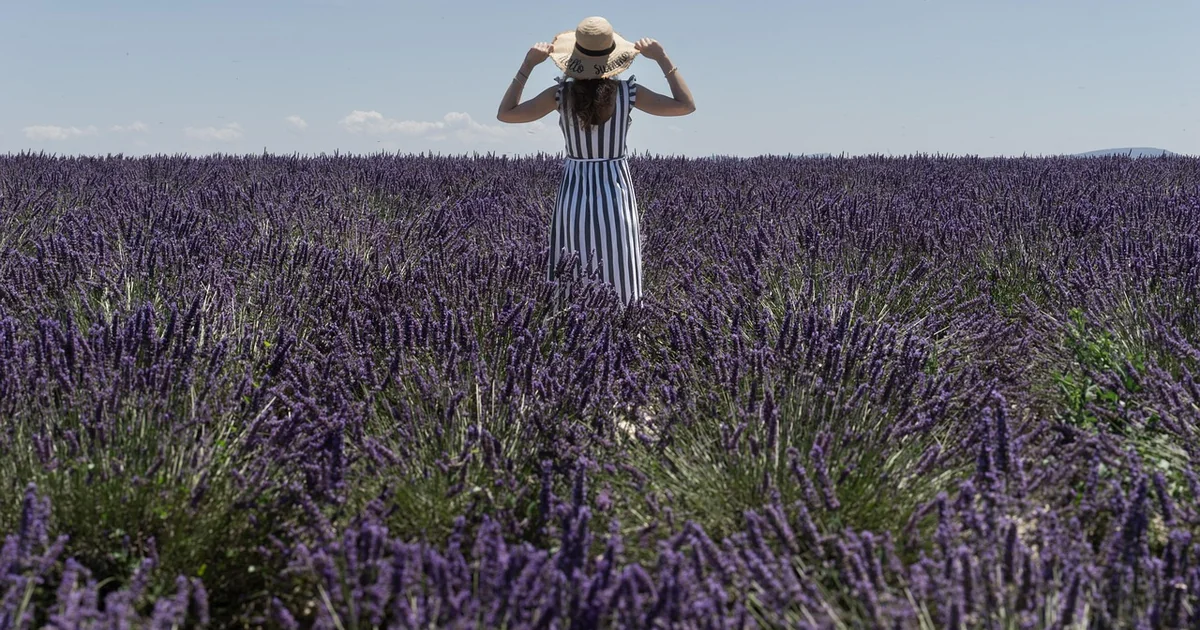
Keen to give it a go for yourself? Here are 11 purple flowers that keep going through summer’s heat, patchy watering schedules, and the occasional bout of complete neglect — while feeding bees, butterflies, and other pollinators along the way.
1. Why is lavender a staple in dream gardens?
Lavender shows up on almost every dream-garden mood board, and not just because it photographs beautifully. Its silvery foliage, slender purple flower spikes, and unmistakable scent instantly make a yard feel calmer and more established. Better still, lavender actively prefers full sun and fast-draining soil — exactly the kind of tough growing conditions that make fussier plants throw in the towel.
Once it settles in, lavender becomes remarkably unfazed by dry spells and continues to pour out blooms from late spring right through the dog days of summer. Bees treat it like a neighborhood café, and the foliage holds its cool gray color even in blazing heat. If you want a variety that stretches the show, consider Grosso Lavender (USDA Zones 5–8) for an extra-long season, Sensational!® Lavender (Zones 5–9) for larger-than-average blooms, or Phenomenal® Lavender, a French hybrid that often keeps flowering until the first frosts kiss the garden.
Lavender offers silvery leaves, fragrant purple wands, drought tolerance, and a steady stream of bee visitors — provided it has full sun and soil that never stays soggy.
2. How does Russian sage create a designer garden effect with little effort?
Russian sage is one of those quiet overachievers that transforms a planting bed without asking for much in return. Its soft, smoky-purple flowers seem to hover above a cloud of silvery, finely cut stems, giving even a small border the layered, painterly quality of a professional planting scheme. Which means, yes, you get that coveted “designer garden” look practically on autopilot.
This plant genuinely thrives in heat and handles drought with poise. Long after many perennials have faded into crispy brown silhouettes, Russian sage keeps sending up airy spires of lavender-purple that catch the breeze and keep the garden moving. For tighter spaces, Blue Jean Baby Russian Sage delivers the same dreamy effect in a more compact frame, and it stays hardy from Zones 4 through 9 — so cold-climate gardeners aren’t left out.
Russian sage gives you soft purple flower clouds on silvery stems, stands up to heat and dry soil, and extends the bloom season far past the point where most neighbors’ gardens have peaked.
3. What makes salvia a hardworking summer border plant?
If gardens had an employee-of-the-month award, salvia would win it repeatedly. Its upright spikes of rich purple bring structure and color for months, turning what could be a floppy, shapeless bed into something that looks intentional. A light trim of spent flower stalks every couple of weeks is often the only maintenance it asks for.
Many salvia varieties sail through hot, dry stretches that leave other plants sulking, which is why they’ve become go-to picks for low-maintenance landscapes across much of the United States. Hummingbirds, bees, and butterflies all seem to get the memo, zipping from spike to spike from early summer until cooler weather arrives. A standout such as Sensation® Sky Blue Salvia pairs that long season of bloom with solid deer resistance and a bushy, well-behaved silhouette.
Salvia delivers flat-topped purple spires that anchor a border for months, copes with heat and dry spells without a fuss, and turns the flower bed into a pollinator hotspot.
4. How can clematis ‘Diamantina’ make a garden look expensive?
If you want a plant that makes your outdoor space read as wildly more costly than it actually is, this clematis might just be it. ‘Diamantina’ produces extravagant double purple blooms with a ruffled, old-fashioned silhouette that feels almost couture. The flowers are large enough to stop traffic, yet they repeat steadily through summer once the vine finds its rhythm.
Hardy across USDA Zones 4–9, ‘Diamantina’ can be trained onto trellises, woven through fences, draped over arches, or even grown in a generously sized container — so it earns its keep whether you garden on acres or on a condo balcony. Because the vine reaches a manageable height, it rarely turns into an unkempt monster, and the bloom-after-bloom habit means you’re rarely without a shot of deep purple.
Clematis ‘Diamantina’ gives you generously sized, doubled, old-rose-purple flowers that reappear throughout the summer, and it adapts to trellises, fences, or containers in Zones 4 through 9.
5. What makes agastache both delicate and tough?
Agastache reads like a contradiction in the best possible way. The tall, slender spikes of tiny purple flowers look as fragile as blown glass, shifting with every puff of summer wind and catching the late-afternoon light like gauze. Beneath that delicate exterior, though, is a plant built to handle rough conditions.
A single established agastache can bloom for months over summer, pumping out nectar-rich flowers that draw a steady parade of hummingbirds and bees. It doesn’t demand rich soil or constant watering, and its licorice-scented foliage is usually left alone by deer and rabbits. Plant it where the sun is strong and drainage is sharp, and it will repay you with a hazy screen of purple that bridges the gap between low-growing perennials and taller back-of-border shrubs.
Agastache puts up tall, airy purple blossoms for an entire summer season, looking fragile while shrugging off heat and dry conditions like a true survivor.
6. Why does Verbena bonariensis seem to float above the garden?
Verbena bonariensis doesn’t follow the usual rules of flower placement. Its wiry, branching stems stretch up to four feet or more, topped with flat clusters of vivid purple that appear to hover weightlessly over the plants around it. That see-through silhouette makes it a master blender — you can slot it anywhere and it never blocks the view.
From early summer right into autumn, those tiny flower heads act like landing pads for butterflies and bees. The plant self-seeds with gentle enthusiasm in many regions, so a single purchase often turns into a drifting cloud of purple that returns year after year. It asks for little more than a sunny spot and decent drainage, and it keeps blooming even when you forget to water for a while.
Verbena bonariensis adds a floating layer of purple that bridges height gaps, feeds pollinators for months, and shrugs off dry spells with slender grace.
7. How does Liatris spicata add vertical drama to summer borders?
Liatris spicata — often called blazing star or gayfeather — offers a different kind of purple punctuation. Instead of soft clouds, it sends up dense spikes packed with tiny flower heads that open from the top downward, like a slow-motion purple firework. The effect is architectural and attention-grabbing, especially when planted in groups of five or seven.
These spikes stay fresh for weeks in the garden and can double as long-lasting cut flowers indoors. They tolerate a fair amount of drought once the root systems are established, and they attract bees and butterflies almost as well as a dedicated butterfly bush, all while resisting deer. Give them full sun and soil that doesn’t winter-wet their roots, and they’ll return with more clout each season.
Liatris spicata rises up with wand-like purple spikes that bloom for weeks in midsummer, adding vertical punch and a reliable pollinator pit stop.
8. What makes balloon flowers a playful yet elegant addition?
Balloon flower (Platycodon grandiflorus) brings a pinch of whimsy to the perennial bed without tipping into childish territory. The buds swell into plump, star-shaped balloons before they crack open into wide violet-blue bells — a performance that plays out repeatedly from early to late summer if you stay on top of snipping off the spent blossoms.
You may also enjoy reading: 5 Secrets to Grow & Care for Azaleas.
The plant’s tidy, clumping habit won’t sprawl or bully its neighbors, and it fits just as nicely into a cottage-garden jumble as it does in a more formal border. While it prefers consistent moisture, it tolerates short dry spells once the roots dig in. A clump kept well-deadheaded often pumps out fresh purple color well past Labor Day.
Balloon flower enchants with bud-to-bloom theatre, delivering steady purple-blue bells all summer long from a well-behaved, non-invasive clump.
9. How does catmint deliver a soft, lavender-like haze with less fuss?
If you love the idea of lavender but battle heavy clay or wet winters, catmint (Nepeta) steps in as a near-indestructible stand-in. It blankets itself in thousands of small, lavender-purple flowers over aromatic gray-green foliage from late spring until the first cool snap, often with no more care than a single hard shear halfway through the season.
Drought tolerance is off the charts once it’s rooted in, and deer and rabbits typically give it a wide berth. The soft, mounding plants spill over the edges of paths and walls, blurring hard lines and giving the garden a relaxed, lived-in feel. Bees work the blooms tirelessly, and the foliage releases a pleasant, minty-camphor scent when you brush against it.
Catmint drapes the garden in a gentle purple haze all season, demands almost no extra water, and softens every edge it touches while feeding local bees.
10. Why is Allium ‘Millenium’ the perfect bridge between ornamental and easy-care?
Ornamental onions don’t always scream “all-summer blooms,” but Allium ‘Millenium’ is an exception. This compact selection fires up just as the early-summer fever dies down, producing perfectly rounded heads of rosy-purple florets on sturdy, upright stems that look right at home alongside coneflowers, black-eyed Susans, and salvias.
The globes hold their color and shape for a surprisingly long stretch — often from mid-July into September — and they dry beautifully if you want to carry the display indoors. Deer and rabbits tend to pass them by, and the clumps stay neat and grass-free without staking. A sunny, well-drained spot is all ‘Millenium’ really asks for.
Allium ‘Millenium’ pops out globe-shaped purple flower heads in the second half of summer, bridging the gap between high-season fireworks and autumn, all while staying virtually trouble-free.
11. What makes heliotrope the sweet-scented secret of cottage gardens?
Heliotrope (Heliotropium arborescens) has been charming gardeners for generations, largely because of its fragrance. The clusters of tiny, deep purple flowers carry a rich, vanilla-almond scent that intensifies on warm afternoons — the kind of perfume that makes you slow down and linger by a patio pot or a front walk.
Though often treated as an annual outside of frost-free zones, heliotrope blooms relentless from early summer until cold weather takes it out, especially if you remove faded heads. It thrives in full sun with decent moisture, and the compact, bushy plants tuck neatly into containers, window boxes, and the front of a mixed border. A dark-leafed variety like ‘Black Beauty’ can make the purple stand out even more.
Heliotrope wraps the garden in deep purple flower clusters and a sweet vanilla fragrance from summer’s start to frost, thriving in sun and rich soil.
Styling your garden with purple summer flowers
Purple summer flowers play well with almost every other color in the garden, but they truly sing when you pair them with silver foliage, lime-green accents, or crisp white blooms. Plant lavender and Russian sage next to golden oregano or ‘Angelina’ sedum for a high-contrast combo that stays vivid even in the dog days. Lean into repetition: a single magenta-purple balloon flower might get lost, but five of them dotted through a bed create a visual rhythm that reads as much more polished than it actually is.
Because many of these plants — catmint, salvia, verbena — have airy, open habits, they also make excellent see-through plants. Use them in the middle of a border to soften bolder shapes without blocking the view of what’s behind. And if containers are your main gardening canvas, pair heliotrope with trailing silver dichondra or purple sweet potato vine for a summer display that earns its keep until the nights turn chilly.
Frequently Asked Questions
How do I keep my purple summer flowers blooming steadily all season long?
Regular deadheading is the single most effective habit. Snipping off spent flowers before they go to seed nudges plants like salvia, balloon flower, and catmint to produce repeat flushes. A light application of a balanced, slow-release fertilizer in early summer supports steady growth, and consistent but not drenching watering — especially during dry spells — keeps the flower factory running well into fall.
Which of these purple flowers handles intense heat and drought the best?
Russian sage and lavender are the undisputed champions of hot, dry spots. Russian sage develops an extensive root system that mines deep moisture, while lavender actually prefers lean, gritty soil and minimal water once established. Verbena bonariensis and catmint follow closely behind, making them excellent choices for xeriscape beds or gardens that can’t count on regular irrigation.
Are any of these purple summer flowers dangerous for dogs or cats?
Lavender and Russian sage are generally considered non-toxic to dogs and cats, although eating large amounts of any plant can cause mild stomach upset. Heliotrope, however, contains pyrrolizidine alkaloids that can be toxic if consumed in significant quantities, so it’s safest to plant it out of reach of curious nibblers. If you share your outdoor space with pets, verify each plant’s safety profile with your veterinarian or a reliable database before adding it to your garden.