Starting Your Bathroom Reno: The Big Shower Decision
Standing in the middle of a gutted bathroom, you face a choice that will shape your mornings for years to come. On one side lies a factory-made kit that promises speed and affordability. On the other sits a craftsperson’s vision of tile, mortar, and enduring style. Each path has distinct trade-offs, and knowing them can save you from costly regret.
What Defines a Prefab Shower Stall?
A prefabricated shower stall leaves the factory as a complete system. Manufacturers shape fiberglass or acrylic into a shower pan and matching wall panels. These kits arrive at your home in either one bulky piece or several flat-packed sections. The one-piece design feels solid because it has no seams, but getting it through a standard 30-inch doorway often proves impossible. Multi-piece units solve that problem. Their flat boxes fit through narrow halls and around tight corners.
Most home improvement centers stock only a few basic models. If you want a specific color, texture, or size, you will likely need to place a special order. High-end prefab units use solid-surface materials that imitate marble or granite. These luxury versions can cost nearly as much as a custom tile installation, but they still arrive as a single factory product with limited dimensions.
Prefab Shower Wall Kits
Sometimes your existing bathtub remains in excellent condition. In that scenario, a full shower kit is overkill. A wall kit solves the problem by providing only the three alcove panels that cover the walls above your tub. These panels attach directly to bare studs or over old tile that is still firmly adhered. Many wall kits come with molded grout lines that fake the look of real tile. For a convincing stone aesthetic, solid-surface panels offer a smooth, seam-free appearance that closely resembles polished marble.
What Makes a Tiled Shower Different?
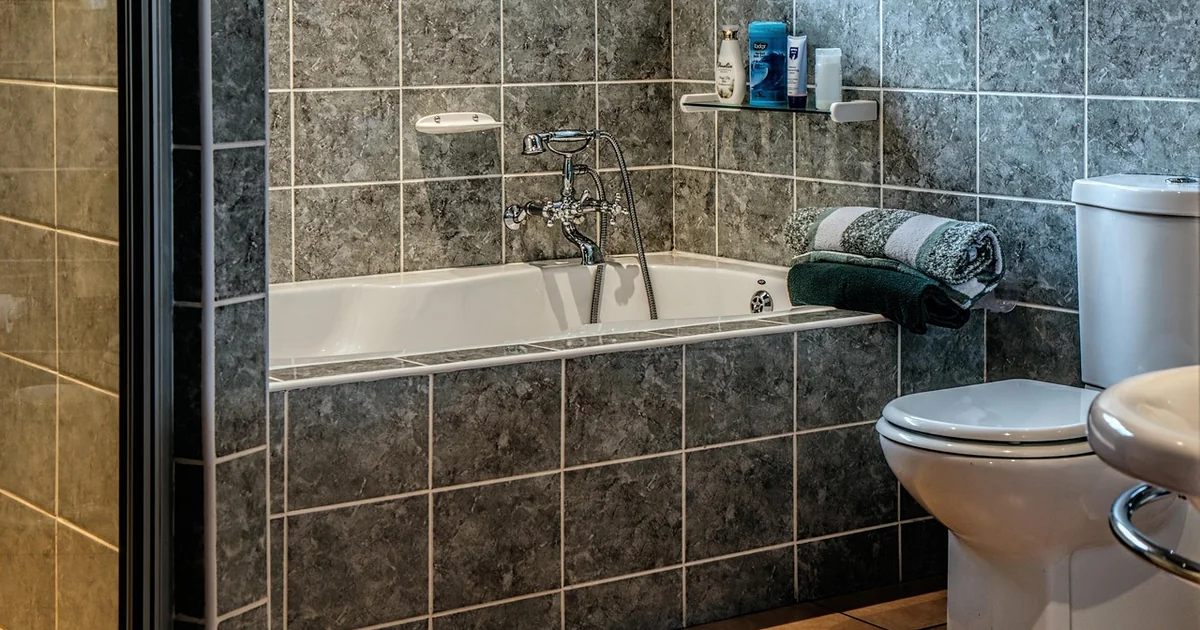
A custom tile shower is born on-site. Carpenters first build a structural frame and cover it with cement board panels such as Wonderboard or Durock. Then tilers arrive to apply mortar, set each tile by hand, and grout every joint. The entire process takes at least a week and sometimes longer. Every decision about tile size, pattern, grout color, and trim profile happens in your home, not on a factory floor.
Tile shower pans are notoriously difficult to construct correctly. The slope toward a hybrid approach. You a factory-made shower pan and then tile only the walls. This method simplifies the hardest part of the hardest part of the job while still giving you a custom look above the pan.
The 13 Pros and Cons of Prefab vs Tiled Showers
The following breakdown covers the most important factors in the prefab vs tiled shower comparison. Each item highlights a concrete advantage or drawback so you can weigh what matters most for your project.
1. Cost: Prefab Wins on Price
An acrylic or fiberglass shower insert costs between $400 and $2,000. That price includes the pan, walls, and sometimes the door. A custom tile shower starts around $1,500 for a basic alcove and climbs quickly to $5,000 or more for premium materials and complex layouts. If your budget is tight, the math favours prefab by hundreds or even thousands of dollars.
2. Installation Speed: Prefab Is Ready in a Day
An experienced DIYer can install a multi-piece prefab unit in a single afternoon. A professional crew finishes the job in one day as well. Tiled showers, by comparison, stretches across five to ten working days. The cement board needs time to cure. The mortar must set. The grout requires sealing. You cannot rush tile work without compromising the result.
3. Design Variety: Tiled Offers Endless Choices
With a prefab shower, you choose from roughly a dozen stock shapes and colors. Special orders expand that range, but you are still limited to factory moulds. Tiled showers give you complete freedom. You can mix subway tiles with hexagonal floor pieces, add a niche with contrasting mosaic, or install a bench wrapped in marble. The only limit is your imagination and your budget.
4. Durability: Tiled Surfaces Last Decades
Quality tile and stone showers survive for 30 to 50 years with proper maintenance. Acrylic and fiberglass panels last 10 to 20 years before they start to show wear. Scratches, dulling, and warping eventually appear on prefab surfaces. Tile, once properly installed and sealed, resists moisture, impact, and daily cleaning without degrading.
5. Repair and Maintenance: Prefab Is Simpler
When a prefab panel cracks or a seam fails, you can often replace just that panel. Kits are modular. Tile showers, require locating matching tile, removing grout, and resetting individual pieces. Colour batches change over time, so a repair may never match perfectly. Grout itself needs regular cleaning and resealing every one to two years to prevent mould and staining.
6. Installation Difficulty: Prefab Favors DIYers
Setting a prefab unit requires basic carpentry skills, a level, and caulk. Many homeowners complete the job themselves. Tile installation demands real skill. Spacing tiles consistently, cutting around fixtures, and achieving a watertight pan are tasks that most DIYers find overwhelming. A single mistake can lead to leaks that ruin the subfloor and cause structural damage.
7. Waterproofing: Tiled Requires Expert Attention
A one-piece prefab unit has no seams except at the door. Leaks are rare. Tiled showers have dozens of grout lines, corners, and transitions. If the waterproofing membrane or cement board is installed incorrectly, water seeps into the wall cavity. About 37 percent of tile shower failures trace back to poor waterproofing, according to industry repair data. You cannot afford to cut corners here.
You may also enjoy reading: 7 Ways Heather Transforms Georgia Outdoor Living.
8. Resale Value: Tiled Adds More Equity
Real estate agents consistently report that bathrooms with ceramic or stone tile appraise higher than those with prefab units, especially in. A custom shower signals quality and craftsmanship to potential buyers. A prefab unit, even a nice one, can feel like a low-end solution. For many sellers, a high-quality tile shower recovers 60 to 70 percent of its cost at resale, while prefab recovers closer to 40 percent.
9. Fit and Sizing: Prefab Has Fixed Dimensions
Prefab units come in standard sizes such as 32 by 32 inches, 36 by 36 inches, and 60 by 30 inches. If your alcove deviates even an inch, you need shims or custom framing. Tiled showers are measured and built to your exact space. Odd angles, sloped ceilings, and irregular alcoves are no problem for a tile installation. The shower fits perfectly because it is built in place.
10. Cleaning and Hygiene: Prefab Is Easier to Wipe
Non-porous acrylic and fiberglass surfaces repel soap scum and mildew better than tile grout. A quick wipe with a squeegee keeps prefab panels clean. Tiled showers require scrubbing along every grout line. Over time, grout develops microscopic cracks where mould takes hold. If you dislike deep cleaning bathrooms, the low-maintenance nature of prefab is a strong advantage.
11. Aesthetic Warmth: Tiled Feels More Luxurious
There is an intangible quality to a well-crafted tile shower. The slight unevenness of hand-laid tile, the depth of a glazed finish, and the weight of natural stone create a sensory experience that prefab cannot imitate. Designers often say that tile showers make a bathroom feel like a spa. Prefab units, even the expensive ones, retain a slight plastic quality that some homeowners find less inviting.
12. Access for Delivery: Prefab Can Be Tricky
A one-piece prefab unit might be 60 inches tall and 36 inches wide. Getting it through a 30-inch door requires tilting at extreme angles or, in some cases, removing the door frame. Homeowners in older homes with narrow corridors sometimes find that the unit simply cannot reach the bathroom. Multi-piece kits avoid this problem, but if you order a one-piece shell, measure every doorway, turn, and stairway before purchase.
13. Long-Term Cost of Ownership: Tiled Can Be Cheaper Over Time
The initial premium for tile can be offset by its longevity. A $4,000 tile shower that lasts 40 years costs $100 per year. A $1,200 prefab shower that lasts 12 years costs $100 per year as well, and that does not include the hassle of replacement labor. If you plan to stay in your home for two decades or more, a quality tile installation may actually be more economical in the long run.
Which Option Fits Your Home Best?
The prefab vs tiled shower decision ultimately depends on your timeline, budget, and skill level. rental property or a quick flip, a prefab unit delivers speed and low upfront cost. For the home where you plan to raise your family and host holidays, a tile shower offers beauty, durability, and added property value.
Consider a middle path if you want the best of both worlds. Install a factory-made shower pan to avoid the trickiest step of tile work, then finish the walls with your choice of ceramic, porcelain, or natural stone. This hybrid approach keeps costs manageable while still giving you a custom aesthetic above the pan.
No matter which route you choose, invest in quality materials and honest installation. A shower that leaks or looks shoddy will frustrate you every single day. One that is built well, whether from acrylic or artisan tile, will make your mornings feel a little brighter for years to come.