Why Some Herbs Prefer Containers Over Garden Beds
An herb garden is a simple way to grow attractive plants you can also use in the kitchen. By growing herbs in containers, you can make the most of limited space – whether that’s a small yard, patio, or windowsill – while keeping conditions like soil, drainage, and sunlight in check. You’ll also have better control over how plants spread, making container gardening an easy, low-maintenance option that’s ideal for beginners. If you are looking for the best herbs for pots, you need to know which varieties benefit most from confinement and careful moisture management.
Most herbs are straightforward to grow, but how you start them can make a difference. Some are quick and reliable from seed, while others establish more easily when bought as young plants. Before we dive into the five top performers, let’s cover a few universal rules for container herb success.
How to Grow Herbs in Containers
While each type of herb has one or two unique needs, there are some basic rules to follow. Getting these right will give your plants a strong foundation.
Choose the Right Container
First, start with the right container. Different materials have their pros and cons, but what really matters is drainage. Make sure whatever pot you choose has drainage holes in the bottom. Without them, roots sit in water and rot quickly. Terracotta pots are porous and help soil dry evenly, which many herbs love. Plastic or glazed ceramic pots hold moisture longer, so you need to water less often but watch for sogginess.
Use a Sterile Potting Mix
Use a sterile, high-quality potting mix. Do not be tempted to simply dig dirt out of your garden. Garden soil compacts in containers and holds too much water, leading to root disease. You need a light mix that doesn’t compact or hold on to water. Look for a blend labeled for containers, often containing peat moss, perlite, and vermiculite. This gives roots the air and drainage they need.
Follow Spacing Guidelines
Whether you start herbs from seeds or use transplants, follow spacing suggestions. Overcrowding leads to disease because air cannot circulate between plants. In a pot, give each herb enough room to reach its mature size. If you are combining multiple herbs in one large container, check their growth habits first. Some spread aggressively, while others stay compact.
Water and Light Needs
Water and light needs vary, but most herbs need full sun – at least six hours of direct sunlight per day. Some tolerate dry soil better than others. All should be watered regularly and never allowed to dry out completely or get soggy or waterlogged. Stick your finger an inch into the soil; if it feels dry, it is time to water. During hot summer weeks, pots may need watering every day.
5 Herbs That Thrive Better in Pots
These five herbs will actually perform better in a pot than in the ground. Before planting, check that they are compatible with your USDA hardiness zone. If not, you can always grow outdoors in summer and move indoors over winter. Together, they offer a versatile, kitchen-ready mix that works across a wide range of cuisines. These are the best herbs for pots for anyone who wants a low-fuss, high-yield container garden.
1. Mint
Mint is a delightful culinary herb with many uses, both fresh and dried. It is tolerant of neglect and hard to kill. This makes mint incredibly easy to grow, but also a menace in the garden, as it spreads very aggressively by runners. Planting mint in the ground can lead to a quick takeover of beds and even lawns. Instead, grow mint in pots. This keeps the rapidly spreading plants contained and allows you to grow them on patios, balconies, and porches.
It is much quicker to start with plants rather than seeds. A single starter plant will fill a pot within a season. Once your mint plant is four to six inches (10 to 15 cm) tall, start harvesting it regularly by pinching off stems just above nodes. This will give you a regular harvest and encourage branching and dense growth. Mint is hardy in zones 3 through 11, meaning it survives freezing winters in most of the United States. In colder areas, the pot may need protection or you can bring it to an unheated garage. A surprising fact: mint contains about 37% more menthol when grown in slightly stressful conditions like a cramped pot, making the leaves more potent for teas and cocktails.
2. Basil
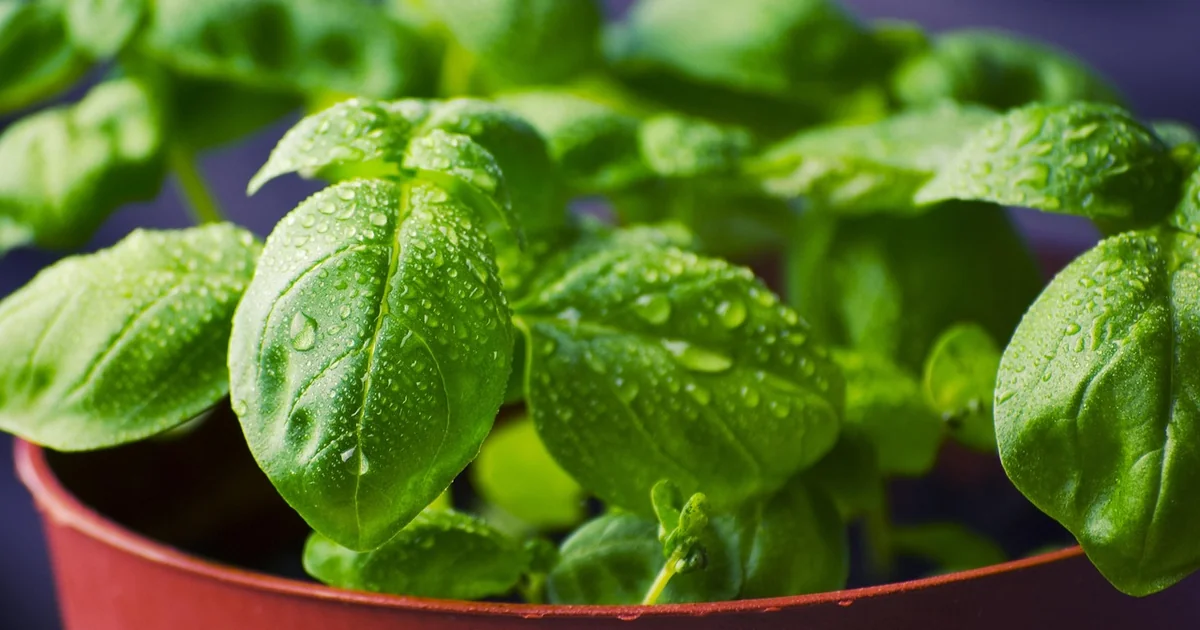
Basil is a culinary staple. In the garden, it requires warm weather and soil that tends towards dry. Soggy soil can kill a basil plant quickly. It is this factor that makes container growing ideal for basil. It gives you better control over soil moisture and drainage. Basil is only hardy in zones 10 through 11, but it grows fast as a summer annual. You will have time to grow several rounds of basil plants by succession planting seeds every couple of weeks.
Choose a pot that is at least 8 inches deep to accommodate the taproot. Use a light potting mix and water only when the top inch feels dry. You can harvest basil leaves by pinching as soon as the plant has several sets of mature leaves. Pinch off flowers as soon as you see them appear; once basil flowers, the leaves turn bitter. A practical tip: if you live in a region with high humidity, container basil is less likely to develop downy mildew because you can move the pot to a sheltered spot during rainy spells. This is one of the best herbs for pots because you can extend its growing season by bringing it indoors before the first frost.
3. Rosemary
This Mediterranean herb needs dry soil to thrive. Rosemary will deteriorate rapidly in soggy, poorly draining soil. By growing rosemary in a pot, you can be sure you do not overwater the plant and risk getting its roots soggy. Rosemary is best started from plants, not seeds, because seeds have a low germination rate (often below 30%). Buy a young plant from a nursery and transplant it into a pot with excellent drainage.
You may also enjoy reading: 11 Easy Vegetables to Plant in May.
Rosemary is hardy in zones 8 through 11. In colder climates, you can move the pot indoors over winter. Place it in a sunny window and water sparingly – only when the soil is completely dry. Indoors, rosemary often struggles with low humidity; misting the leaves occasionally helps. A little-known fact: rosemary contains an essential oil called camphor that repels certain insects. Placing a pot of rosemary near your kitchen door can help keep mosquitoes away during summer evenings. For the best herbs for pots that add both flavor and fragrance, rosemary is a top choice.
4. Thyme
Thyme can be tricky to grow in the ground if you do not get the soil conditions right. It demands sharp drainage and a slightly alkaline pH. Most garden soils are too heavy or too acidic for thyme to thrive. Container growing allows you to control soil conditions precisely. Mix a handful of crushed eggshells or garden lime into your potting mix to raise the pH. Thyme also benefits from a gritty texture – add a bit of coarse sand or perlite.
Thyme is a low-growing perennial, hardy in zones 5 through 9. It spreads slowly, so a single plant will stay manageable in a 6-inch pot for years. Harvest by snipping sprigs once the plant is about 6 inches tall. Thyme is one of the best herbs for pots because it tolerates drought well; you can forget to water it for a day or two without harm. In fact, overwatering is the most common mistake. Let the soil dry out completely between waterings. Thyme also flowers with tiny pink or white blooms that attract bees, making it a lovely addition to a patio container garden.
5. Oregano
Oregano, like thyme, is a Mediterranean native that prefers lean, well-drained soil. In the ground, oregano can become invasive, spreading by underground rhizomes. A pot keeps it contained and makes harvesting easier. Oregano is hardy in zones 4 through 9, and it thrives in full sun. It is one of the best herbs for pots for beginner gardeners because it is nearly impossible to kill. Even if you forget to water for a few days, oregano bounces back quickly.
Start oregano from seeds or a small transplant. It grows quickly and will fill a 10-inch pot in one season. For the best flavor, harvest leaves just before the plant flowers. The essential oil content, which gives oregano its pungent taste, peaks at that moment. A fascinating detail: oregano contains a compound called carvacrol, which has been shown in laboratory studies to inhibit the growth of certain foodborne bacteria. While you should not rely on it as a preservative, adding fresh oregano to your cooking does more than just add flavor. To keep your plant productive, prune it back by about one-third after each harvest.
Basic Care Tips for Container Herbs
Now that you know which herbs to choose, here are a few maintenance pointers that apply to all five. Fertilize sparingly. Herbs grown for flavor actually produce more essential oils when the soil is not too rich. Use a balanced, water-soluble fertilizer at half strength once a month during the growing season. Avoid high-nitrogen formulas, which encourage leafy growth at the expense of taste.
Repotting may be necessary every year or two. When roots start circling the bottom or poking out of drainage holes, move the plant to a pot one size larger. Spring is the best time for repotting. If you live in a cold climate, protect pots from freezing by wrapping them in bubble wrap or moving them to a sheltered spot. Most of these herbs can overwinter indoors on a sunny windowsill, though rosemary and thyme may need a cool period to rest.
Pests are less common in container herbs, but aphids and spider mites can appear. A strong spray of water from the hose usually knocks them off. For persistent problems, use insecticidal soap – never harsh chemicals on edible plants.