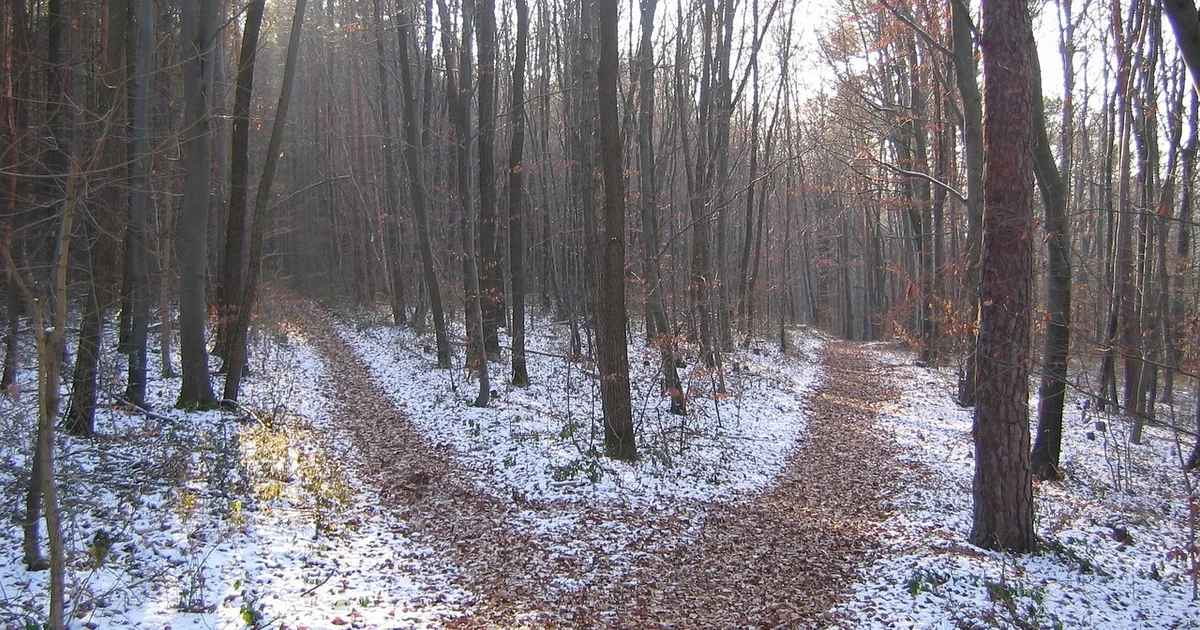
There comes a moment in nearly every life when the path ahead splits in two. You stand between what was and what could be, feeling the weight of everything familiar pressing against the pull of something unknown. This is the crossroads. It can arrive through loss, through a broken relationship, through a career collapse, or through the quiet realization that the life you have built no longer fits the person you have become. In these moments, finding steady ground can feel nearly impossible. They offer a tether. They remind you that others have walked through this same fog and emerged on the other side.
The Avoidance Trap and Why It Fails
When the ground beneath you shifts, the natural impulse is to look away. You might scroll through your phone for hours. You might fill your calendar with busywork. You might tell yourself that if you just ignore the problem long enough, it will resolve itself. This is avoidance, and it is a deeply tempting coping mechanism. Avoidance works in the short term. In the long term, it seals the pain inside you. It does not let the pain dissolve. It buries it, where it grows heavier over time.
If you notice yourself dodging the hard questions about where you are headed, it is time to pause. Ask yourself what you are afraid to feel. The answer is rarely the situation itself. It is usually the discomfort of not knowing. Avoidance keeps you stuck because it prevents you from gathering the information you need to move forward. When you avoid, you cannot learn. You cannot adapt. You simply spin in place.
Healthy coping looks different. It starts with openness. Openness means admitting that you do not know what the next step will feel like. It means sitting with the ache of uncertainty instead of running from it. This is not comfortable, but it is effective. Studies on emotional regulation show that people who label their difficult emotions and allow themselves to feel them recover from stress 23 percent faster than those who suppress their feelings. The act of naming the feeling takes away some of its power.
How Life Crossroads Quotes Help Shift Your Perspective
Words have a unique ability to reach parts of us that logic cannot touch. A well-chosen phrase can slip past the noise in your head and land directly in your chest. That is why life crossroads quotes hold so much value. They are not magic. They are tools. They give you a framework for thinking about your situation in a new way. When your own inner voice is stuck in a loop of worry and self-doubt, someone else’s words can break the cycle.
Quotes work best when you engage with them actively. Do not just read them once and move on. Write one down and place it where you will see it every morning. Say it aloud while you brush your teeth. Ask yourself what it means for your specific situation. The goal is not to find a quote that perfectly describes your life. The goal is to find a quote that opens a door in your mind. Once that door opens, you can step through and see your crossroads from a fresh angle.
Below are seven quotes that have helped many people find calm and clarity during uncertain transitions. Each one speaks to a different aspect of the crossroads experience. Some will resonate right away. Others may take time to sink in. Let them sit with you.
1. “This Too Shall Pass” — Persian Adage
This too shall pass.
This simple phrase has traveled through centuries for a reason. It does not promise that the pain will disappear overnight. It promises that nothing stays the same, including the pain. When you are deep inside a difficult transition, it can feel permanent. Every cell in your body believes that this moment will last forever. The adage invites you to zoom out. It asks you to remember that you have survived every difficult thing that has ever happened to you. This moment is no different. The feeling will shift. The fog will lift. You will be on the other side of this crossroads eventually, carrying the lessons with you.
Try this the next time the weight of uncertainty presses down on you. Take a slow breath and whisper the phrase to yourself. Let it land. Repeat it until your shoulders drop away from your ears. The relief may not come all at once, but it will come in layers.
2. “Not All Who Wander Are Lost” — J.R.R. Tolkien
Not all who wander are lost.
Tolkien wrote this line in a poem about a ranger who appeared aimless but was actually moving with deep purpose. At a crossroads, you may feel like you are wandering. You may not have a clear destination. You may be taking steps that feel tentative and uncertain. That does not mean you are lost. It means you are exploring. Sometimes the most direct route to where you need to go is not a straight line. It is a winding path that lets you gather the wisdom you will need later.
If you are worried that you should have figured things out by now, release that expectation. Wandering with intention is a form of discovery. You are gathering data. You are testing possibilities. You are learning what does not fit so that you can recognize what does. Trust the process, even when the process looks messy.
3. “The Best Way Out Is Always Through” — Robert Frost
The best way out is always through.
Robert Frost understood the temptation to look for shortcuts. When a path becomes difficult, every instinct tells you to find another way. But Frost observed that the real solution is rarely to go around the obstacle. It is to walk directly into it. At a crossroads, the way forward is not to avoid the hard conversations with yourself. It is to have them. It is to sit with the questions that scare you. What do I really want? What am I afraid of losing? What would I do if I were not afraid?
Going through means allowing yourself to feel uncomfortable without numbing the feeling. It means waking up in the morning and taking one small step even when you do not know where that step will lead. The through path is not glamorous. It is slow and steady and honest. But it is the only path that actually leads somewhere new.
A practical way to apply this is to set a timer for ten minutes each day. Sit quietly and let the uncomfortable questions surface. Do not try to answer them. Just let them exist. Over time, the answers will start to emerge on their own.
4. “In the Middle of Difficulty Lies Opportunity” — Albert Einstein
In the middle of difficulty lies opportunity.
Einstein spoke from a place of deep scientific understanding. He knew that breakthroughs rarely come from comfortable situations. They come from moments when the old framework no longer works and you are forced to build a new one. A crossroads is precisely this kind of moment. The old structure of your life has cracked. That crack is not just a problem. It is an opening. Something new can grow through it that would not have had space before.
You may also enjoy reading: 13 SMART Goals Templates for Work & Life (Free Printables).
This does not mean you have to pretend the difficulty is easy. It means you can hold two truths at once. This is hard, and there is something here for me to learn. This hurts, and it is also clearing ground for something else. Ask yourself: What am I being asked to let go of? What am I being invited to create? The answers may not come immediately, but the questions themselves are a form of progress.
5. “What Lies Behind Us and What Lies Before Us Are Tiny Matters Compared to What Lies Within Us” — Ralph Waldo Emerson
What lies behind us and what lies before us are tiny matters compared to what lies within us.
Emerson wrote these words during a time of personal upheaval. He understood that when the external world feels unstable, the internal world becomes your anchor. At a crossroads, you can spend a lot of energy obsessing over the past or worrying about the future. Emerson redirects your attention to the one thing you can actually work with: your own inner resources. You have dealt with difficult things before. You have strengths you have not even discovered yet. Those strengths are already inside you, waiting to be called upon.
To access what lies within, try this exercise. Write down three challenges you have already overcome in your life. Next to each one, write down the quality that helped you get through it. Resilience. Patience. Creativity. Humor. Now look at that list. Those qualities are still with you. You can draw on them again.
6. “Courage Doesn’t Always Roar. Sometimes Courage Is the Quiet Voice at the End of the Day Saying, ‘I Will Try Again Tomorrow.'” — Mary Anne Radmacher
Courage doesn’t always roar. Sometimes courage is the quiet voice at the end of the day saying, ‘I will try again tomorrow.’
We often picture courage as something dramatic. A hero charging into battle. A person making a bold speech. But the courage required at a crossroads looks different. It is quieter. It is the decision to keep going when no one is watching. It is the willingness to get out of bed even though the uncertainty feels heavy. It is the commitment to try again, even after a day that went nowhere.
This quote releases you from the pressure to have it all figured out right now. You do not need a grand plan. You do not need to be fearless. You just need to show up for yourself, one day at a time. The quiet voice that says I will try again tomorrow is enough. It is more than enough. It is how every major transition is actually made. Not in one heroic leap, but in a thousand small, quiet decisions to keep moving.
7. “It Is Never Too Late to Be What You Might Have Been” — George Eliot
It is never too late to be what you might have been.
George Eliot, the pen name of Mary Ann Evans, knew something about reinvention. She lived a life that defied the expectations of her era. This quote cuts through one of the most painful beliefs that surface at a crossroads: the belief that you have missed your chance. Maybe you feel like you have spent too many years in the wrong career. Maybe you think you are too old to start over. Maybe you believe that your mistakes have closed certain doors forever. Eliot says no. The door is still open.
Being what you might have been does not mean becoming a completely different person. It means shedding the layers that do not belong to you. It means giving yourself permission to grow into the version of yourself that has always been there, waiting. The timeline does not matter. What matters is that you start. Take one small action today that aligns with who you are becoming, not just who you have been.
Putting Life Crossroads Quotes Into Daily Practice
Reading these words once will not change your situation. Returning to them regularly will. The real power of life crossroads quotes is not in the initial spark of recognition. It is in the repetition. Each time you revisit a quote, you reinforce a new mental pathway. You train your brain to respond to uncertainty with openness instead of fear.
Here is a simple practice that takes less than five minutes a day. Choose one quote from this list that speaks to your current situation. Write it on a sticky note and place it on your bathroom mirror. Each morning, read it aloud while you brush your teeth. Let the words settle into your mind. Then, at the end of the day, take thirty seconds to reflect on how the quote showed up in your thoughts or actions. Did it help you pause instead of react? Did it give you a sliver of comfort? Did it shift your perspective even slightly? That is enough.
Over time, this small ritual builds resilience. It trains you to meet your crossroads not with panic, but with a calm learning stance. You discover that you can feel uncertain and still step forward. You find out that giving up what no longer fits does not destroy you. It frees you. The crossroad that once felt like a dead end becomes a threshold. You cross it not because you have all the answers, but because you have learned to trust yourself enough to keep walking anyway.