The kitchen spaces we remember longest are rarely the ones built from a catalog. They carry personality, patina, and a quiet conversation between what was once there and what is now possible. Designed by Martje Overmeer and featuring hardware by Tokyo-based designer Maha Alavi, this 250-square-foot space proves that small kitchens can hold big ideas without losing their soul. Let’s walk through the details that make this naarden farmhouse kitchen so memorable.
The Unlikely Setting: A 17th-Century Fortress Town
Naarden Vesting sits southeast of Amsterdam, a star-shaped fortress town whose layout has barely shifted since the 1600s. To walk its streets is to step into a living map of Dutch military engineering. The homes here were never meant to be showpieces. They were practical structures built within fortified walls, designed for endurance rather than ornament. That makes this kitchen’s transformation all the more compelling.
Within a monumental farmhouse in this historic town, Overmeer carved out a 250-square-foot kitchen that manages to feel both expansive and intimate. The square footage is modest by American standards, but the design makes every inch count. Tall ceilings and carefully placed windows help the space breathe. The original farmhouse tiles, still intact, ground the room in its past while the surrounding elements pull it firmly into the present.
Designing within a historic structure comes with constraints. Load-bearing walls cannot move. Window placements are fixed. Floor levels may slope. Overmeer worked within these limitations rather than fighting them, creating a kitchen that feels as though it has always been there even though it was recently reconceived.
Modern Meets Authentic: The Core Design Philosophy
Overmeer describes her approach as a synergy between modern elements and authentic details. That phrase matters because it is not about contrast or shock value. It is about finding points of agreement between two eras. The oak cabinetry does not pretend to be antique. The brushed stainless steel worktop does not try to hide its industrial nature. These materials coexist because they share an honesty about what they are.
This is where the naarden farmhouse kitchen succeeds where many renovations fail. Too often, historic home renovations fall into one of two traps. Either they become museum pieces, frozen in time and uncomfortable to live in, or they erase all evidence of the past in favor of sterile modernity. Overmeer avoids both. The original tiles remain visible and functional. The new cabinetry respects the proportions of the room. Nothing fights for attention. Everything belongs.
This philosophy extends to the choice of hardware. Maha Alavi’s solid-bronze Cercle Pulls appear on the oak cabinets. Bronze develops a patina over time, darkening and softening as it is touched daily. In twenty years, those pulls will look different than they do today. That natural aging process aligns beautifully with a farmhouse that has already stood for centuries.
The Tiles That Anchor the Room
The original farmhouse tiles are not merely decorative. They are functional flooring that has survived generations of foot traffic, spills, and seasonal temperature swings. Dutch farmhouse tiles from this period were typically fired locally using clay from nearby riverbeds. They were made to last, and they have.
Rather than covering them up or replacing them with something more fashionable, Overmeer left them exposed and built the rest of the kitchen around their earthy tones. This decision saved money on flooring and preserved a layer of history that cannot be replicated. If you are renovating a historic home, check what lies beneath your current flooring. Original materials often survive under layers of linoleum, carpet, or vinyl.
Custom Cabinetry with Ultra-Thin Precision
The custom cabinets in this naarden farmhouse kitchen are oak with an ultra-thin brushed stainless steel worktop. That worktop is worth examining closely. Brushed stainless steel is common in commercial kitchens for good reason. It resists heat, sanitizes easily, and does not harbor bacteria. But residential kitchens rarely use it because it can feel cold or clinical.
Overmeer solves that problem by pairing the steel with warm oak. The wood softens the metal’s industrial edge. The ultra-thin profile of the worktop helps it read as a surface rather than a bulky counter. It does not compete with the cabinets. It sits on top of them like a precise tool laid out for use.
This combination also solves a practical problem. Historic farmhouses often have uneven walls and floors. Custom cabinetry allows for exact measurements that accommodate these irregularities. Stock cabinets would leave awkward gaps or require shims and filler strips. Custom units fit the space as if they grew there.
The Integrated Compost Container
One detail that might escape a casual glance is the stainless steel compost container integrated into the cabinet below the coffee area. This is not a trendy add-on. It is a practical response to a daily chore. In European households, food waste separation is often mandatory. Municipal collection systems require organic waste to be kept separate from general trash.
Having a built-in container means the compost bin is never sitting on the counter or taking up floor space. It slides out when needed and disappears when not. The stainless steel construction prevents odors from seeping into the wood cabinetry. If you plan a custom kitchen, consider where your waste bins will live. A designated pull-out drawer with a sealed container keeps the space cleaner and more pleasant to work in.
Appliances That Perform Without Shouting
The wall oven is a Siemens, a brand known for precision engineering and minimalist aesthetics. The wine refrigerator is a Liebherr, a German manufacturer that prioritizes temperature stability. The faucet is a Quooker stainless steel tap, which delivers near-boiling water on demand. These choices reflect a philosophy of performance over display.
None of these appliances scream for attention. They are finished in stainless steel and designed to blend into the cabinetry rather than stand out from it. This is deliberate. In a small kitchen, visual clutter reads as chaos. Every surface should either serve a function or contribute to the sense of calm. Appliances that shout their brand logos or feature bright digital displays undermine that calm.
The Quooker tap deserves special mention. It provides boiling water instantly, which eliminates the need for a kettle on the counter. That alone frees up valuable surface space in a 250-square-foot kitchen. For coffee, tea, and quick cooking tasks, it is transformative. If you are designing a small kitchen, consider a boiling water tap as a space-saving upgrade.
Seating and Dining: Where the Kitchen Becomes a Room
The walnut table and built-in sofa are custom pieces by Overmeer, and they transform the kitchen from a workspace into a gathering place. The table is substantial enough for meals, homework, or conversation. The built-in sofa provides comfortable seating without the visual weight of freestanding chairs on one side.
The dining chairs on the opposite side of the table are vintage pieces sourced from Morentz Gallery. Mixing custom and vintage furniture is one of the smartest moves in interior design. Custom pieces ensure perfect fit and function. Vintage pieces bring character and a sense of history that no new furniture can replicate. The combination feels collected rather than decorated.
You may also enjoy reading: Design a Memorial Garden: 7 Ways for Remembrance & Reflection.
The built-in sofa is upholstered with Milma YP2003 virgin wool from Designs of the Time. Wool is an excellent choice for upholstery in a kitchen. It resists stains naturally, does not trap odors, and regulates temperature better than synthetic fabrics. It also wears gracefully, developing a soft sheen over years of use rather than looking worn out.
The Role of Cafe Curtains
Privacy is a genuine concern in ground-floor kitchens, especially in historic town centers where homes sit close to the street. Overmeer used cafe curtains to address this without blocking natural light. Cafe curtains cover only the lower half of the window, allowing sunlight to enter from above while preventing passersby from seeing directly into the kitchen.
This solution is both practical and historically appropriate. Cafe curtains have been used in European homes for centuries. They require minimal fabric, which keeps costs low, and they are easy to install and remove for cleaning. In a naarden farmhouse kitchen with original windows, cafe curtains also highlight the architecture rather than hiding it behind full-length drapes.
Lighting and Art: The Finishing Touches
The pendant light above the dining table is the Alba Top Pendant from Contain in Mallorca. Its simple, sculptural form provides ambient light without overwhelming the table below. The height is critical here. A pendant hung too low blocks sightlines and feels oppressive. Hung too high, it fails to define the dining zone. This one sits at the sweet spot, casting light where it is needed while leaving the rest of the room in soft shadow.
The wall piece is by Frederique Bruijnen, sourced from Art Salon Anaïs. Art in a kitchen is often overlooked, but it adds a layer of personality that finishes the room. The piece does not compete with the architecture. It simply occupies the wall with quiet confidence, giving the eye a place to rest when it is not focused on food or conversation.
Why These Details Matter Together
No single element in this naarden farmhouse kitchen is revolutionary on its own. Bronze pulls, oak cabinets, wool upholstery, cafe curtains, and a well-placed pendant light are all familiar ingredients. What makes this kitchen special is how they work together. Each choice supports the others. The warmth of the wood balances the coolness of the steel. The roughness of the original tiles grounds the precision of the custom cabinetry. The vintage chairs keep the room from feeling too new.
This kind of cohesion requires restraint is harder than it looks. It requires saying no to many good ideas so that the right ideas can shine. Overmeer clearly understood that the farmhouse itself was the most important element. Her job was not to compete with it but to add quietly to its story.
Lessons for Your Own Kitchen Renovation
If this kitchen inspires you to rethink your own space, start with what already exists. Look at your floors, your walls, your windows. What is worth keeping? Original materials that are still functional should almost always stay. They have already proven their durability. Replacing them with something trendy would be a downgrade in most cases.
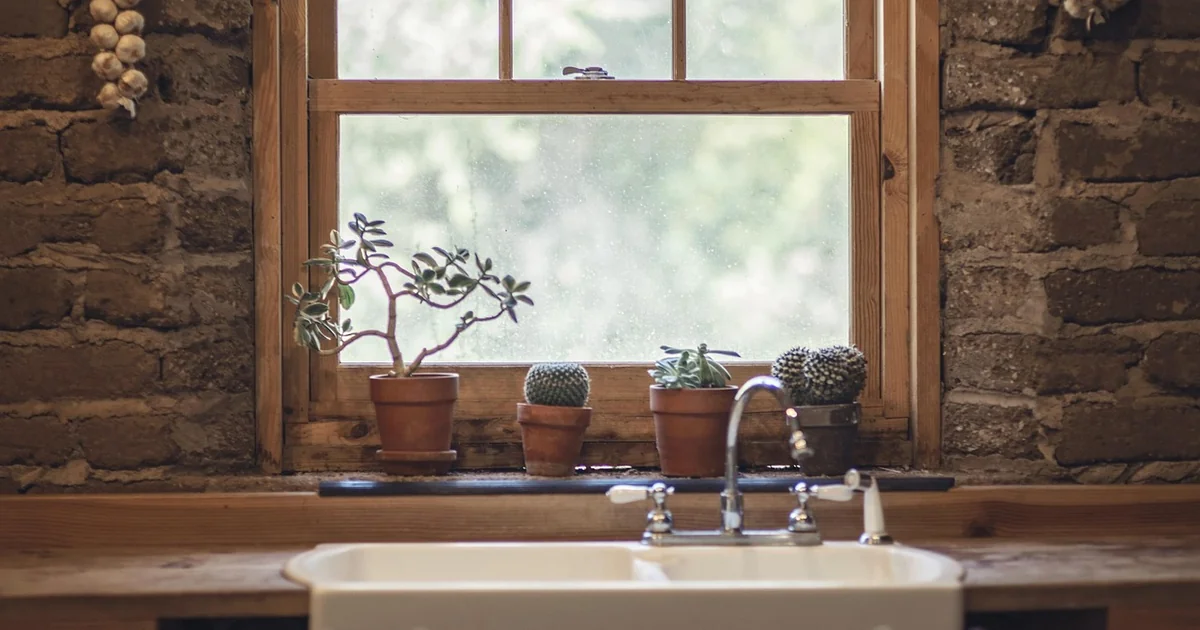
Next, consider your workflow. This kitchen places the coffee area near the compost bin, the oven near the prep surface, and the sink near the window. Each zone serves a purpose without crowding the others. Draw your kitchen on paper and trace your typical cooking movements. If you cross the room multiple times to complete one task, the layout needs adjustment.
Finally, choose materials that age well. Bronze, oak, wool, and stainless steel all improve with use. They develop character over time. Avoid anything that looks pristine on day one but will show every scratch and stain within a year. A kitchen is a working room. It should look lived in without looking worn out.
The Deeper Lesson of Naarden Vesting
This kitchen exists in a town that was built to withstand sieges. The fortress walls of Naarden Vesting were designed to protect what mattered most to the people inside them. In a way, that is what a kitchen does too. It protects the rituals of daily life, the meals shared, the conversations held over coffee, the small moments that make a house a home.
Overmeer understood that a kitchen must be both fortress and hearth. It must stand up to the demands of cooking, cleaning, and living while remaining a place where people want to gather. This naarden farmhouse kitchen achieves that balance with quiet confidence, offering a model for anyone who wants to renovate with respect for the past and an eye on the future.
The next time you walk through a historic home, look at the kitchen with fresh eyes. Ask what is worth saving. Ask what deserves to be added. Ask whether each choice brings you closer to the home you want to live in. If you answer honestly, you might end up with something as charming as this one.