Most gardeners focus on what a plant looks like — the color of its petals, the shape of its leaves, the height of its stems. But fragrance works on a completely different clock. A rose that smells divine at noon may be nearly scentless at dusk. A jasmine that fills the evening air with sweetness can be barely noticeable in the morning heat. Understanding time of day plants — those species whose fragrance peaks at specific hours — lets you design a garden that greets you with the perfect scent exactly when you need it.

The First Golden Rule: Match Plant Scent Peaks to Your Daily Rhythms
Every plant follows an internal schedule. Its fragrance production is tied to its need to attract specific pollinators at specific times. Morning-blooming flowers release light, citrusy or floral terpenes to draw in early bees. Afternoon plants often produce resinous, herbaceous oils that rise with the heat. Evening and night-blooming species emit heavy, musky, or sweet compounds that travel well in cool, still air and attract moths and bats. By choosing time of day plants that sync with when you are actually in your garden, you avoid wasting a beautiful scent on an empty patio.
Morning Fragrance: Crisp, Uplifting, and Energizing
The cool, damp air of early morning holds delicate scent molecules close to the ground. This is the moment for plants that offer a gentle wake-up call. Mock orange (Philadelphus coronarius) bursts with a sweet, orange-blossom fragrance that is strongest from dawn until about 10 a.m. Lily of the valley (Convallaria majalis) releases its clean, dewy perfume in the cool hours, making it a perfect choice near a bedroom window or along a morning walkway. Sweet alyssum (Lobularia maritima) carpets the ground with a honey-like scent that intensifies with the morning dew and fades as the sun climbs. If you enjoy coffee on the porch or an early garden stroll, place these plants where you pass first thing.
Afternoon Fragrance: Grounding, Resinous, and Calming
As temperatures rise, the air becomes drier and more turbulent. Lighter floral notes evaporate quickly, but heavier essential oils — especially from herbs and Mediterranean plants — become more volatile. Lavender (Lavandula angustifolia) releases its camphor-like linalool most strongly in the heat of the day. Studies have shown that inhaling linalool can lower cortisol levels and reduce anxiety, making lavender an ideal companion for a midday break. Rosemary (Salvia rosmarinus) and thyme (Thymus vulgaris) also pump out their piney, resinous aromas in full sun. Heliotrope (Heliotropium arborescens) offers a vanilla-cherry scent that peaks in the afternoon warmth. Position these near a seating area where you relax after lunch or work in the garden during the hottest hours.
Evening and Night Fragrance: Heavy, Sweet, and Seductive
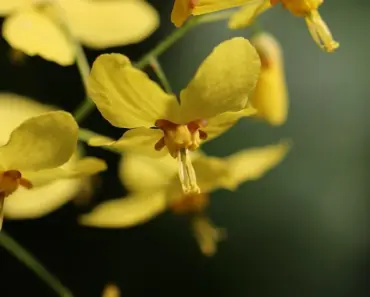
When the sun dips and the air cools, humidity rises. Scent molecules no longer dissipate quickly — they hang in the air like a held breath. This is the domain of night-blooming plants that rely on moths and bats for pollination. Evening primrose (Oenothera biennis) opens its yellow flowers at dusk, releasing a lemony fragrance that attracts sphinx moths. Night-scented stock (Matthiola longipetala) is unremarkable by day but becomes intensely fragrant after sunset. Moonflower (Ipomoea alba) unfurls large white blooms that emit a sweet perfume strongest between 8 p.m. and midnight. Gardenia (Gardenia jasminoides) is famous for its creamy, intoxicating scent that becomes more pronounced in the evening humidity. If you entertain on the patio or unwind after work, these are the time of day plants that will reward you most.
The Second Golden Rule: Master the Environmental Factors That Shape Fragrance
Choosing the right plant for the right time is only half the equation. Temperature, humidity, airflow, and microclimate all determine whether a scent reaches your nose or stays trapped in the foliage. Even the most fragrant plant can underperform if placed in the wrong spot. Understanding these factors helps you get the most from every time of day plant you choose.
Temperature and Humidity
Fragrance molecules are volatile organic compounds (VOCs). They evaporate more quickly in high temperatures. On a hot, dry afternoon, scents travel farther but also dissipate faster. In cool, humid evenings, molecules become heavier and linger longer. This is why a jasmine vine beside a porch can perfume an entire yard on a summer night but seem almost scentless on a breezy, dry afternoon. If you live in a region with high humidity — like the southeastern United States — evening scents will be especially potent. In arid climates, afternoon scents may carry better because the heat helps release oils from herbs like sage and lavender.
Airflow and Shelter
Wind scatters scent molecules. A plant placed in an open, breezy location may have its fragrance carried away before you can enjoy it. Conversely, a plant in a sheltered nook — against a wall, in a corner, behind a hedge — can trap its aroma in a pocket of still air. For evening plants, which produce heavy scents, a sheltered spot is ideal. For morning plants with lighter fragrances, a slight breeze can actually help lift the scent and carry it to your nose. Place time of day plants accordingly: morning blooms near a breezy path, evening blooms in a protected alcove.
Microclimates and USDA Zones
Your garden is not a uniform environment. South-facing walls absorb heat and radiate it at night, creating a warmer microclimate that can extend the blooming period of heat-loving plants. North-facing areas stay cooler and may delay morning fragrance release. Shade from trees or buildings can also affect when a plant receives sunlight, shifting its internal clock. Before planting, observe your garden for a few days. Note where the sun hits first, where shadows fall, and where the wind tends to funnel. Then match your time of day plants to those microclimates. For example, a south-facing wall is perfect for an evening jasmine that needs the stored heat to release its fragrance after sunset.
You may also enjoy reading: 5 Aquaponics Tips: Grow Plants & Fish for Beginners.
The Third Golden Rule: Design with Scentscaping and Layering
The final rule is about arrangement. Scentscaping — the intentional placement of fragrant plants to create a sequence of aromas — allows you to experience a living perfume that changes as you move through the garden and as the day progresses. Layering means combining plants with different peak times so that as one fades, another takes over. This creates a continuous sensory experience from dawn to dusk.
Place Heavy Scents in Sheltered Nooks
Plants with powerful, sweet fragrances — like gardenia, jasmine, and honeysuckle — can overwhelm a small space if placed in the open. Instead, tuck them into corners, near seating areas, or beside entryways where their scent can accumulate. A gardenia planted next to a front door will greet you with a wave of perfume each evening. A honeysuckle trained over an archway will release its honeyed aroma as you pass underneath. These time of day plants are best used as accent points rather than background fillers.
Use Light Scents as Pathway Greeters
Delicate morning fragrances — like sweet alyssum, lily of the valley, and dianthus — work best when planted along paths or near seating areas where you brush against them. Their lighter molecules are easily lifted by a passing breeze, so they don’t need shelter. A border of sweet alyssum along a stepping-stone path will release a gentle honey scent as you walk by in the morning. These plants also tend to have lower, spreading growth habits, making them ideal for edges and borders where they won’t block views.
Layer for Continuous Fragrance
The real magic happens when you layer plants with different peak times in the same area. For example, near a morning coffee spot, plant lily of the valley for dawn, lavender for midday, and evening primrose for dusk. As the day progresses, the dominant scent shifts without any effort on your part. This is the essence of scentscaping — designing a multi-sensory experience that aligns with your schedule. To do this, map out the areas you use at different times: the back door in the morning, the patio at lunch, the porch swing in the evening. Then choose time of day plants that peak during those hours and plant them together.
Consider Seasonality as Well
Fragrance timing also varies by season. Spring-blooming bulbs like hyacinth and narcissus offer strong morning scents in cool weather. Summer brings the heat-loving herbs and evening flowers. Autumn offers the spicy scent of blooming pineapple sage and the sweet, late-season fragrance of certain roses. By combining plants that peak at different times of day and different times of year, you ensure that your garden always has something to offer your nose, no matter when you step outside.
Choosing time of day plants is not about following a strict formula. It is about observing your own habits, understanding your garden’s microclimates, and experimenting with placement. Start with one area — maybe the spot where you have your morning tea — and plant a few morning-blooming fragrant species. Notice how the scent changes as the sun rises. Then add an afternoon plant nearby. Over a season or two, you will build a living, shifting perfume that follows you from dawn until the last moonbeam. That is the reward of gardening with intention.