Out of suffering, some of the strongest souls emerge, their characters seared with scars. For me, that statement became a reality when I was born with spina bifida. My life was marked by surgeries, hospitalizations, and uncertainty. Yet, through it all, my body taught me valuable lessons about resilience, strength, and the power of the human spirit.
Learning to Walk Again
When I was ten years old, doctors told me I might not walk again after a surgery that would change my life. I don’t remember every word they said, but I remember the feeling – the air shifting in the room, the adults speaking carefully, the quiet that followed. Paralysis was a possibility. By that point, my body already knew hospital ceilings well. I had been through multiple surgeries before I fully understood what surgery meant. By adulthood, that number would grow to thirteen.
Four days later, I stood up. I was in the hospital, alone in a cold room, and couldn’t feel anything but pain. I pressed the pain button and sat up. I manually swung my legs to the side of the bed and pushed off the bed with my arms. Not because I felt strong, not because I wasn’t afraid, but because something inside me refused to accept that prediction as final.
The Importance of Early Intervention
Research has shown that early intervention in physical therapy can significantly impact a child’s ability to recover from physical trauma. According to the American Academy for Cerebral Palsy and Developmental Medicine, children who receive early physical therapy have a better chance of regaining motor function and achieving independence in daily activities (1). In my case, that early intervention came in the form of a nurse who called physical therapy and said, “You are going to walk again.”
That spark of hope ignited a fire within me. I went on to play basketball in high school and later in college, not because my body was untouched by struggle, but because it adapted. The court didn’t care about medical charts; it only responded to effort. Through repetition and discipline, I built strength where fear had lived.
Adaptation and Resilience
Life tested me again when I was a young adult. After twelve surgeries, scar tissue led to another. Due to complications and losing six pints of blood, I fell into a coma. When I woke up, walking was no longer automatic. Muscles that once responded quickly felt distant. I had to relearn balance and rebuild my strength. Again.
It’s a humbling experience to teach your body how to move twice in one lifetime. It strips away ego and teaches patience. I had moments of frustration, moments of anger, moments when I wished I’d had an easier path. I compared myself to people whose medical history didn’t follow them into every room. But something shifted in me during recovery.
The Power of Asking the Right Questions
Instead of asking “Why is my body like this?” I started asking “What is my body teaching me?” It’s a subtle but profound shift in perspective. When we ask the right questions, we open ourselves up to new insights and possibilities. In my case, asking “What is my body teaching me?” led me to discover herbalism, holistic modalities, yoga, rebounding, and chiropractic care.
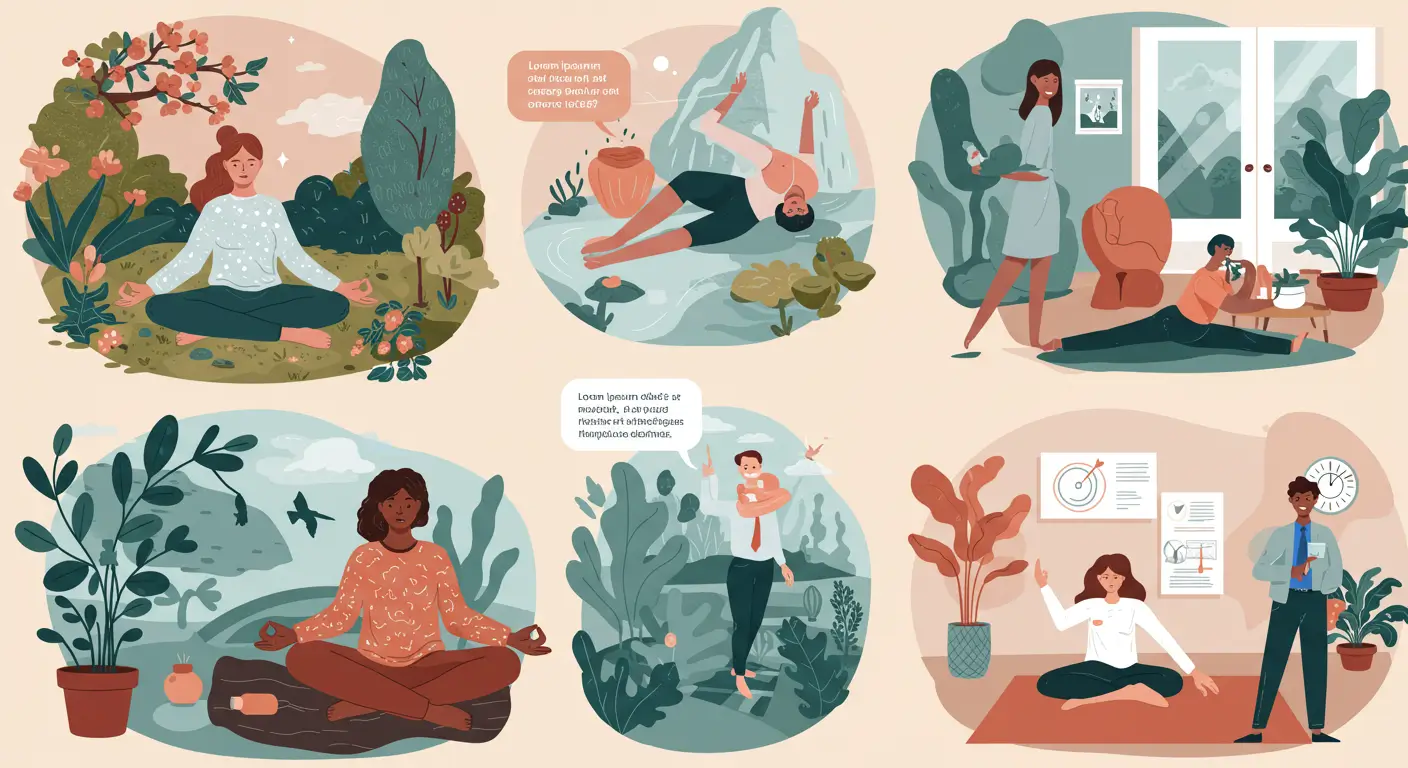
Those practices taught me that strength is not loud. It’s consistent. It’s showing up to physical therapy when progress is slow. It’s repeating small movements until they feel natural again. It’s trusting your body even when it feels unfamiliar. Healing is rarely dramatic. It’s repetitive. It’s quiet. It’s a thousand small decisions to keep trying.
The Value of Self-Care
I learned that taking care of my physical, emotional, and mental well-being is crucial for recovery. A friend encouraged me to eat healthier, and I discovered the importance of nutrition in supporting my body’s healing process. According to the Academy of Nutrition and Dietetics, a healthy diet can help reduce inflammation, improve wound healing, and support overall recovery (2).
Self-care is not a luxury; it’s a necessity. It’s about being kind to ourselves, listening to our bodies, and honoring their needs. When we prioritize self-care, we become more resilient, more adaptable, and more capable of handling life’s challenges.
Embracing Our Scars
My body has been opened, stitched, sedated, and measured more times than I can count. It has been judged and doubted. And yet, it continues to move. I no longer resent its limitations. I respect its endurance. It has survived stillness. It has survived uncertainty. And it has taught me that scars are not weaknesses, but evidence of repair.
According to the Journal of Wound Care, scars are a natural part of the healing process, and they can serve as a reminder of our strength and resilience (3). When we view our scars as a badge of honor, we begin to see ourselves in a new light. We see that we are capable of overcoming adversity, of pushing through pain, and of emerging stronger on the other side.
Conclusion
My body has taught me many lessons, but the most important one is that strength is not about being perfect; it’s about being persistent. It’s about showing up, day after day, even when it feels like too much. It’s about trusting ourselves, our bodies, and our abilities. And it’s about embracing our scars, not as weaknesses, but as evidence of our strength and resilience.
References:
(1) American Academy for Cerebral Palsy and Developmental Medicine. (n.d.). Early Intervention. Retrieved from https://aacpdm.org/early-intervention
(2) Academy of Nutrition and Dietetics. (n.d.). Nutrition and Recovery. Retrieved from https://www.andjrnl.org/article/S2212-2672(19)30052-9/
(3) Journal of Wound Care. (2018). Scars: A review of the literature. Retrieved from https://www.jwcn.com/article/scar-review-literature/