
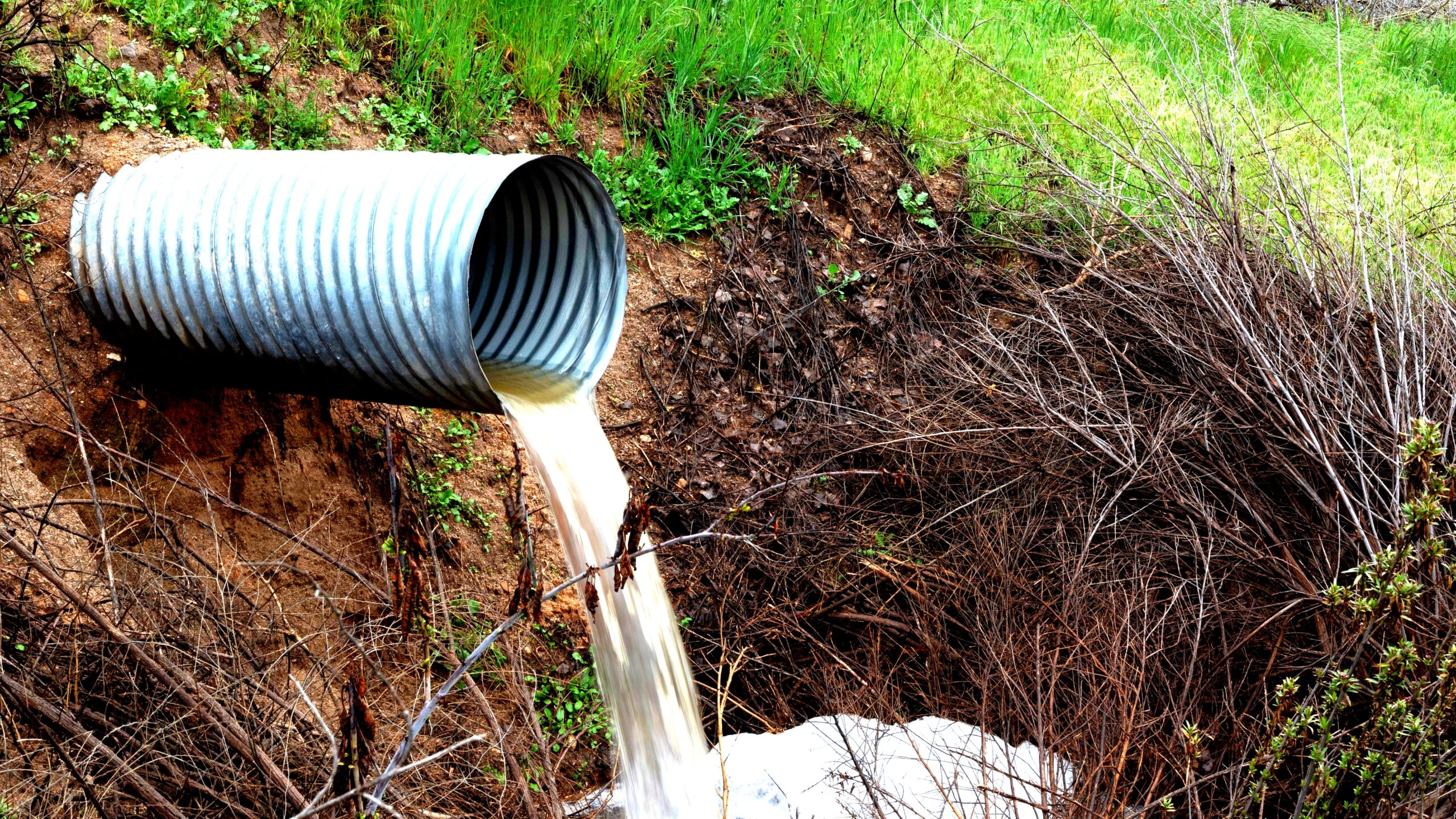
For outdoor drain cleaners, the right tool depends on your clog and pipe. Manual augers handle solid clogs like sticks and roots near the opening. Sewer jetters flush leaves and silt from deeper drains and work with corrugated and PVC pipes. Avoid electric augers in corrugated drains to prevent damage.
Outdoor drain cleaners are tools used to remove clogs from landscape drainage systems, including manual augers for solid obstructions and sewer jetters for flushable debris.
How to Identify the Type of Clog in Your Landscape Drain
Begin by determining the clog’s material and location. A solid clog — sticks, animal debris, or roots — feels firm and often sits near a top opening.
Flushable debris like leaves, mulch, or silt packs loosely and slides deeper into the pipe. If dirt clogs appear far from any visible opening, send in a video camera to inspect for cracks, separations, or collapses. Knowing the material and depth guides your tool selection.
When to Use a Manual Drain Auger
A manual drain auger suits solid clogs near the drain opening. Use it when you see or feel twigs, leaves compacted into a dry mass, or fine roots just inside the grate.
It handles solid obstructions near the entrance, pulling out animal debris that a quick grab cannot reach. Manual drain augers can also pull out fine roots close to the drain opening; turn the handle slowly and retrieve the coil. The roots come out wrapped around the tip. After the auger breaks a clog, run a garden hose down the drain to wash loosened fragments out the bottom.
For corrugated accordion drains, never use an electric auger. The powered steel tip can gouge the pipe wall, while the manual version spins under your control. If the obstruction is deeper than your arm’s reach or feels soft and sludgy, switch to a sewer jetter.
When to Use a Sewer Jetter
Sewer jetters clear flushable debris — leaves, mulch, wet silt — that sits far from the drain opening. They work on the film of sediment that builds up along the pipe wall. Sewer jetters are compatible with corrugated accordion drains and PVC drains. Pressure washer-powered sewer jetters scrub and flush silt, leaves, and dirt without scraping the pipe.
Choose a plastic-braided sewer jetter for standard landscape drains. The braided jacket reduces the chance of the line snagging in seams and perforations. Match the hose diameter to your pipe size.
Gas pressure washers with sufficient flow are almost always required to flush outdoor debris. Electric pressure washers are only suitable when the debris is soft and sits close to the bottom opening, because the low flow cannot push heavy material.
Safety and technique determine the outcome. Before starting, put on fluid-resistant work gloves and eye protection. Guide the sewer jetter nozzle at least one foot into the drain opening before you pull the trigger.
Sewer jetter nozzles must be pointed uphill from a downhill drain opening to let gravity carry the flushed debris out. Never feed a jetter down from a top opening if the bottom opening is buried underground; the line can double back and get stuck. Pull the hose back halfway every few feet, then advance again.
This back-and-forth action breaks up packed layers. Water flow must be stopped by releasing the trigger before the sewer jetter nozzle reaches the drain opening.
Pressure washer-powered sewer jetters cannot remove roots. A jetter will push water around woody tangles but won’t cut them. For roots, you must pull them out manually.
Avoid sewer jetters in clay (ceramic), concrete, and Orangeburg pipes. The nozzle and hose can catch in cracks, making retrieval difficult. Stick to manual methods for those materials.
Which Pipe Materials Work with Each Drain Cleaner?
Match the tool to the pipe so you clear the clog without cracking the wall. The table below covers the common landscape drain materials:
| Pipe Material | Manual Drain Auger | Sewer Jetter |
|---|---|---|
| Corrugated accordion | Safe — slow-turning auger pulls solid clogs without chipping the plastic. | Safe — water jet scrubs without impact. |
| PVC and other plastic | Safe — manual auger won’t abrade the smooth interior. | Safe — jets clean thoroughly. |
| Clay (ceramic) | Safe — manual action avoids pressure on brittle walls. | Not recommended — nozzle can lodge in cracks. |
| Concrete | Safe — slow retrieval prevents gouging. | Not recommended — same crack risk. |
| Orangeburg | Safe — gentle rotation works. | Not recommended — fragile material snags the hose. |
Manual augers, used carefully, suit all pipe types because you control the force.
Routine Maintenance to Prevent Future Clogs
Prevention costs less than an emergency call-out. Schedule cleaning after leaf drop in autumn and again in early spring.
Create a written inspection plan that maps every drain location, notes the pipe material, and lists the tools you need. Tie inspections to seasonal transitions — mark them on your calendar when you set clocks forward or back. For complex systems with long runs, multiple catch basins, or buried outlets, enlist a professional landscaper or drainage expert.
Maintain vegetation away from drains and ensure proper grading so water flows toward the drain. Trim back shrubs to keep roots from seeking water near the pipe. After jetting, use a mild enzyme cleaner to help break down future buildup without harming soil or plants. These habits cut the odds of a hard clog lodging deep inside the line.
Choose the Right Tool for Your Drain Every Time
The decision tree is simple: feel for a solid obstruction near the top, pull out a manual auger. Encounter a deep, soft mat of leaves or silt, hook up a gas-powered sewer jetter. Stay away from electric augers in corrugated accordion pipes, and never send a jetter into clay, concrete, or Orangeburg. Keep up with seasonal maintenance, and you’ll spend less time chasing clogs and more time enjoying a yard that drains.
FAQ
Q: Can I use a drain auger in corrugated pipes?
A: Manual augers are safe for corrugated drains, but electric augers must be avoided because the powered steel tip can damage the pipe wall.
Q: Do sewer jetters work on roots?
A: No, pressure washer-powered jetters cannot remove roots. For root clogs, use a manual auger to pull out roots near the opening.
Q: What pressure washer is needed for a sewer jetter?
A: Gas pressure washers with sufficient flow are almost always required. Electric washers are only suitable for flushable debris close to the bottom opening.
Related Post: Outdoor Drain Cleaning: Buyer’s Guide to Tools & Chemicals