Amazing outdoor kitchens combine weather-resistant materials like stainless steel, granite, and engineered quartz with smart layouts that preserve views and manage slopes. Houzz features over 40,000 images from professionals, showing techniques like building below finished floor elevation to protect lake sightlines. Amazing outdoor kitchens are fully equipped cooking and dining spaces built outdoors using weather-resistant materials such as stainless steel, granite, and engineered quartz, designed for durability and aesthetic integration with the landscape.
What Materials Work Best for Outdoor Kitchens?
The right materials make the difference between a kitchen that ages gracefully and one that needs constant repair. Houzz identifies several options that handle sun, rain, and high heat without breaking down. Stainless steel, granite, and engineered quartz are top choices, while concrete and teak also perform well when properly sealed. Avoid materials like marble and unsealed wood, which fail quickly outdoors.
- Stainless steel resists rust and withstands direct grill heat. It shows up in cabinet doors, countertops, and appliances.
- Granite brings a natural stone look. A proper seal makes it non-porous enough for outdoor use, and it shrugs off UV exposure.
- Engineered quartz delivers consistent color and surprising heat resistance. It will not warp or crack under a hot pan.
- Concrete can be cast into almost any shape. Sealed correctly, it stands up to freeze-thaw cycles and spills.
- Teak is a dense hardwood that repels water and insects. It is often used for cabinet fronts and trim.
Marble and unsealed wood belong nowhere near an outdoor kitchen because marble stains from wine and citrus and unsealed wood warps and rots quickly. Houzz recommends skipping both to save time and money. Instead, choose from the weather-resistant materials listed above. Select materials that suit your local climate and cooking habits.
How Does Layout Preserve Views and Manage Slopes?
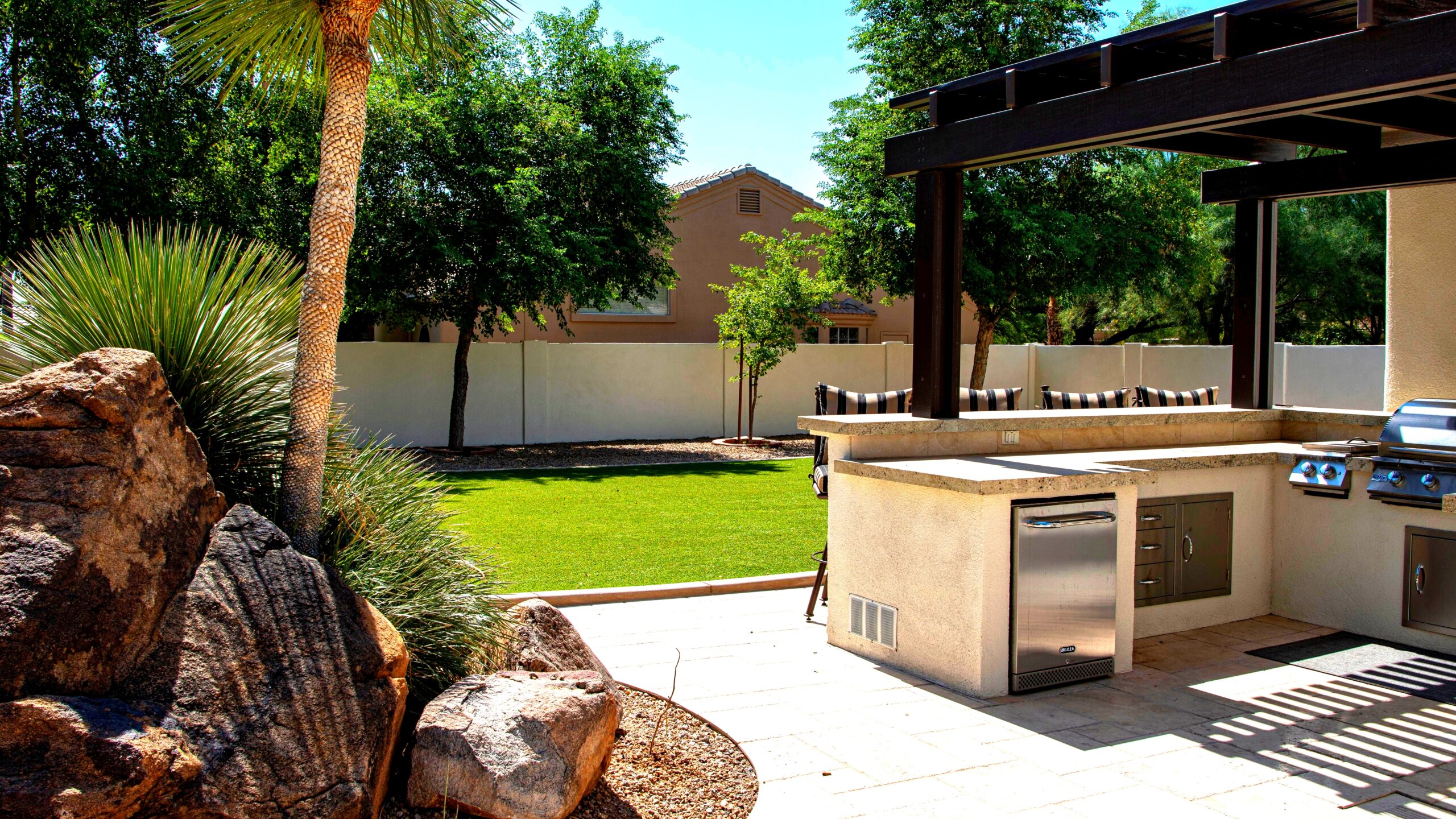
Beyond materials, the layout determines landscape integration. Positioning it poorly can block the scenery. One Houzz project avoided this by setting an L-shaped kitchen below the finished floor elevation, keeping its mass low and preserving an uninterrupted lake view. The setup included a built-in stainless steel grill and a round table with an umbrella hole for shade.
A steep slope behind another kitchen became an asset when the designer planted a mix of ground covers, shrubs, and existing trees, holding the slope in place and turning a bare grade into a textured backdrop. The kitchen felt tucked in, not perched precariously. One professional project on Houzz demonstrates these principles in a compact backyard. This technique works well on sloped lots.
Case Study: Urban Oasis Design & Construction LLC
Urban Oasis Design & Construction LLC, a Houzz professional, designed a backyard that loads multiple functions into roughly 600 square feet of interior space. The kitchen counter sits at a standard 36 inches high, and a separate bar counter rises to 42 inches for overflow seating. That extra height gives guests a clear sightline across the yard. This layout maximizes the limited footprint and creates separate zones.
A fire pit patio with a seat wall defines the level change cleanly, while artificial turf handles trampoline wear. Cooking and play share the same footprint without compromise. This efficient design uses 600 square feet for entertaining and recreation. Urban Oasis Design & Construction LLC created a multifunctional backyard.
How Does Artistic Concrete Surfaces Use Custom Concrete?
Artistic Concrete Surfaces, a Houzz professional, built a project where custom concrete becomes the visual and functional anchor. A custom concrete countertop wraps around a BBQ, creating a seamless, wipe-clean work surface. The kitchen sits under a covered structure that houses the BBQ, a Traeger grill, and an outdoor sink—all complemented by granite countertops on the side prep areas. Underfoot, a natural stone patio made of blue stone adds a cooler surface and resists stains.
In one corner, a pond and water feature brings movement and sound, turning the kitchen into a gathering spot that engages more than just appetite. These examples from Houzz professionals show that material choice and layout are key, but the Houzz image library provides endless inspiration for your own project. Custom concrete anchors the design. A textured backdrop enhances the outdoor experience.
Where to Find Inspiration for Your Outdoor Kitchen?
Houzz hosts 40,576 images of outdoor kitchens from designers, decorators, and architects. That volume of professional photography lets you study real builds in your climate zone rather than guessing from catalog shots. You can filter by style, size, and material to see how other homeowners solved the same storage, shade, and seating challenges you face. This resource helps you avoid common design mistakes.
Conclusion
A durable outdoor kitchen relies on two things: materials that shrug off weather and a layout that respects the site. Stainless steel, granite, engineered quartz, concrete, and teak cover the material shortlist, while marble and unsealed wood get crossed off. Height adjustments preserve views, and strategic planting tames slopes. The projects from Urban Oasis Design & Construction LLC and Artistic Concrete Surfaces prove that a compact yard can still hold a full-featured kitchen with room to spare.
FAQ
Q: What are the best materials for an outdoor kitchen countertop?
A: Houzz recommends engineered quartz, concrete, and stainless steel for heat resistance, and teak, granite, and stainless steel for weather resistance. Avoid marble and unsealed wood due to porosity. Q: How can I design an outdoor kitchen to preserve a view?
A: Build the kitchen below the finished floor elevation of the house, as shown in a Houzz project where an L-shaped kitchen with a built-in grill was placed lower to avoid blocking lake views. Q: What is the standard height for an outdoor kitchen counter?
A: In a Houzz project by Urban Oasis Design & Construction LLC, the kitchen height was 36 inches, with a bar height of 42 inches for overflow seating.