Tips for Fashion Stylist: Workflow from Prep to Return
Tips for fashion stylist include starting with a mood board from the photographer, gathering model measurements, scheduling showroom appointments, photographing pulls, creating looks beforehand, organizing garments on-set by shoot order, steaming clothes, using a styling kit, inspecting items after, and returning cleaned clothing. Fashion stylist tips are practical steps for managing a photoshoot workflow: mood board, measurements, showroom scheduling, pull photography, look creation, on-set prep, steaming, pinning, inspection, and returns. Start by understanding the foundational steps of a stylist’s workflow, from the first brief to the final return.
What Is the First Step in a Fashion Stylist’s Workflow?
The workflow for a fashion stylist begins long before any garment is touched, starting with the brief, when the photographer or producer holds the creative vision and the stylist decodes that vision into a practical sourcing plan. The specific sequence to launch a project follows clear steps. A mood board without measurements is just a picture; the numbers turn it into a workable plan. Once the mood board and measurements are ready, the stylist moves on to securing the actual pieces from showrooms.
According to Brittany Diego, the stylist discusses the overall style direction and obtains a mood board directly from the photographer or producer. This document becomes the reference point for every selection that follows. Brittany Diego then collects the model’s height, full clothing sizes, and specific measurements from the photographer.
Exact fit depends on these numbers. Without them, a pull is a guess. The stylist overlays the mood board imagery against the model’s actual proportions.
An oversized blazer in a reference photo cuts very differently on a 5’2″ frame than on a 5’10” one. The stylist translates the approved mood and the specific measurements into a list of garment types, silhouettes, and sizes to source.
How to Schedule Showroom Appointments and Organize Pulls
Brittany Diego identifies showrooms through a contact list, cross-referencing the mood board’s aesthetic requirements with the model’s sizes. A showroom full of sample-size 2 stock is useless for a curve model. Brittany Diego then emails PR showrooms and designers to schedule appointments for specific shoot items.
The email states the shoot date, the model’s size, and the types of pieces needed. At the showroom, the stylist selects the items and immediately documents them. Waiting until later risks forgetting which belt belonged to which jacket.
Brittany Diego photographs the pulls and organizes them in folders by showroom and date when a pull sheet is absent. This self-made record acts as a reliable backup. Each item gets tagged with the showroom name.
Bags are grouped by showroom, not by look. Returns later depend on this separation.
With the mood board and specific measurements in hand, the stylist shifts from planning to sourcing, a phase requiring precision, a clear email, and a system that prevents mix-ups later; fashion stylists turn concept into rail by following this sequence. A blurry phone photo taken on the spot beats a perfect memory that fails three days later, and these folder structures save hours during the final return scramble. After the pulls are organized, the stylist creates specific looks and prepares everything for the shoot day.
What Does On-Set Preparation Involve?
Brittany Diego creates looks according to the mood board prior to arriving on-set. Working at home with space and time allows for thoughtful pairings that a rushed set trailer never permits. Brittany Diego unloads and organizes clothes, shoes, and accessories in order of the shoot upon arrival at the set.
The first look hangs at the front of the rail. The last look waits at the back. Steam all clothing to remove wrinkles before the shoot.
Fabric that sat folded in a bag for hours needs this treatment. A wrinkle across a chest reads as a styling error in the final image. Each look gets a last check against the model’s measurements.
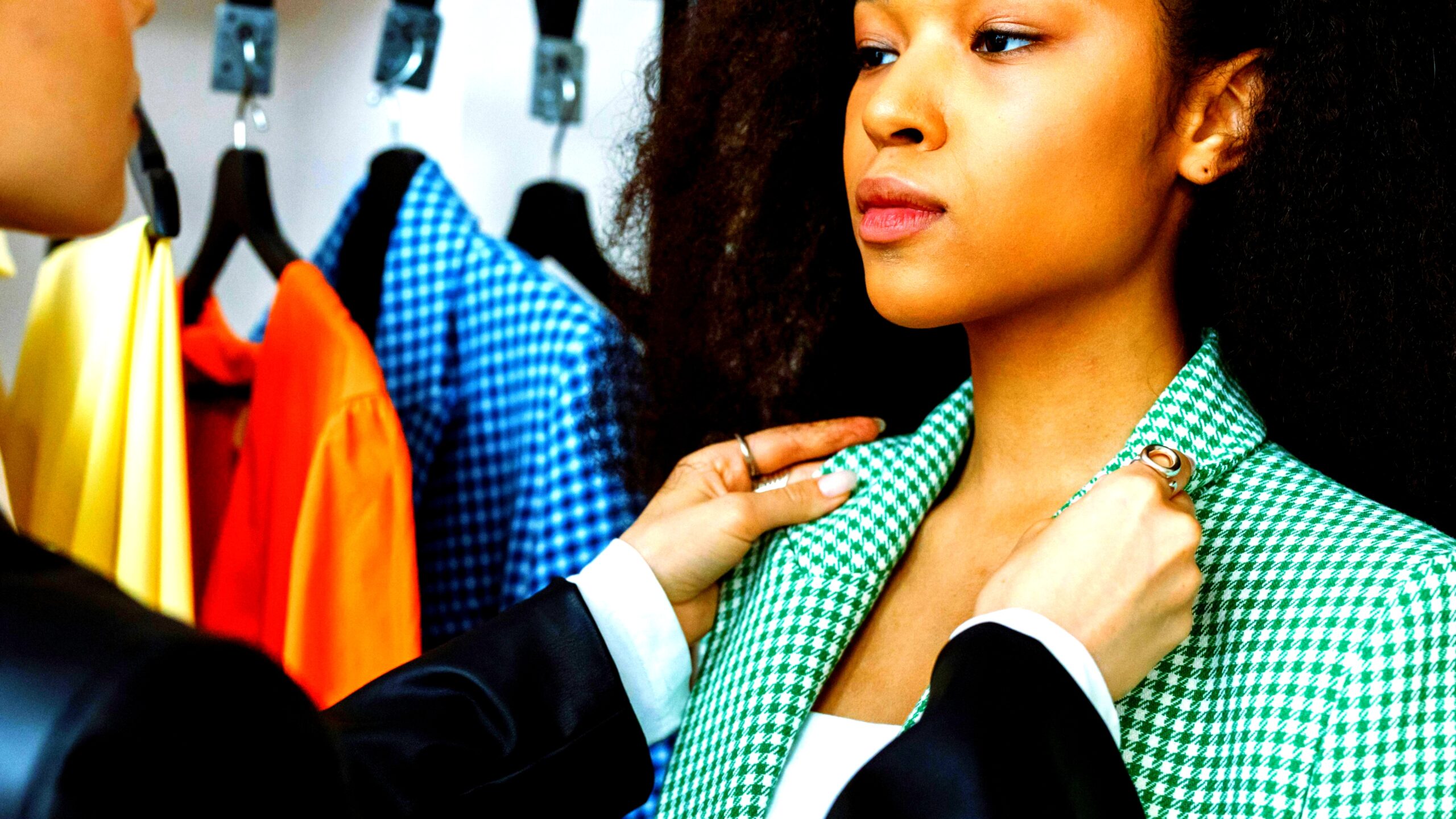
A pair of trousers that fit the hanger perfectly may gap at the waist on the actual model. Brittany Diego uses a styling kit for pinning clothes or applying double stick tape on-set. The kit contains the tools that fix fit issues in real time, from safety pins to topstick tape.
The rail is packed, but the work is far from done; on-set preparation separates a stylist who scrambles from one who executes, as the tasks unfold in a deliberate order from pre-visualization at home to the final steam on location. The on-set workflow follows this rhythm. Steamers earn their space on set; a garment fresh from a garment bag can still show fold lines, and those lines distract from the silhouette the stylist built. Once the shoot is finished, the stylist must carefully inspect and return all borrowed items.
How to Handle Post-Shoot Inspection, Cleaning, and Returns
Brittany Diego inspects borrowed clothing for stains, smells, missing buttons, and broken zippers after the photoshoot. A quick glance in a dim studio catches nothing. Good light catches foundation smudges on a collar and deodorant marks inside a sleeve.
If a seam split or a button popped during the shoot, the stylist notes it immediately and contacts the showroom. Surprises at the returns desk burn bridges. Acknowledgment upfront preserves them.
Brittany Diego takes borrowed clothing to dry cleaners if the model sweated during a hot day. Not every item needs cleaning, but any garment that touched skin on a warm location day does. The folders and labels created during the pull phase now prove their value.
Each item goes back into the bag with its showroom tag still attached. Brittany Diego returns all clothing to the respective showrooms after the photoshoot. A late return is a debt the next stylist pays in hesitation.
The final frame is captured, but the stylist’s responsibility continues; returning pieces in the same condition they arrived is how trust stays intact with showrooms, and a meticulous post-shoot process protects the relationships that make future shoots possible. The return workflow follows a careful checklist. Inspect borrowed items for damage before returning them; a small rip caught now is a conversation, while the same rip discovered by the showroom is a lost contact. This last phase of the workflow is the one that sustains a career.
Conclusion
The distance from a mood board to a dry cleaner receipt holds the entire career of a fashion stylist; skipping one step creates friction that compounds, and the difference between repeat work and chasing work often comes down to whether the returns are clean and on time. No one sees the folder structure, but everyone sees the result. The workflow that Brittany Diego outlines treats styling as a logistical system rather than a series of creative moments, with the mood board setting direction and the discipline around it determining success.
A styling career rewards vision, but it runs on process; building looks before arriving on set moves creative decisions into a calm space, steaming before the first take removes a variable, and using a styling kit on-set addresses fit gaps. Post-shoot diligence closes the loop, as an item returned dirty or damaged outlasts a beautiful image. Dry cleaning after a hot shoot day is a professional obligation, and the folder system created during the pull phase earns its value at the end. Every phase connects, and the stylist who masters that chain builds a reputation showrooms trust and photographers book again.
FAQ
Q: What is the first step in a fashion stylist’s workflow?
A: The first step is discussing style direction with the photographer to obtain a mood board, then collecting model measurements such as height and sizes. Q: How do fashion stylists organize pulled items?
A: When a pull sheet is absent, stylists like Brittany Diego photograph the pulled items and organize them in folders by showroom and date. Q: What does a fashion stylist do on set?
A: Upon arrival, they unload and organize clothes in shoot order, steam items to remove wrinkles, and use a styling kit for pinning or taping. Q: How do fashion stylists handle returns?
A: After the shoot, they inspect items for damage, take soiled items to dry cleaners if needed, and return all clothing to the showrooms.