Privet grows fast, but removing it is even harder. If you have ever admired a neighbor’s dense, perfectly clipped hedge and wondered whether this plant belongs in your landscape, there are a few urgent lessons you need first. Gardeners who have tangled with privet as an invasive shrub will tell you that its lush, green veneer hides a stubbornness that can turn your yard into a multi-year battleground. Before you bring one home, here are the five realities that experienced hands want every new gardener to understand.
1. The Battle You’ll Face Trying to Remove It Later
A privet hedge might start as an innocent row of twigs, but once established it sinks a network of roots and woody stumps that refuse to give up. Understanding the sheer tenacity of this plant is the first thing that separates a quick landscaping project from a recurring nightmare.
Why Does Privet Regrow with Such Vengeance?
Privet is difficult to eliminate because it resprouts quickly and aggressively. When you cut a stem, it does not simply die back; instead, dormant buds all along the root collar and even lateral roots send up fresh shoots within weeks. A single plant left with a fragment of living tissue can multiply into a thicket of suckers. That ability to resurrect from stumps makes impulsive yanking or half-hearted trimming a recipe for a larger problem the following season. Many homeowners discover this only after clearing a hedge, only to find dozens of upright sprouts reclaiming the space by midsummer.
The Only Way to Fully Reclaim Your Space
Effective removal of privet involves cutting the plant down and removing the root system. Simply hacking the top growth to the ground and walking away will almost guarantee a denser regrowth. When you have young, manageable shrubs, a shovel and pickax can be used to excavate the entire root ball, ideally when the soil is moist and forgiving. For dense, mature privet that has formed a tangled, woody crown, start by cutting all stems to ground level, leaving only short stumps. An appropriately labeled herbicide should then be applied to the stump. Jim Downs, a forestry specialist at Ohio State University Extension, emphasizes that using an herbicide with triclopyr or glyphosate directly on the freshly cut stumps is often the only reliable way to stop resprouting when root removal is not practical.
The Role of Herbicide When Root Removal Isn’t Possible
If the root system is not removed, herbicide should be applied and regrowth must be monitored. This is not a set-it-and-forget-it solution. The stump application must happen immediately after cutting, while the vascular tissue is still absorbing moisture, or the chemical will not move down into the roots. Even then, you need to patrol the area regularly for months afterward. Any green shoot that escapes treatment can re-establish a new root network faster than you might believe. Pairing herbicide with vigilance is the only reliable path when heavy machinery or days of manual digging are off the table.
What if you do not want to use herbicides at all? In that case, you must dedicate yourself to repeated, relentless cutting. Every time a sprout appears, remove it to starve the root system. This can work for small infestations, but expect to be at it for at least two full growing seasons, and never let a single new leaf get large enough to photosynthesize.
Privet resprouts aggressively from roots and stumps, requiring complete root removal or careful herbicide application. Any shortcut here almost certainly means you will be fighting the same plant next year.
2. Not All Privet Varieties Are Equally Aggressive
Blanket statements about privet being a menace miss an important distinction: plant breeding has produced cultivars that behave far more politely. Before you write off the whole genus, it is worth knowing exactly which types earn their invasive reputation and which ones can be managed safely.
The Culprit That Gives Privet Its Bad Name
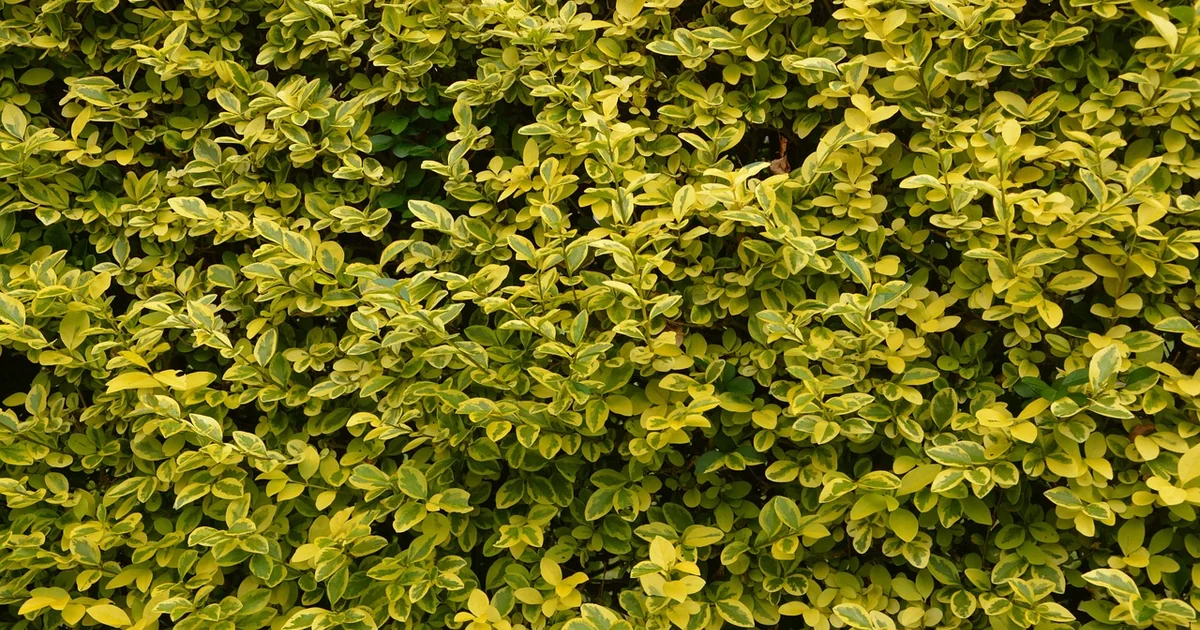
Chinese privet (Ligustrum sinense) is incredibly invasive. In the southeastern United States and increasingly in the lower Midwest and mid-Atlantic, this species forms dense, monoculture stands that smother forest floors and stream banks. The combination of abundant seed production, bird dispersal, and vigorous vegetative growth makes it a textbook example of an invasive shrub. If you see an unlabeled privet at a big-box garden center, it is very likely this species or a hybrid with similarly aggressive tendencies. Gardeners who unknowingly plant Chinese privet often spend years undoing the damage as seedlings pop up in every corner of the property.
Bred to Behave: Cultivars That Won’t Take Over
Some privet cultivars like ‘Straight Talk’ and ‘Golden Ticket’ were bred to be less invasive. ‘Straight Talk’ (Ligustrum vulgare ‘Swift’) was selected for its tight columnar habit and, crucially, for minimal seed production. It still produces flowers and may occasionally form a few fruits, but the viable seed load is dramatically lower than that of Chinese privet. ‘Golden Ticket’ (Ligustrum x vicaryi ‘NCLX1’) went a step further and is one of the first privets marketed as having no viable seed production at all. For a gardener who loves the fast, dense growth and classic hedging look but who lives near natural areas or simply wants to be a responsible neighbor, these cultivars are a significant improvement.
How to Spot Truly Low-Risk Varieties in Your Area
Not every variety sold as “sterile” or “non-invasive” stays that way in every climate. For example, wax-leaf privet, also known as Japanese Privet (Ligustrum japonicum), can still be slightly invasive in warm, humid regions where birds move its seeds freely. The safest approach is to check with your local extension office before buying. Ask specifically whether the exact cultivar you are considering has been observed escaping cultivation in your county. A plant labeled as “low-seed” on the tag might still produce enough viable berries to become a problem if you live adjacent to a woodland. Relying on named, well-researched varieties like ‘Straight Talk’ and ‘Golden Ticket’ gives you a much better starting point, but marrying that choice with local knowledge is what really prevents an accidental invasion.
Yes, cultivars like ‘Straight Talk’ and ‘Golden Ticket’ were bred for minimal or no viable seed production. When you choose one of these, you are working with a plant that has been intentionally reined in, rather than fighting the wild genetics that make its relatives so hard to control.
3. Your Local Wildlife Would Prefer You Choose Native Shrubs
Privet has a transactional relationship with the ecosystem: it offers nesting cover and a few pollinators visit its blooms, but it does not support the web of life the way shrubs native to your region do. Once you compare what privet provides against what native alternatives deliver, the choice becomes clear for anyone who wants birds, butterflies, and beneficial insects to thrive.
Why Birds, Butterflies, and Bees Aren’t Cheering for Privet
Privet seeds are spread by birds, leading to dense stands that block sunlight from other plants. Birds eat the dark berries with enthusiasm, but the calories they gain are relatively low in nutritional value compared to native fruit. The real damage unfolds after the seeds are deposited in a forest understory or along a fencerow. The resulting thickets shade out wildflowers, tree seedlings, and the host plants that native insects need. Few North American caterpillar species can use privet as a food source, which means nesting birds lose the soft, protein-packed insect prey their chicks require. Jim Downs, a forestry specialist at Ohio State University Extension, does not recommend planting privet ornamentally for these very reasons. A hedge that looks lush to us can function as a food desert for the creatures that keep an ecosystem humming.
Native Shrubs That Grow Lush and Fast Without Invading
Downs suggests alternative shrubs such as spicebush, witch-hazel, red or black chokeberry, and serviceberry. Each of these offers something privet cannot. Spicebush (Lindera benzoin) is a host plant for the spicebush swallowtail butterfly; its fragrant leaves and early spring flowers are a delight, and its red berries feed migrating thrushes. Witch-hazel (Hamamelis virginiana) brings spidery yellow blooms in late autumn when few other plants offer nectar. Red or black chokeberry (Aronia species) forms tidy, manageable shrubs with white spring flowers, brilliant fall color, and berries that cedar waxwings adore. Serviceberry (Amelanchier species) can be pruned into a small multi-stemmed tree or a dense hedge, offering early-spring blooms and sweet summer fruit that rivals blueberries for human snacking. All of these grow quickly enough to create a privacy screen within a few seasons, and none will escape into natural areas to dominate them.
The Challenge of Winter Burn in Privet for Colder Climates
For gardeners in regions with harsh winters, there is yet another reason to look beyond privet. Broadleaf evergreen privet types frequently suffer winter burn when frigid winds strip moisture from leaves that frozen roots cannot replace. This leaves a hedge looking brown, crisp, and ragged just when you need the privacy it was planted to provide. Many of the recommended native shrubs are deciduous, shedding leaves cleanly in autumn and revealing attractive branching structure that holds snow beautifully, then leafing out vigorously each spring without a single scorched leaf edge. In a cold climate, a serviceberry or chokeberry hedge will look more reliably attractive in March than a box of desiccated privet leaves.
Spicebush, witch-hazel, red or black chokeberry, and serviceberry are recommended alternatives. They deliver the structure and screening you want while feeding caterpillars, pollinators, and fruit-eating birds in every season.
You may also enjoy reading: English Edge: 7 Pro Landscaper Border Tricks.
4. You Can Control It Without Digging It All Up—If You Act at Just the Right Moment
Maybe you moved into a home that already has a long privet hedge, or you planted a supposedly sterile variety that is still producing a few surprise seedlings. You do not have to resort to a chainsaw and a long battle with roots if your goal is simply to live with the shrub without letting it spread. There is a very specific, narrow window that makes all the difference.
The Tiny Window to Stop a Bird-Driven Invasion
To prevent seed spread, trim privet branches after flowers bloom but before seeds become viable. The fragrant white flower clusters that appear in late spring and early summer are the starting gun. Bees and butterflies will work the blooms for a couple of weeks, and then the petals drop. The green berries that follow are not immediately viable; they need time to mature and harden. By shearing the outer branches immediately after flowering fades and before those berries turn dark, you remove the future seed crop entirely. In Ohio and similar climates, Downs notes that most privet flowers in late spring to early summer. By mid-July, many seeds are already fully formed and attractive to birds, so the window can be as short as two or three weeks. Set a yearly reminder for yourself to check the hedge right at petal fall, and the job becomes a simple, peaceful pruning task rather than a frantic reaction to a thousand scattered seedlings.
A Non-Herbicide Approach That Actually Works
If you are determined to avoid all chemical products, this post-bloom trimming is your strongest ally. Combine it with a habit of pulling up any seedlings you spot in garden beds or lawns while they are still small and vulnerable. A young privet seedling pulls out easily after a rain, roots and all. Over time, if you systematically remove every seed-bearing branch before the fruit ripens and stay on top of stray sprouts, a well-behaved privet hedge can remain a contained, attractive feature. The work is not zero-maintenance, but it is often less than what you would spend wrestling with an uncontrolled thicket later.
Trim privet branches after flowers bloom but before seeds become viable to prevent spread. Master that rhythm and you reclaim control without needing to uproot the entire planting.
5. When You Decide to Pull It Out, Timing Is Everything
Sooner or later, many gardeners conclude that a privet hedge has worn out its welcome. Whether it is a leftover patch of Chinese privet or a row that has simply grown too large, the removal process will go far more smoothly if you pick the right season and follow a clear plan matched to the plant’s size.
Why Late Winter Delivers the Knockout Punch
Late winter or early spring is the recommended time to remove unwanted privet. At this point, the shrub is still at the end of its dormant period, having stored a limited energy reserve in its roots. The soil is often workable but the sap is not yet flowing upward to fuel the kind of rapid regrowth that makes spring removals so frustrating. Cutting during this window means you are eliminating the above-ground growth before the plant can funnel carbohydrates into new shoots. Combined with the stump treatments discussed earlier, late-winter removal maximizes the chance that the root system will not have the vigor to regenerate.
How to Remove Young vs. Mature Privet
For a small, young privet, the process is refreshingly straightforward. Digging around the base with a sharp spade and prying the entire root mass out of moist ground often solves the problem in a single afternoon. For dense, mature privet that has formed a crown the width of a dinner plate, the approach must be more deliberate. As described earlier, cutting the whole plant to ground level and immediately treating the stumps with a suitable herbicide is the most effective path when hand digging is impossible. Afterward, mark the area clearly and check for resprouts every few weeks throughout the growing season. If you spot a new leaf, remove it on the same day. It takes persistence, but beginning in late winter ensures that even a stubborn root system faces the longest possible fight to recover.
Late winter or early spring, during the end of its dormant period, is ideal for removal. Combine that timing with the right method for the size of your shrub, and you can close the chapter on privet without inviting a sequel.
Frequently Asked Questions
Can I plant privet if I trim it regularly to prevent seeds?
You can, but the success of this strategy depends entirely on your consistency and the variety you choose. If you plant a named low-seed cultivar like ‘Golden Ticket’ and faithfully shear the hedge immediately after flower fade each year, you sharply reduce the risk of bird-dispersed seedlings. Missing even one season, however, can allow a large crop of viable berries to form, and those seeds can remain viable in the soil for years. This approach works best on a small, easily reachable hedge where you will not be tempted to skip a pruning due to rain or a busy schedule.
How do I tell if a privet variety is truly non-invasive in my area?
Start by contacting your state’s cooperative extension service or a local native plant society. Ask whether any privets have been reported escaping into natural areas within your county, and specifically whether the cultivar you are considering is documented as a problem. The tag on the plant may say “sterile” or “low seed production,” but local observations matter more than marketing language. Also, look for formal assessments from sources like the USDA PLANTS database or a state invasive plant list; these often note if a species or specific cultivar has naturalized beyond garden settings.
What native shrub grows as fast as privet for a privacy screen?
Serviceberry (Amelanchier) and red chokeberry (Aronia arbutifolia) are among the fastest options. A well-sited serviceberry can gain two feet of height per year in its youth and can be pruned into a dense, multi-stemmed hedge that provides excellent screening by its third or fourth season. Red chokeberry, while slightly shorter, thickens quickly and offers a wall of glossy foliage plus brilliant fall color. Both supply flowers for early pollinators and fruit that birds genuinely rely on, all without the risk of invading nearby natural areas.