Plants standing together in supportive partnerships sound wonderfully efficient, yet the reality of garden teamwork is often more complex than charming folklore suggests.
Understanding Companion Planting Realities
Gardening forums, seed catalogs, and well-meaning books have been circulating the same companion planting tips for decades, and it is not always easy to separate fact from fiction.
Indeed, we may not even think there is fiction, believing that if a pairing has been suggested since the 1970s, it must have a definitive basis in reality.
But are we being too trusting of what may often amount to vegetable companion planting myths? Understanding vegetable companion planting properly means separating mechanism from myth.
To empower your gardening choices this year, it is time to get a handle on how effective certain plant partnerships really are.
Some pairings offer measurable benefits, such as pest suppression, soil improvement, and structural support.
But other pairings rely on assumptions about insect behavior that modern science does not support.
This distinction matters if you are planning a garden around these ideas.
It is good to be confident that every square inch of your veg patch is working in harmony towards the healthiest, most bountiful crops.
So let us plant with purpose, and make sure we really are choosing plant partners that want to be together.
To ensure fewer pests and bigger harvests, here are 6 companion planting truths every savvy homegrower needs to know.
Meet The Myths
It is easy to see why companion gardening myths persist.
They can offer simple, poetic solutions to frustrating problems, like aphids and wilt.
We have selected these 3 myths because they are some of the heavy hitters of garden lore, with familiarity in a range of USDA zones.
They represent variations of the aromatic shield idea, which suggests that if a plant smells strong enough to us, it must be a nightmare for bugs.
By debunking these vegetable garden companion planting myths, we are hoping to help you tool up in a more thoughtful way, for a more successful growing and harvesting season.
When you stop relying on a single marigold to save your tomatoes, you free yourself to use more effective strategies, like physical barriers or integrated pest management.
This myth busting can be very liberating: once the myths are gone, you have more room for the stuff that works!
The Marigold Shield
Vegetable companions are often imagined as aromatic guardians, but the truth about companion dynamics is more nuanced than a simple nose-based defense.
Planting strategies that seem logical on paper can crumble when observed in a living garden ecosystem.
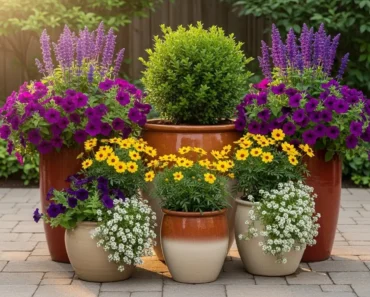
Marigolds (Tagetes spp.) turn up in almost every companion planting guide as a near-universal pest deterrent.
The reality is narrower than that.
Tagetes plants do contain alpha-terthienyl, a compound with documented effects on root-knot nematodes in the soil.
However, producing a meaningful result requires dense, sustained plantings across the whole bed, the kind of coverage you would get from a cover crop.
A decorative border of a dozen plants is not going to do it.
To truly suppress nematodes, you need a solid block of tagetes grown for at least two months, then tilled into the soil.
One study noted that continuous cultivation of certain Tagetes varieties can reduce nematode populations by measurable levels, but this is a far cry from scattering a few plants here and there.
If nematodes are your actual target, a good soil test kit can help to confirm your soil health before you commit a whole bed to this labor-intensive approach.
If you do not have a kit, an easy option is the Luster Leaf Rapitest Soil Kit, which is available from Amazon.
Sign up for the Gardening Know How newsletter today and receive a free copy of our e-book “How to Grow Delicious Tomatoes”.
For flying insects like whiteflies or cabbage loopers, the evidence is weaker still.
Pests that navigate by smell need a high, consistent concentration of volatile compounds in order to be redirected – not the ambient drift from a few marigolds scattered around your vegetable beds.
You would need a wall of marigolds to mask the chemical signature of a juicy tomato plant from a hungry pest.
So it is a stretch to think of marigolds as a broad pest deterrent (and by marigolds, we do mean tagetes varieties and not pot marigold calendula types).
Marigolds do have value.
They do attract beneficial hoverflies, whose larvae consume significant numbers of aphids.
In this light, the myths around simple marigold barriers become less useful than understanding their real ecological role.
The Scent Shield Fallacy
Another common myths suggests that strongly scented herbs can mask the smell of vulnerable crops like tomatoes.
Gardeners often plant lemon balm or similar herbs nearby, assuming the fragrance will confuse pests searching by scent.
In reality, pests use specialized receptors on their feet to identify host plants, and a light herbal aroma is unlikely to interfere.
Flying pests rely on visual cues and specific chemical signals rather than simply being overwhelmed by a pleasant garden perfume.
Lemon balm and similar herbs may not effectively mask tomato scent for pests, no matter how vigorously you prune them.
This is a classic case where the romantic notion of a fragrant shield falls short of biological reality.
Instead of relying on aromatic confusion, consider physical barriers like fine mesh row covers that actually block insect access.
These barriers provide a tangible defense that does not depend on the variable power of natural fragrances.
The Universal Protector Fallacy
A third persistent planting myth claims that certain plants act as universal protectors for everything around them.
You may have heard that basil defends tomatoes or that onions safeguard carrots from every threat.
While some interactions show mild benefits, there is rarely a one-size-fits-all guardian in the garden.
Pests and plants interact in highly specific ways that depend on climate, soil, and local ecology.
What works in one region may have little effect in another, and assuming otherwise can lead to misplaced confidence.
We have selected these 3 myths because they are so deeply embedded in gardening culture that they often go unchallenged.
Recognizing their limitations allows you to channel your energy into strategies with a clearer evidence base.
Effective Pairings That Deliver Real Results
Once the myths are gone, you have more room for the stuff that works.
Focusing on proven relationships helps you design a garden that supports healthy growth without relying on superstition.
Here are three pairings that offer measurable benefits, such as pest suppression, soil improvement, and structural support.
Tomatoes and Basil
Tomatoes and basil is a pairing celebrated not only in the kitchen but also in the garden.
While the culinary synergy is well known, the garden dynamic involves more than shared flavor profiles.
Basil may help to repel certain flies and mosquitoes, and some gardeners observe fewer pests on nearby tomato plants.
This could be due to the volatile oils released by basil leaves disrupting insect navigation.
The dense foliage of basil also provides a living mulch that conserves soil moisture and suppresses weeds.
Interplanting basil around tomatoes creates a more complex habitat that supports beneficial insects like ladybugs.
These predators help keep aphid populations in check naturally.
Carrots and Onions
Carrots and onions make excellent neighbors below and above ground.
Onions emit strong sulfur compounds that many pests find irritating, which can deter carrot flies seeking their host.
In return, carrots grow with a relatively small footprint, allowing onion leaves to spread without excessive competition.
This complementary growth habit maximizes space and reduces weed pressure between the rows.
Studies on allium compounds suggest that these sulfur-based chemicals can interfere with the host-finding behavior of certain insects.
While not a complete solution, this pairing demonstrates how biological chemistry can play a role in garden protection.
Corn, Beans, and Squash
The classic trio of corn, beans, and squash showcases a partnership built on mutual support and resource sharing.
Corn provides a sturdy stalk for beans to climb, reducing the need for external supports.
Beans fix atmospheric nitrogen into the soil, enriching fertility for the heavy-feeding corn and squash.
Squash spreads across the ground, acting as a living mulch that shades the soil and suppresses weeds.
This symbiotic relationship has been refined over centuries and remains a cornerstone of sustainable gardening.
It illustrates how thoughtful planting design can create a resilient system that requires fewer external inputs.
Building a Thoughtful Garden Strategy
Moving beyond myths allows you to design a garden that is both beautiful and effective.
Physical barriers, such as row covers and fine netting, provide reliable protection against many flying pests.
Integrated pest management combines biological controls, careful monitoring, and targeted interventions.
Healthy soil remains the foundation of any resilient garden, influencing plant vigor and pest resistance.
Regular soil testing helps you understand nutrient levels and pH, guiding thoughtful amendments.
When you focus on creating balanced ecosystems, the garden tends to regulate itself more naturally.
Observing insect behavior and plant responses over a full season offers valuable insights that no chart can provide.
Document your observations, adjust your strategies, and remain open to learning from each growing year.
To ensure fewer pests and bigger harvests, here are 6 companion planting truths every savvy homegrower needs to know.
Truth one: Diversity in planting reduces the risk of widespread pest damage.
Truth two: Healthy soil produces stronger plants that can better withstand stress.
Truth three: Not all insects are enemies; many are essential pollinators and predators.
Truth four: Timing and spacing matter more than random proximity.
Truth five: Some traditional tips have a symbolic value that can inspire mindful gardening.
Truth six: Continuous observation and adaptation lead to the best long-term results.
This myth busting can be very liberating: once the myths are gone, you have more room for the stuff that works!
Gardening is as much about curiosity and patience as it is about following old habits.
By questioning simple narratives and embracing complexity, you cultivate both your garden and your understanding.
Approach each season with a beginner’s mind, ready to adjust and refine your methods.
When you stop relying on a single marigold to save your tomatoes, you open the door to more sophisticated ecological thinking.
In this way, companion planting becomes not a set of rigid rules but a flexible framework for thoughtful cultivation.
We’ve selected these 3 myths because they are so common that even experienced gardeners may unconsciously rely on them.
Recognizing their limitations allows you to focus on practices that genuinely enhance your garden’s vitality.
As you plan your next growing season, let evidence guide your decisions and let curiosity lead your experiments.
The garden offers endless opportunities for discovery, and every careful observation brings you closer to a thriving, balanced space.