What if your morning coffee routine could shift from a rushed caffeine grab to a peaceful ritual you actually look forward to—without spending thousands or hiring a designer?
11 Unique Coffee Bar Ideas to Start Your Morning Off Right
Transform any space into your personal café with these creative coffee bar table solutions
You wake up, shuffle to your own personal unique coffee bar, and within minutes, you’re sipping barista-quality coffee without leaving home. Sounds perfect, right? Creating a dedicated coffee station transforms your morning routine from a rushed necessity into a cherished ritual. Whether you live in a sprawling house or a compact apartment, the right coffee bar table setup can revolutionize how you start each day.
The numbers tell a compelling story: 66% of American adults now drink coffee daily—a 20-year high representing a 37% increase since 2004. More significantly, 70% of coffee drinkers globally now brew at home in 2025, with the at-home coffee market valued at $96.45 billion. This shift from coffee shops to home brewing has sparked a design revolution, with home coffee bars evolving into personalized, aesthetically pleasing setups that rival premium cafés.
In this guide, we’ll explore eleven creative coffee bar ideas that go beyond the typical kitchen counter setup. From vintage cart transformations to hidden cabinet solutions, these designs prove that your coffee station can be both functional and stunning. Best of all, each idea adapts to different spaces, budgets, and style preferences, letting you create a morning sanctuary that suits your unique lifestyle.
1. The Vintage Bar Cart Coffee Station
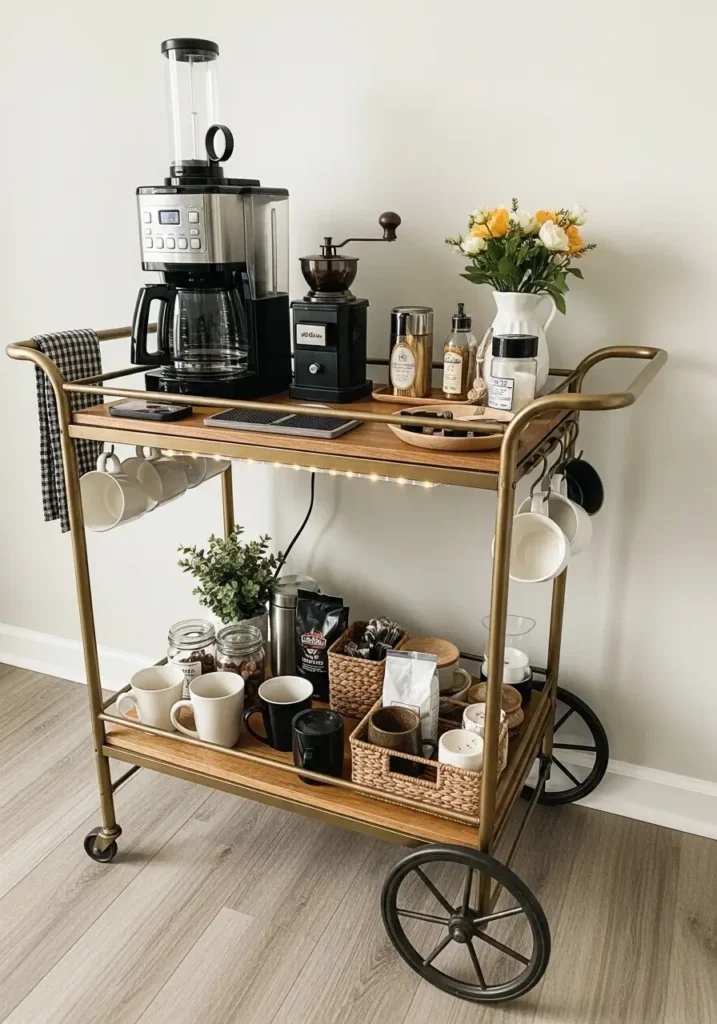
Transform a vintage bar cart into a mobile unique coffee bar that brings character to any room. This option works brilliantly for renters or anyone who values flexibility. Bar carts offer multiple tiers for organization, wheels for easy movement, and instant vintage charm that makes your coffee corner feel special.
Start by selecting a cart with at least two levels. The top tier holds your coffee maker, grinder, and daily essentials. Use the lower shelf for mugs, coffee beans, and backup supplies. Add small baskets or containers to prevent items from rolling around. The beauty of this setup lies in its mobility—roll it into the dining room for brunch parties or tuck it away when you need extra space.
Consider these cart styling tips for maximum impact. Hang mugs from S-hooks along the sides. Place a small tray on top to catch drips and define your workspace. Add a small plant or fresh flowers for a touch of life. Install battery-powered LED strips underneath shelves for early morning ambiance. The result? A coffee bar table that moves where you need it while looking like it belongs in a trendy café.
Budget-conscious coffee lovers can find bar carts at thrift stores, estate sales, or online marketplaces for under fifty dollars. A coat of metallic spray paint transforms dated brass into modern gold or sleek black. Replace worn wheels with new casters from the hardware store. These simple updates create a custom piece that rivals expensive designer options.
2. Wall-Mounted Minimalist Coffee Bar
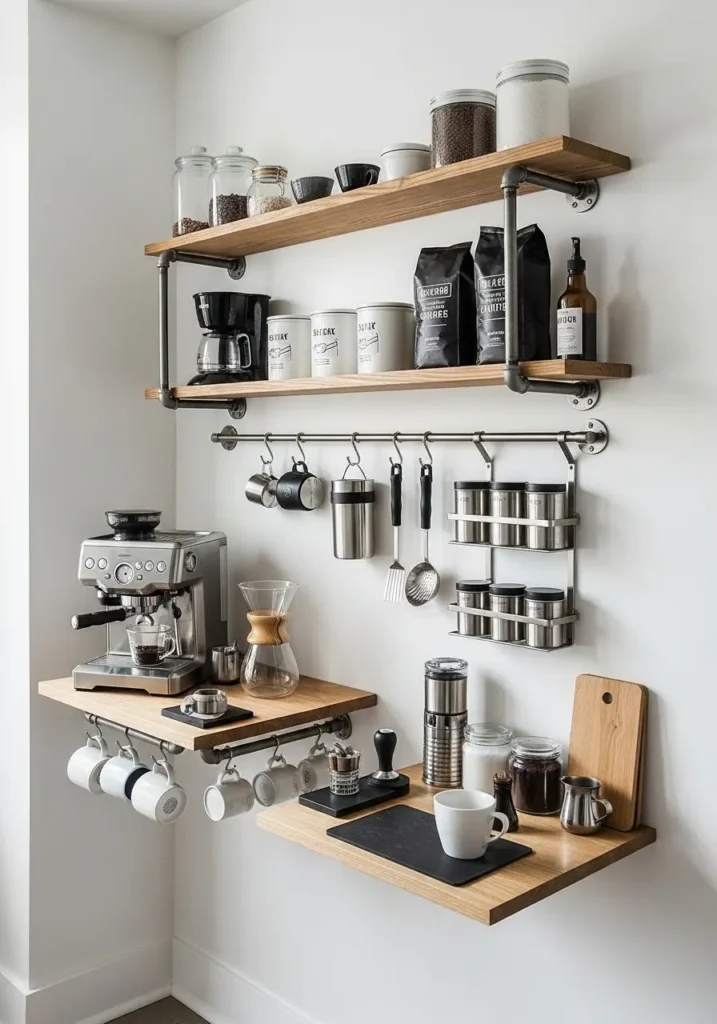
When floor space comes at a premium, look up. A wall-mounted unique coffee bar maximizes vertical space while maintaining a clean, modern aesthetic. This approach works particularly well in small kitchens, studio apartments, or any space where you want to keep counters clear.
Begin with floating shelves installed at comfortable working height. Space them twelve to sixteen inches apart to accommodate coffee makers and storage containers. Choose shelves deep enough to hold your equipment safely—typically ten to twelve inches works well. Mount them into wall studs or use heavy-duty anchors to support the weight of your coffee gear.
Organization becomes crucial with wall-mounted systems. Use wall-mounted mug racks or hooks underneath the lowest shelf. Install a narrow rail system for hanging tools like tampers, measuring spoons, and milk frothers. Magnetic strips hold metal canisters against the wall, freeing up shelf space. Consider adding a fold-down shelf that serves as a workspace when needed and tucks away when not in use.
The minimalist approach shines when you embrace negative space. Choose matching containers for coffee, sugar, and other supplies. Stick to a consistent color palette—white and wood, all black, or metallic finishes create cohesive looks. Hide coffee filters and cleaning supplies in attractive boxes. The goal? Everything you need remains accessible while maintaining visual calm.
This setup adapts to any style preference. Industrial pipes and reclaimed wood create rustic charm. Sleek metal brackets and glass shelves offer contemporary elegance. White brackets and light wood bring Scandinavian simplicity. Whatever your aesthetic, wall-mounted systems prove that small spaces can still accommodate a fully functional coffee bar table setup.
3. Repurposed Dresser Coffee Station
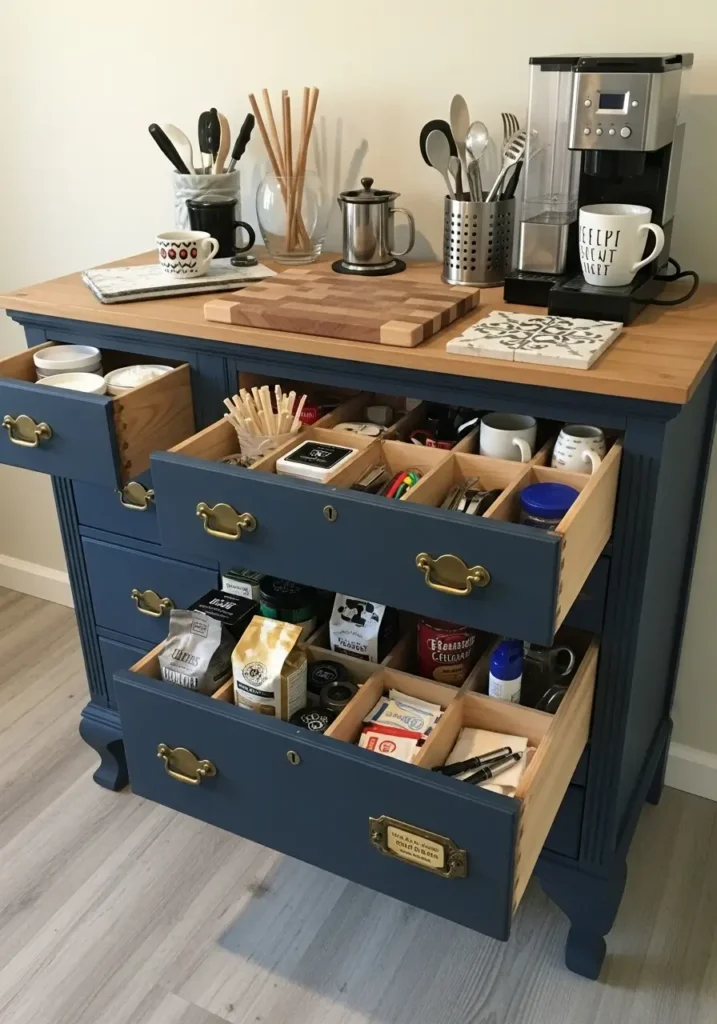
That old dresser gathering dust in your garage holds secret potential as a unique coffee bar. This transformation combines ample storage with counter space, creating a coffee station that handles everything from bean storage to mug collections. Plus, repurposing furniture adds character while keeping perfectly good pieces out of landfills.
Select a dresser with a flat, stable top that can support your coffee equipment. The ideal height sits between thirty-four and thirty-six inches—comfortable for most adults to work at while standing. Check that drawers slide smoothly and the structure remains solid. Minor wobbles or sticky drawers are fixable, but significant structural damage might not be worth the effort.
Preparation makes the difference between amateur and professional results. Sand the entire piece to remove old finish and create a surface that accepts new paint or stain. Fill any holes or scratches with wood filler. Consider removing the top drawers to create open shelving for easy access to daily items. Install a power strip inside for a clean look—drill a hole in the back for cords to pass through.
The top surface needs protection from heat and moisture. Options include a piece of cut marble or granite from a countertop remnant, a butcher block cutting board, or heat-resistant tiles arranged in a pattern. These materials protect the wood while adding visual interest. Seal any wood surfaces with polyurethane to resist coffee stains and water damage.
Storage possibilities multiply with creative drawer organization. The top drawer holds coffee filters, stirrers, and small tools. Dedicate another drawer to different coffee varieties, keeping them in airtight containers. Use drawer dividers to organize sugar packets, creamers, and flavor syrups. The bottom drawer stores backup supplies, cleaning materials, or seasonal items like hot chocolate mixes.
Style your repurposed dresser to match your home’s aesthetic. Paint it navy blue with gold hardware for sophisticated appeal. Choose chalk paint in soft gray for farmhouse charm. Strip it down to natural wood for rustic warmth. Add decorative molding, new feet, or vintage labels to personalize your creation. The result? A coffee bar table with more personality than anything from a furniture store.
What’s holding you back from creating your dream coffee bar? Is it lack of space, budget constraints, or uncertainty about your design skills? Share your biggest challenge in the comments—let’s problem-solve together!
4. Kitchen Island Coffee Corner
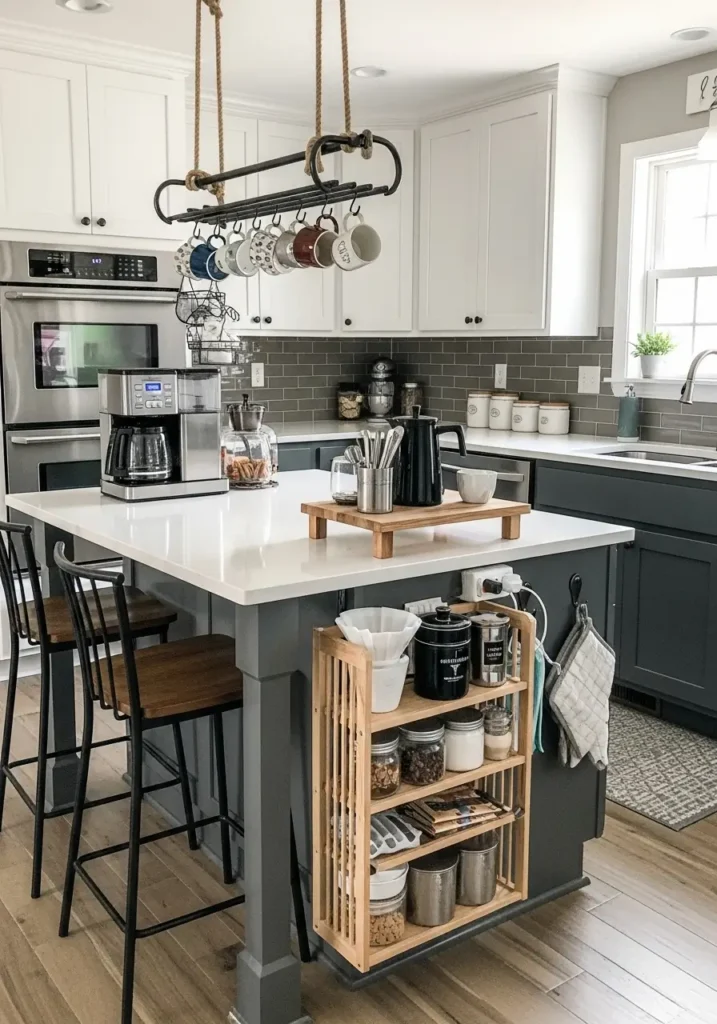
Your kitchen island offers prime real estate for a dedicated unique coffee bar zone. This approach keeps coffee preparation central to kitchen activity while maintaining clear boundaries between coffee and cooking spaces. The key lies in thoughtful organization that maximizes functionality without creating clutter.
Designate one end or corner of your island specifically for coffee. This creates a defined zone that prevents coffee supplies from spreading across the entire surface. If your island has an overhang, position the coffee area there—bar stools transform it into a café-style experience where family members can chat while you brew.
Vertical solutions maximize limited island space. Install a small shelf unit or riser on the island surface to create levels. The elevated area holds the coffee maker and grinder, while the lower level provides workspace. Hanging solutions work brilliantly here—suspend a rod from the ceiling above the island to hang mugs, or install hooks underneath upper cabinets if they extend over the island.
Power access often challenges island coffee stations. If your island lacks outlets, consider these solutions. A power strip with USB ports mounted discreetly on the island’s side provides convenient access. For islands without any power, look into countertop power pop-ups that install through the surface. Battery-powered or manual coffee equipment offers another option—hand grinders and pour-over systems need no electricity.
Storage requires creative thinking when working with island limitations. Use attractive canisters that double as décor for counter storage. Install a narrow drawer organizer on the island’s side for filters and stirrers. Magnetic containers stick to the side of metal islands. A small lazy Susan corrals supplies while making everything accessible with a spin.
The island coffee corner shines during entertaining. Guests serve themselves without entering your main cooking space. Set up a full beverage station with coffee, tea, and accompaniments. The central location encourages conversation while you prepare meals. This setup transforms your kitchen island from simple prep space into a social hub centered around coffee culture.
5. Butler’s Pantry Coffee Haven
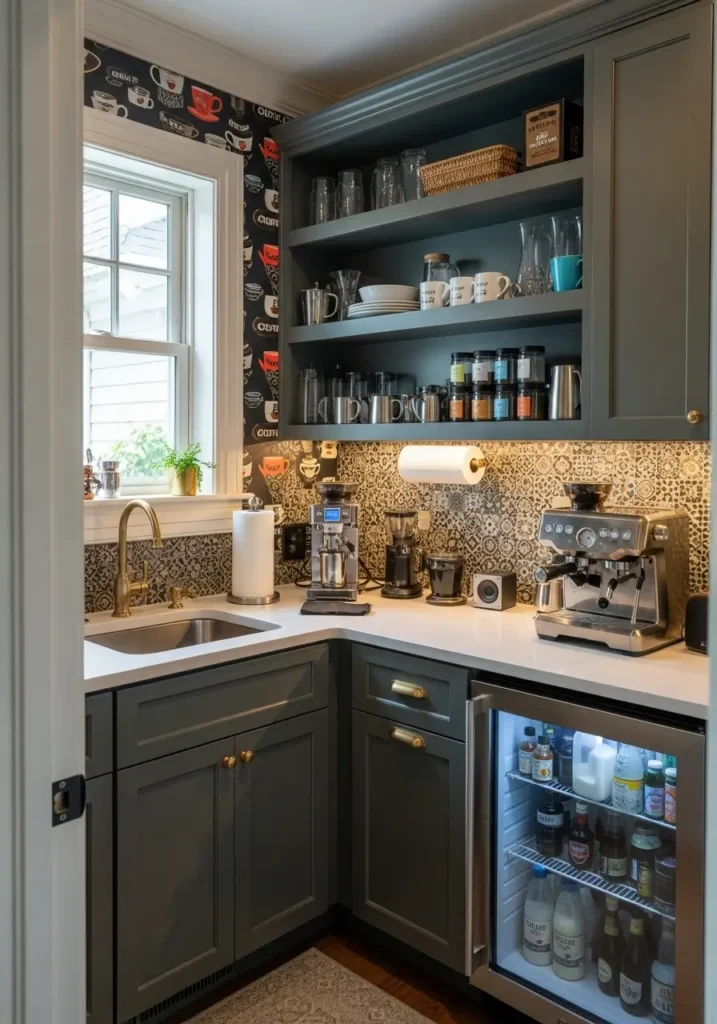
Lucky enough to have a butler’s pantry? Transform this traditionally underused space into the ultimate unique coffee bar. Butler’s pantries offer privacy, built-in storage, and separation from main kitchen chaos—perfect conditions for creating a sophisticated coffee experience that rivals high-end cafés.
Begin by evaluating your pantry’s layout and infrastructure. Most butler’s pantries include upper and lower cabinets, counter space, and sometimes a sink—ideal bones for a coffee station. Check electrical capacity, as you might run multiple appliances simultaneously. Adding dedicated circuits prevents tripped breakers during morning rush hours when the coffee maker, grinder, and milk frother run together.
Design your space for efficiency and enjoyment. Position frequently used items at eye level and within arm’s reach. Install under-cabinet lighting to illuminate your workspace—early mornings demand good visibility. If you have a window, position your main prep area there for natural light and garden views while you brew.
The enclosed nature of butler’s pantries allows for bolder design choices. Paint the walls a dramatic color that might overwhelm a main kitchen—deep green, navy, or even black creates intimate atmosphere. Install statement wallpaper featuring coffee-themed patterns or bold graphics. Open shelving displays beautiful mugs and equipment as functional art.
Equipment placement follows workflow logic. Position items in order of use: water source, grinder, coffee maker, serving area. If you have a sink, install a water filter for optimal coffee quality. Mount a paper towel holder nearby for quick cleanups. Consider adding a small refrigerator for milk and cream if space allows—this keeps your main fridge organized and provides convenient access.
The butler’s pantry coffee haven accommodates serious coffee enthusiasm. Install multiple outlets to support various brewing methods—espresso machine, drip maker, pour-over station. Dedicate cabinet space to different coffee varieties, organizing by roast level or origin. Create a tasting station with cupping bowls and flavor wheels. Add a small sound system for morning music that doesn’t disturb the rest of the house.
This setup particularly benefits households with different wake times. Early risers prepare coffee without disturbing sleepers. The closed door contains noise and aromas until others are ready to start their day. The separate space also means messy coffee experiments stay contained while your main kitchen remains presentation-ready.
Quick Tip: Measuring Your Space
Before committing to any coffee bar table design, measure your available space carefully. Account for door swings, traffic patterns, and reaching room. Most coffee makers need 18 inches of clearance above for adding water and beans. Allow at least 24 inches of workspace beside your machine for comfortable preparation.
6. Window Nook Coffee Sanctuary
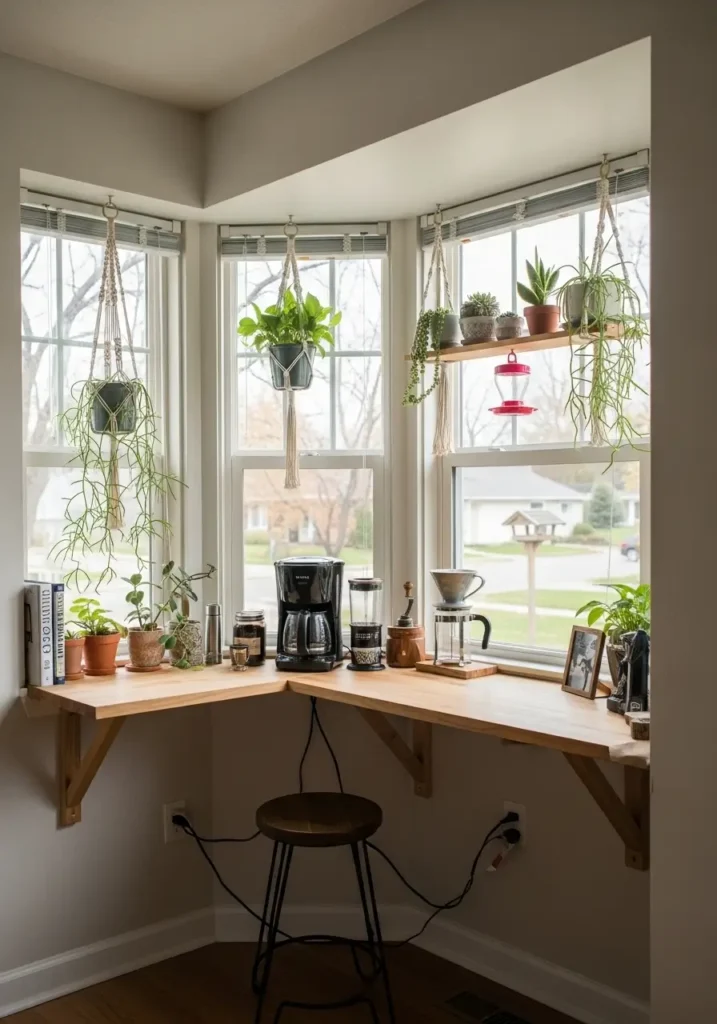
That awkward window nook or bay window area makes an ideal spot for a unique coffee bar with a view. Natural light enhances your morning ritual while the defined space creates a cozy coffee sanctuary. This setup works particularly well in kitchens, dining rooms, or even bedroom sitting areas where windows create natural alcoves.
Assess your window nook’s dimensions and sunlight patterns. Direct afternoon sun might overheat equipment or fade coffee beans, so consider window treatments. Sheer curtains filter harsh light while maintaining brightness. Position heat-sensitive items like coffee beans away from direct sunlight, using the sunny spots for plants or decorative elements instead.
Custom solutions maximize irregular nook spaces. Build or buy a console table that fits the exact width of your nook. Floating corner shelves utilize awkward angles. A narrow bookshelf placed perpendicular to the window creates defined boundaries while providing vertical storage. For deep window sills, extend them with a wooden board to create additional surface area.
The view becomes part of your coffee experience, so embrace it. Position your coffee maker where you can watch the world wake up while your coffee brews. Add a small stool or chair if space allows—morning coffee tastes better when you can sit and enjoy the view. Bird feeders outside the window provide entertainment during your coffee ritual.
Window nooks often lack electrical outlets, requiring creative solutions. Extension cords hidden behind furniture provide temporary power. For permanent solutions, hire an electrician to install outlets—the investment pays off in convenience and safety. Battery-operated or manual brewing methods offer alternatives: French presses, pour-over systems, and hand grinders need no electricity while delivering excellent coffee.
Decorate your window nook to enhance the coffee experience. Hang plants in macramé holders for a bohemian vibe. Install small shelves for succulent gardens that thrive in bright light. Use the windowsill for rotating seasonal decorations that complement your coffee station. The natural focal point of windows means even simple styling creates visual impact.
7. Closet Conversion Coffee Bar
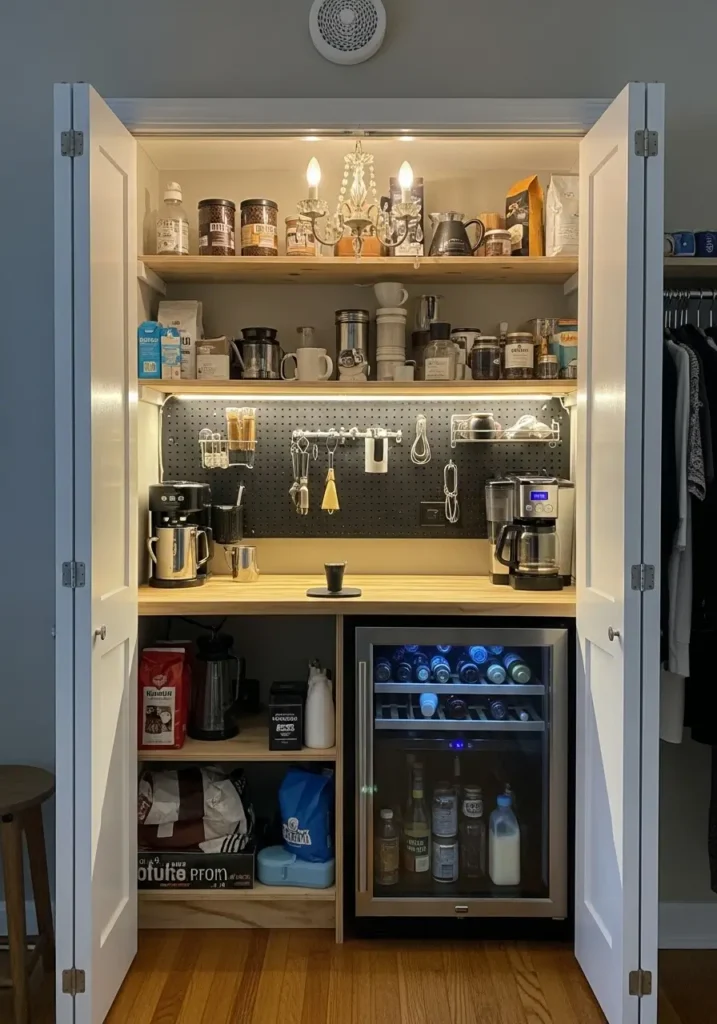
Transform an underutilized closet into a hidden unique coffee bar that disappears when not in use. This brilliant solution works for various closet types—hallway linen closets, kitchen pantries, or even bedroom closets. The ability to close doors and hide everything appeals to minimalists and anyone living in small spaces.
Evaluate your chosen closet’s potential carefully. Remove doors to create an open coffee bar, or keep them for a hidden station. Bifold doors offer compromise—they open wide for access but close for concealment. Measure depth carefully; most coffee makers need at least 12 inches, plus room for your hands to operate controls.
Structural modifications transform basic closets into functional coffee bars. Remove existing rods and shelves that don’t serve your purpose. Install a countertop at comfortable working height—typically 36 inches from the floor. Use a butcher block remnant, thick plywood with laminate, or even a repurposed desk top. Support it with brackets rated for the weight of your equipment plus workspace use.
Electrical work might be necessary but worthwhile. Most closets lack outlets, but adding them is straightforward for electricians. Request multiple outlets at counter height and consider adding USB ports for charging phones during morning coffee time. If electrical work isn’t possible, run an extension cord through a small hole drilled discreetly in the wall.
Maximize vertical space with floor-to-ceiling organization. Install adjustable shelving above your counter for flexibility as your coffee collection grows. Use the back wall for pegboard or slat wall systems that hold tools and accessories. Magnetic strips and adhesive hooks utilize door backs for additional storage. The enclosed space means you can pack in more without worrying about visual clutter.
Lighting transforms dark closets into inviting spaces. LED strip lights under shelves provide task lighting. Battery-operated puck lights offer solutions without electrical work. Consider a small pendant light or chandelier for ambiance—the unexpected elegance surprises and delights. Motion-sensor lights add convenience for early morning brewing.
The closet conversion accommodates serious coffee setups without overwhelming living spaces. Install ventilation fans if you’re using steam-producing equipment. Add a small wine fridge for milk storage. Create a coffee bean library with labeled jars on display. Include a fold-down table extension for additional workspace when entertaining. The closed doors mean you can go all out with equipment and storage without affecting your home’s overall aesthetic.
If money and space weren’t issues, what would your ultimate coffee bar include? Espresso machine? Bean roaster? Built-in water filtration? Share your dream setup below—you might inspire someone else’s realistic plan!
8. Garden Shed Coffee Retreat
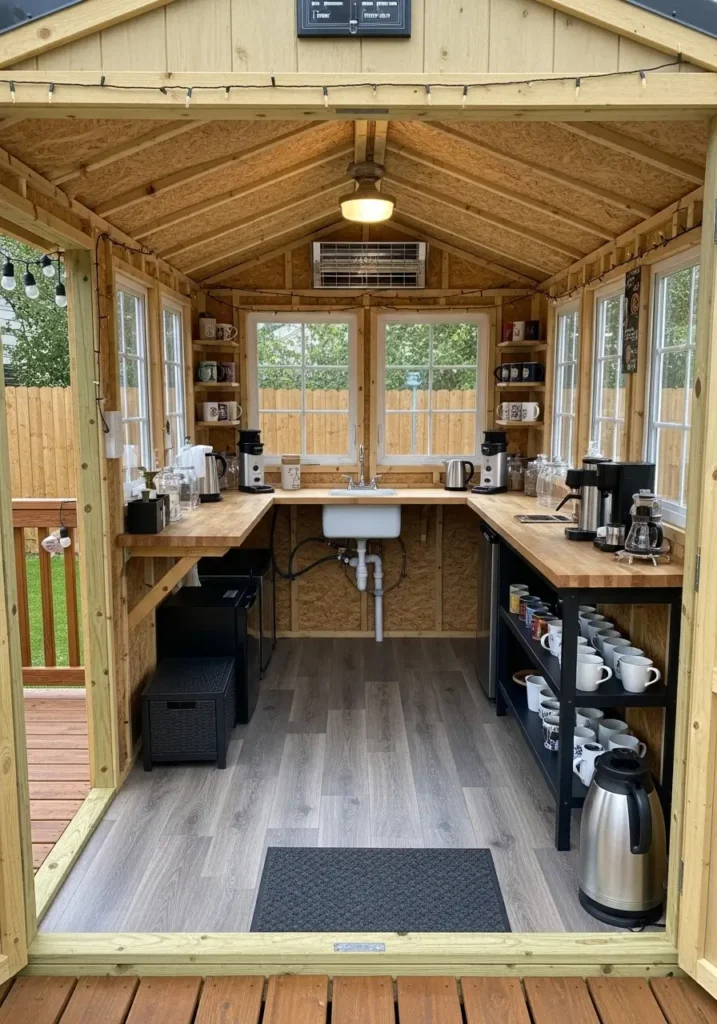
Take your unique coffee bar outdoors by converting a garden shed into a dedicated coffee retreat. This option provides complete separation from household distractions, creating a true escape for coffee lovers. Whether you have an existing shed or build one specifically for this purpose, the outdoor coffee bar offers an experience unlike any indoor setup.
Start with structural basics to ensure year-round usability. Insulation keeps the space comfortable in weather extremes. Weatherstripping around doors and windows prevents drafts. Consider heating and cooling options—a small space heater for winter and fan for summer might suffice, or invest in a mini-split system for optimal climate control.
Electrical installation is crucial for a functional shed coffee bar. Run power from your main panel through underground conduit for safety and code compliance. Install sufficient outlets for all equipment plus lighting. Add exterior outlets for string lights or heating elements on an attached deck. Solar panels offer an eco-friendly alternative for basic power needs.
Design your shed interior like a tiny coffee shop. Paint walls in warm, inviting colors. Install vinyl plank flooring that handles spills and foot traffic. Add a small counter or bar along one wall for equipment. Include comfortable seating—even a single chair creates a destination rather than just a functional space. Windows on multiple walls provide natural light and garden views.
Plumbing additions elevate your shed coffee bar but aren’t essential. A small sink connected to garden hose water works for basic needs. For winter use, consider frost-proof fixtures or drain systems. Many shed coffee bars function perfectly with water carried from the house in thermal carafes. Focus on what enhances your experience without overcomplicating the project.
The separated space allows for unique touches impossible indoors. Install a sound system for morning music without disturbing family. Create a coffee-roasting station with proper ventilation. Display extensive mug collections on open shelving. Add a small deck or patio area for outdoor coffee enjoyment. The shed becomes more than a coffee bar—it’s a personal retreat that happens to serve exceptional coffee.
9. Stairs Landing Coffee Spot
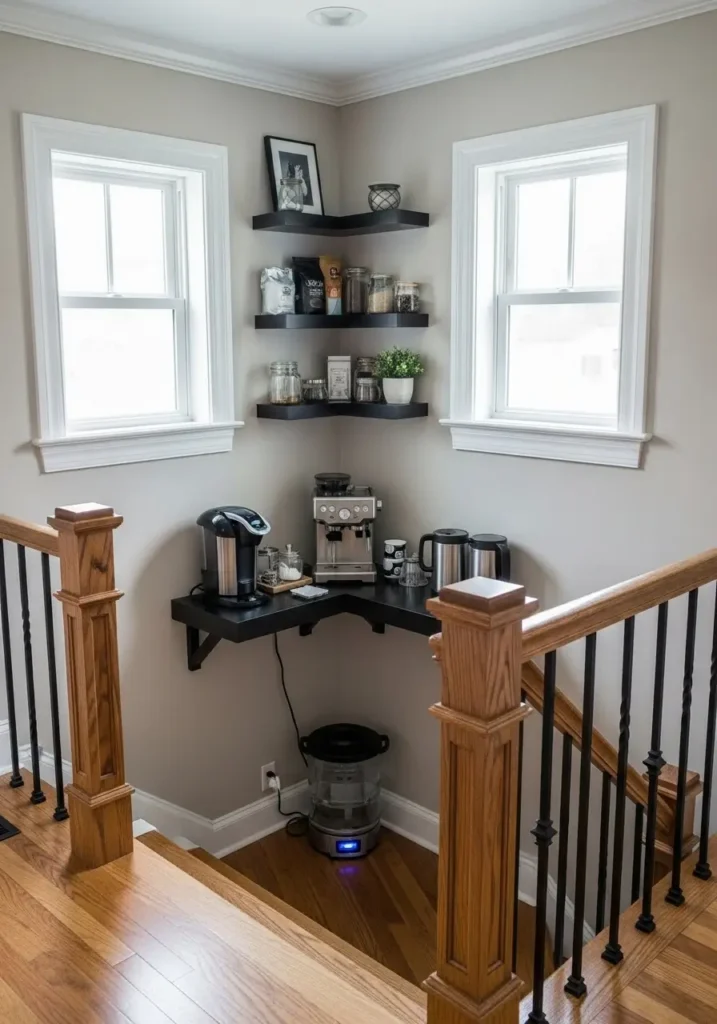
That often-wasted space on stair landings provides an unexpected location for a compact unique coffee bar. This creative solution works particularly well in multi-story homes where the landing offers a natural pause point. The elevated position keeps coffee supplies away from pets and young children while creating an interesting architectural feature.
Measure your landing carefully to determine what fits without impeding traffic flow. Building codes typically require 36 inches of clear passage on stairs and landings. Work within these constraints by choosing narrow console tables or wall-mounted solutions. Corner landings offer more flexibility with L-shaped arrangements that maximize space.
Safety considerations guide design choices for stair landing coffee bars. Secure all furniture to walls to prevent tipping. Choose equipment with automatic shut-offs for peace of mind. Avoid placing hot water reservoirs near edges where they might spill onto stairs below. Install proper lighting to prevent morning stumbles—motion-activated lights add convenience and safety.
The vertical nature of stairwells offers unique design opportunities. Hang floating shelves at varying heights up the wall for visual interest and storage. Use the wall space above and below windows for organization. Install a narrow ledge along the wall as a coffee bar table that doesn’t protrude into walking space. The height variation creates dynamic displays impossible in standard room settings.
Power access requires planning on stair landings. Existing outlets might be limited to one near the floor. Use furniture that conceals power strips and cord management. Alternatively, battery-powered LED lights and manual brewing methods reduce electrical needs. For major additions, consult electricians familiar with stairwell electrical codes.
Style your landing coffee spot to complement your home’s architecture. Match wood tones to existing stair railings and balusters. Echo architectural details in your storage solutions—traditional homes suit furniture-style pieces while modern homes call for minimalist floating shelves. The visible location from multiple floors means your coffee station becomes a design feature viewed from various angles.
10. Home Office Integrated Coffee Bar
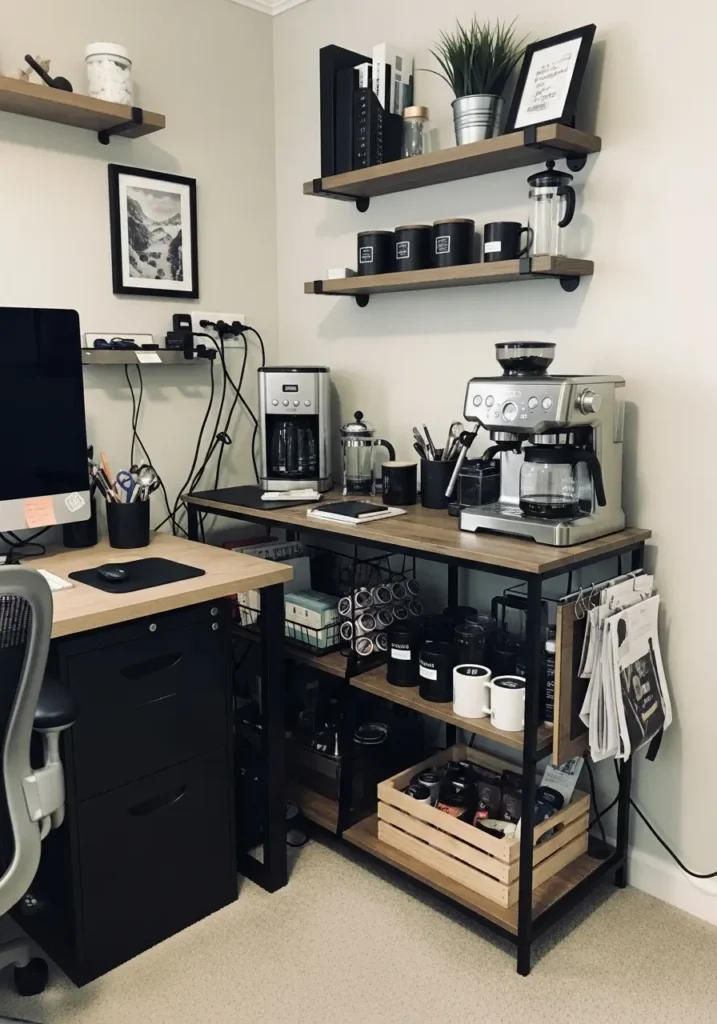
With remote work becoming a staple in many households, integrating a unique coffee bar into your home office creates a seamless blend of productivity and convenience. This setup keeps your morning brew—or midday pick-me-up—within arm’s reach, minimizing disruptions and enhancing focus during work hours. It’s particularly ideal for professionals who spend long periods at their desks, turning a standard office into a multifunctional haven that rivals co-working spaces.
Begin by assessing your office layout for integration opportunities. Dedicate a corner of your desk, a nearby side table, or a credenza to the coffee station. If your office includes built-in bookshelves or cabinets, allocate one section for coffee essentials—this keeps everything organized without encroaching on workspace. Aim for a compact footprint, typically 2-3 feet wide, to maintain a professional environment while accommodating a coffee maker, grinder, and storage.
Power management is straightforward in most home offices, which often have multiple outlets for computers and peripherals. Use cable organizers or under-desk trays to hide cords from the coffee equipment, preventing a tangled mess that could distract from work. For added efficiency, incorporate a power strip with USB ports to charge devices alongside brewing coffee. If outlets are limited, opt for low-power or manual options like a French press to avoid overloads.
Storage integrates seamlessly with office supplies for a cohesive look. Use desk drawers or organizers for coffee pods, beans, and filters—label them clearly to avoid confusion with work items. Magnetic strips on the side of a filing cabinet can hold metal tools like spoons or tampers. Install a small riser shelf on the desk to elevate the coffee maker, freeing up surface area below for mugs or a notepad. This dual-purpose approach ensures the station feels like a natural extension of your office rather than an add-on.
Customize the design to match your work aesthetic and boost motivation. For a modern office, choose sleek, matte-black containers and minimalist shelving that complements tech gadgets. Rustic setups might incorporate wooden crates or reclaimed wood accents for warmth. Add personal touches like a motivational quote board or a small plant to make the area inviting—studies show such elements can reduce stress and improve workflow. Lighting plays a key role; task lamps already in offices provide focused illumination, or add LED strips for ambiance during early calls.
This integrated coffee bar excels for solo workers or shared offices, allowing quick brews during video meetings without leaving the room. It also encourages better habits, like staying hydrated with nearby water filters. For families, position it away from high-traffic areas to maintain a quiet zone. Overall, this setup transforms your home office into a self-sufficient space where work and wellness converge effortlessly.
11. Mudroom Multi-Purpose Station
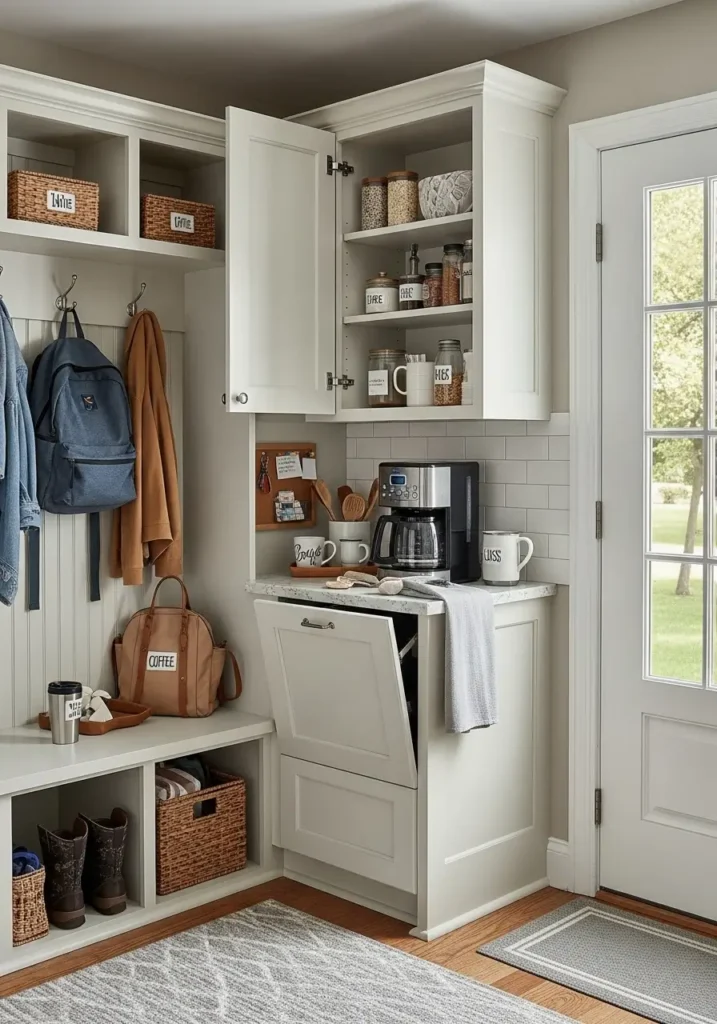
Your mudroom already handles daily transitions, so adding a unique coffee bar creates a one-stop morning launch pad. This strategic placement means grabbing coffee while gathering bags, coats, and keys for the day ahead. The casual nature of mudrooms allows for functional design without worrying about pristine appearances.
Evaluate your mudroom’s existing layout for coffee integration opportunities. Bench tops provide surfaces for coffee makers. Open cubbies store mugs and supplies. Hook systems hold travel mugs within easy reach. The key lies in creating zones—dedicate one section to coffee while maintaining the mudroom’s primary functions.
Built-in solutions maximize mudroom efficiency. Convert one upper cabinet into a coffee station with equipment on pull-out shelves. Install a flip-up counter that folds against the wall when not in use. Add a small coffee bar table that doubles as a landing zone for packages. These dual-purpose solutions prevent coffee items from overwhelming the space.
The high-traffic nature of mudrooms demands durable materials. Choose equipment that withstands bumps from backpacks and sports equipment. Use washable rugs under the coffee area for easy cleaning. Select containers that won’t break if knocked over. Position equipment away from high-activity zones to prevent accidents during morning rushes.
Organization systems keep mudroom coffee bars functional despite chaos. Label everything clearly so family members can help themselves. Use a communication board to note when supplies run low. Install timer outlets so coffee starts brewing automatically each morning. Create grab-and-go stations with travel mugs, lids, and sleeves ready for busy mornings.
The mudroom location offers unique advantages for families. Kids can grab breakfast drinks without entering the main kitchen. Guests can help themselves to coffee without feeling intrusive. The casual setting encourages conversation during morning preparations. Spills and messes worry no one in this hardworking space.
Weather considerations influence mudroom coffee bar design. Position equipment away from doors where rain might blow in. Use moisture-resistant storage for coffee supplies. Install mats that catch drips from both coffee and wet boots. Good ventilation prevents coffee aromas from mixing with mudroom odors. These practical considerations ensure your coffee stays delicious regardless of weather.
Choosing the Right Coffee Bar Setup for Your Lifestyle
Selecting from these unique coffee bar ideas requires honest assessment of your needs, space, and habits. The perfect setup for a single professional differs vastly from what works for a family of five. Consider these factors when making your decision.
Daily coffee consumption patterns guide equipment choices. Single-cup pod systems suit moderate drinkers who value convenience. Serious coffee enthusiasts need space for multiple brewing methods—the global specialty coffee market is estimated at $45 billion in 2025 and projected to grow at 5.5% annually, reflecting increased demand for quality home brewing. Large families benefit from high-capacity makers and extensive mug storage. Track your current coffee habits for a week to understand your true needs.
Available space dictates possible configurations. Measure not just floor space but also wall space, counter depth, and electrical outlet locations. Consider traffic patterns—will people bump into protruding equipment? Account for door swings and drawer pulls. Create paper templates of equipment footprints to test arrangements before committing.
Budget influences both initial setup and ongoing costs. DIY conversions using existing furniture cost less than built-in solutions. Factor in ongoing costs like coffee beans, filters, and electricity. Sometimes spending more initially saves money long-term through durability and efficiency. With Americans consuming an average of 3 cups of coffee per day, investing in quality equipment that enhances each cup makes financial sense.
Household dynamics affect location choices. Young children require safety considerations like locked cabinets and high placement of hot equipment. Teenagers might appreciate a separate station to avoid morning conflicts. Multiple coffee drinkers benefit from stations with room for simultaneous use. Pet owners need secure storage for items toxic to animals, like coffee grounds and chocolate-covered beans.
Style preferences shouldn’t be overlooked. Your coffee bar becomes part of daily life, so choose designs that bring joy. Modern minimalists gravitate toward wall-mounted systems. Vintage lovers embrace repurposed furniture. Traditional homes suit built-in solutions. The best coffee bar reflects your personality while functioning flawlessly.
Essential Equipment for Your Coffee Bar Table
Regardless of which unique coffee bar design you choose, certain equipment and accessories elevate your setup from functional to exceptional. Building your collection gradually allows you to invest in quality pieces that enhance your coffee experience for years. The coffee equipment market reached $12 billion in 2025, with projected growth to $16 billion by 2030, offering more innovative options than ever.
The coffee maker anchors your station, so choose wisely. Drip makers suit those wanting consistent, hands-off brewing. Espresso machines satisfy those craving café-style drinks. Pour-over systems appeal to ritual lovers who enjoy the brewing process. French presses deliver full-bodied coffee with minimal equipment. Consider having multiple brewing methods for variety.
Grinders significantly impact coffee quality. Burr grinders produce consistent grounds essential for optimal extraction. Blade grinders work for basic needs but create uneven particles. Hand grinders offer quiet operation and portability. Pre-ground coffee saves time but sacrifices freshness. Invest in the best grinder your budget allows—it affects every cup you brew.
Storage solutions maintain coffee freshness and organization. Airtight containers protect beans from air, light, moisture, and heat. Vacuum-sealed canisters extend freshness further. Date labels track roasting dates for optimal use. Separate containers for regular and decaf prevent mix-ups. Proper storage means better-tasting coffee and less waste.
Water quality influences coffee taste more than most realize. Filtered water removes chlorine and impurities that affect flavor. Water temperature between 195-205°F extracts optimal flavors. Thermometers ensure proper temperature for manual brewing methods. Electric kettles with temperature controls provide precision. Quality water transforms good coffee into great coffee.
Measuring tools ensure consistency. Digital scales provide accurate coffee-to-water ratios. Measuring scoops work for quick brewing. Timer functions on coffee makers or separate timers prevent over-extraction. Consistency means you can replicate perfect cups and adjust recipes precisely.
Serving accessories complete the experience. Thermal carafes keep coffee hot without burning it. Sugar and creamer containers match your aesthetic. Stirring spoons, both disposable and reusable, stay within reach. Travel mugs for on-the-go enjoyment. Beautiful serving pieces make everyday coffee feel special.
Maintaining Your Coffee Bar: Tips for Long-Term Success
Creating a unique coffee bar is just the beginning. Proper maintenance ensures your station remains functional, hygienic, and enjoyable for years. Regular care prevents equipment failures, maintains coffee quality, and keeps your space inviting.
Daily cleaning prevents buildup that affects taste and equipment function. Rinse all removable parts after each use. Wipe down surfaces to prevent sticky residue. Empty and rinse carafes to prevent coffee oil buildup. Clean steam wands immediately after frothing milk. These quick tasks take minutes but prevent hours of deep cleaning later.
Weekly deep cleaning maintains optimal performance. Descale equipment according to manufacturer instructions—usually every few months depending on water hardness. Clean grinder burrs to prevent oil buildup that creates bitter flavors. Wash all containers and organization tools. Sanitize surfaces with food-safe cleaners. Regular maintenance extends equipment life significantly.
Organization systems require periodic adjustment. Reassess storage solutions as your coffee preferences evolve. Rotate stock to use older supplies first. Update labels when trying new varieties. Remove items you no longer use to prevent clutter. Functional organization means everything has a place and purpose.
Inventory management prevents morning disappointments. Track supply levels weekly. Note when favorite beans run low. Stock backup filters and cleaning supplies. Keep a shopping list nearby for immediate notation of needs. Coffee Review’s buying guides help discover new beans worth trying when restocking.
Seasonal adjustments keep your coffee bar relevant year-round. Summer might bring cold brew equipment to the forefront—cold brew consumption surged to 21% of American adults in the past week in 2025, up 50% since 2020. Winter highlights hot chocolate additions. Holiday seasons warrant special mugs and flavored syrups. Spring cleaning provides opportunity for deep organization. Adapting your station to seasons maintains excitement and functionality.
Equipment upgrades should be strategic rather than impulsive. Research thoroughly before purchasing new items. Consider whether additions truly improve your experience or just add clutter. Sell or donate equipment that no longer serves you. Quality over quantity creates better coffee experiences with less maintenance burden.
Creating a Budget-Friendly Coffee Bar
Building a unique coffee bar doesn’t require enormous investment. Smart shopping, DIY solutions, and gradual building create impressive stations without financial strain. These strategies help you achieve coffee shop quality at home while respecting your budget.
Start with essentials and build gradually. A good coffee maker and fresh beans matter more than elaborate setups. Add accessories and organization as budget allows. This approach prevents overwhelming expenses while letting you identify what you actually need through experience.
Thrift stores and yard sales offer incredible finds for coffee bar furniture and accessories. Vintage mugs cost fraction of new prices. Old furniture awaits transformation into coffee stations. Unique containers and serving pieces add character cheaply. Patience and regular searching yield amazing discoveries.
DIY projects save money while creating custom solutions. Build floating shelves from hardware store lumber. Paint existing furniture instead of buying new. Create organization systems from repurposed containers. Sew fabric baskets for storage. These projects provide exactly what you need at lower cost than retail options.
Buy quality where it matters most. Invest in a good grinder over expensive mugs. Choose a reliable coffee maker over decorative accessories. Focus spending on items affecting coffee quality rather than appearance. This strategic approach ensures great coffee even on tight budgets.
Share resources with other coffee lovers. Split bulk coffee purchases for variety without waste. Trade equipment you no longer use. Share subscription services for specialty beans. Coffee communities often embrace sharing and trading, reducing everyone’s costs.
Watch for sales strategically. Black Friday brings major appliance discounts. Post-holiday sales clear seasonal items. End-of-season transitions discount outdoor furniture perfect for coffee stations. Sign up for retailer newsletters to catch sales early. Patient shopping saves hundreds on equipment purchases.
Sustainable Coffee Bar Practices
Your unique coffee bar can embrace sustainability without sacrificing convenience or quality. Environmentally conscious choices often save money while supporting responsible coffee production and reducing waste. Small changes in your coffee routine create meaningful environmental impact.
Choose reusable over disposable whenever possible. Cloth filters replace paper ones for many brewing methods. Reusable K-cup pods work in single-serve machines. Metal straws and stirrers eliminate plastic waste. Initial investments in reusables pay off through eliminated ongoing purchases.
Coffee ground disposal offers surprising possibilities. Compost bins turn grounds into garden gold. Acid-loving plants like azaleas thrive with coffee ground mulch. Grounds absorb odors in refrigerators and freezers. Used grounds scrub cookware and exfoliate skin. These second uses extract maximum value from every bean.
Energy efficiency reduces environmental impact and utility bills. Programmable coffee makers brew only when needed. Thermal carafes eliminate warming plates that waste electricity. Unplug equipment when not in use to prevent phantom power draw. Energy-efficient models might cost more initially but save money long-term.
Support sustainable coffee producers through purchasing choices. Fair Trade certification ensures farmers receive living wages—Fairtrade-certified coffee output exceeded 578,000 metric tons in recent years. Organic coffee avoids harmful pesticides. Shade-grown varieties protect rainforest habitats. Local roasters reduce transportation emissions. These choices support both environmental and social sustainability.
Reduce packaging waste through bulk buying and refillable containers. Buy beans in bulk using your own containers. Choose minimal packaging when possible. Support roasters offering refill programs. Avoid individually wrapped items like sugar packets. Smart shopping reduces trash without sacrificing convenience.
Water conservation matters even in coffee preparation. Use only necessary water amounts for brewing. Fix dripping coffee makers promptly. Collect rinse water for plant watering. Install low-flow faucets if adding sinks. Conscious water use preserves this precious resource.
Key Takeaways:
- ✓66% of Americans drink coffee daily, with 70% brewing at home in 2025
- ✓Any space can accommodate a unique coffee bar with creative planning
- ✓Start simple and build your coffee bar table setup gradually based on actual needs
- ✓Repurposing existing furniture saves money while adding character
- ✓Organization and maintenance matter more than expensive equipment
- ✓Sustainable practices enhance your coffee experience while protecting the environment
Frequently Asked Questions
How much space do I need for a functional unique coffee bar?
A functional coffee bar requires surprisingly little space—as small as 2 feet by 18 inches for basic setups. Wall-mounted solutions work in spaces with no floor area available. The key lies in vertical organization and choosing appropriately sized equipment. Measure your available space carefully, accounting for equipment dimensions plus working room. Most coffee makers need 18 inches of height clearance for adding water and beans. Allow at least 12 inches of counter depth and 24 inches of width for comfortable operation. Small spaces benefit from multi-functional furniture like bar carts or fold-down tables that adapt to your needs. With 70% of coffee drinkers brewing at home in 2025, creative space solutions have become essential for maximizing limited square footage.
What’s the average cost to set up a complete coffee bar table at home?
A basic coffee bar setup costs between $200-500, including a decent coffee maker ($50-150), grinder ($30-100), and simple organization solutions. Mid-range setups with better equipment and custom storage run $500-1,500. High-end stations with espresso machines and built-in cabinetry can exceed $3,000. However, smart shopping reduces costs significantly. Thrift stores provide furniture for transformation under $50. DIY shelving costs less than $30 in materials. Used equipment from online marketplaces offers quality at reduced prices. Build gradually rather than buying everything at once. Focus initial spending on items affecting coffee quality—grinder and beans matter more than decorative elements. With the coffee equipment market valued at $12 billion in 2025, options exist for every budget level. Many impressive coffee bars evolved over months or years as owners found deals and refined their needs.
How do I prevent my coffee bar from becoming cluttered and messy?
Preventing clutter requires both good systems and daily habits. Assign specific homes for every item—when everything has a place, tidying becomes automatic. Use closed storage for items you don’t need daily, keeping counters clear for active use. Implement the “one in, one out” rule: when adding new items, remove something you no longer use. Daily maintenance takes just minutes but prevents overwhelming messes. Rinse equipment immediately after use. Wipe surfaces while waiting for coffee to brew. Return items to their designated spots after each use. Weekly organization sessions catch clutter before it accumulates. Evaluate whether decorative items earn their space through joy or functionality. Regular decluttering keeps your station efficient and inviting. Americans consume an average of 3 cups daily, so maintaining an organized station becomes crucial for smooth morning routines.
Can I create a coffee bar if I rent my home and can’t make permanent modifications?
Absolutely! Rental-friendly coffee bars focus on portable, non-permanent solutions that pack up easily when moving. Bar carts offer the ultimate rental solution—mobile, self-contained, and requiring no installation. Freestanding shelving units provide vertical storage without wall mounting. Command strips and removable adhesive hooks organize without damaging walls. Tension rods between cabinets create hanging space for mugs. Battery-operated LED lights eliminate electrical work. Choose furniture-based solutions like repurposed dressers or console tables that function as coffee stations but move to any home. Avoid built-ins or anything requiring drilling into walls, cabinets, or countertops. Focus on modular systems that adapt to different spaces. Many renters create impressive coffee bars that rival permanent installations while respecting lease restrictions. With home coffee consumption at record highs and rental rates increasing, portable solutions have become sophisticated and stylish.
What’s the best way to store coffee beans to maintain freshness?
Proper coffee storage protects beans from their four enemies: air, light, moisture, and heat. Store beans in airtight containers with one-way valves that release CO2 while preventing oxygen entry. Keep containers in cool, dark locations away from heat sources like ovens or windows. Cabinet storage works better than countertop display despite aesthetic appeal. Divide large quantities into daily-use containers plus sealed storage for the remainder. This limits air exposure when accessing beans. Avoid refrigeration or freezing, which introduces moisture and causes condensation. Buy smaller quantities more frequently rather than bulk purchasing—coffee peaks 3-14 days after roasting and begins degrading after 2-3 weeks. Date containers when opened to track freshness. Vacuum-sealed containers extend life by removing air completely. For optimal flavor, grind beans immediately before brewing rather than storing ground coffee. Proper storage preserves the complex flavors you paid for, ensuring each cup tastes as the roaster intended.
Transform Your Mornings Starting Today
Creating a unique coffee bar transforms more than just your morning routine—it establishes a ritual that grounds your entire day. Whether you choose a vintage bar cart, wall-mounted minimalist setup, or converted closet station, your personalized coffee bar table becomes a daily destination that makes waking up something to anticipate rather than endure.
With 66% of Americans drinking coffee daily and 70% brewing at home, you’re joining a community that values quality, convenience, and the simple pleasure of a perfectly crafted cup. The eleven ideas presented here prove that any space—no matter how small or unconventional—can accommodate a coffee station that reflects your style and serves your needs.
Start small if budget or space constraints feel overwhelming. A simple cart or wall-mounted shelf becomes your foundation. Build gradually as you discover what you truly need versus what merely looks appealing. Focus on quality where it matters—good beans, a reliable grinder, and organizational systems that support daily use. The most successful coffee bars evolve over time, shaped by your actual habits rather than magazine ideals.
Remember that your coffee bar serves you—not social media, not guests, not anyone else. Choose equipment you’ll actually use. Organize in ways that make sense for your household. Style it to bring you joy during those early morning moments when aesthetic pleasure matters most. The perfect coffee bar is the one that makes your mornings better, whether that’s a elaborate espresso station or a simple French press on a cart.
Now it’s your turn: Which of these 11 unique coffee bar ideas speaks to your space and lifestyle? Will you start with a simple cart and build from there, or dive into a full closet conversion? More importantly, what’s the first cup of coffee you’ll brew in your new setup? Share your plans, progress photos, or questions in the comments below—let’s inspire each other to create morning spaces worth waking up for!